![[Bild]](/common/img/default.png)
The sources to the new information about the viking age Lund
Information
The Viking age Lund
See also
• Lund's viking age history
Information from the chronicle "Gesta Wulinensis ecclesiae pontificum", which can be
translated as the history of the Wolin bishops, has rewritten Lund's oldest viking age history
in a way that has never happened before. This has given us completely new and unique knowledge
about Lund's oldest viking age history. Many people question the material and claim that it is
a forgery. The information has also been subjected to extensive smear campaigns from other
researchers. Our tourist information about the viking age Lund, which has been updated based
on the new information, is also accused of being fictional. On this page we present the
sources of the new information about Lund's oldest history, so that those who want can read
and form their own opinion, as we have done.
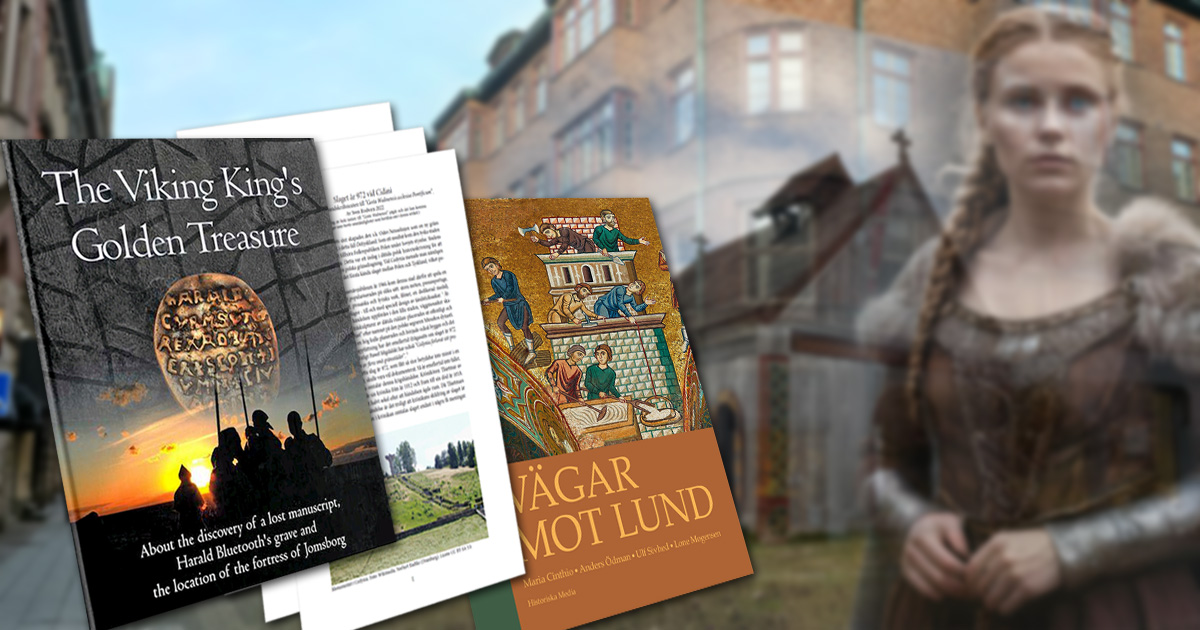
This is how Lund's oldest history was rewritten
It started with the publication of the book "Roads towards Lund" (Vägar mot Lund) in 2018. The book reveals information which implies that it is archaeologically proven that Lund must have been established already during Harald Bluetooth's time. Previously, it has been believed that Lund was founded around the year 990, during the time of Sweyn Forkbeard. In summer 2021, the book "The Viking King's Gold Treasure" was published. In that book, the oldest parts of the chronicle "Gesta Wulinensis ecclesiae pontificum", were published. The older part of the Chronicle was written at the end of the 10th century by the priest Avico, who lived close to Harald Bluetooth for a long time.
What has previously been known about Lund's oldest history comes from written sources that were written long after the events they talked about. Oral tradition has first passed on the information for a few generations, and then there is always a significant risk that many errors have arisen in the story. With the contemporary written source “Gesta Wulinensis ecclesiae Pontificum”, Lund's oldest history can be told in a completely different and much more detailed way.
Parts of "Gesta Wulinensis ecclesiae pontificum" that were not included in the book "The Viking King's Gold Treasure" have been published as documents which, just like the Swedish edition of the book, are available to download for those who want to read it. Another book will be published with more information from the chronicle "Gesta Wulinensis ecclesiae pontificum", probably in 2026.
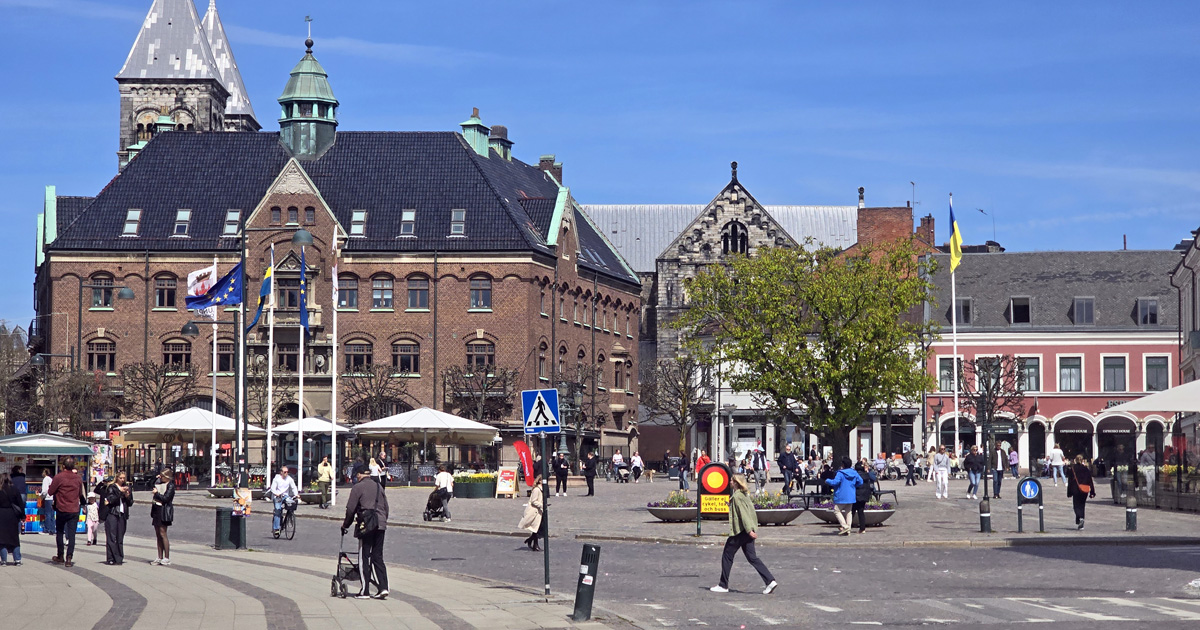 Nowadays we know that the Main Square (Stortorget) in Lund was built around 987 and is thereby
the oldest square in Sweden.
Nowadays we know that the Main Square (Stortorget) in Lund was built around 987 and is thereby
the oldest square in Sweden.
The Chronicle is not only about Lund's history. Our visitor guides are updated based on the new information, and therefore we read the parts about Lund especially carefully. There are also other information, literature, archaeological reports and documents, that inform our tourist information. Our members have spent many hours reading and processing the information. On this page, we present the most important sources of the new information about Lund's oldest viking age history.
The book "The Viking King's Gold Treasure"
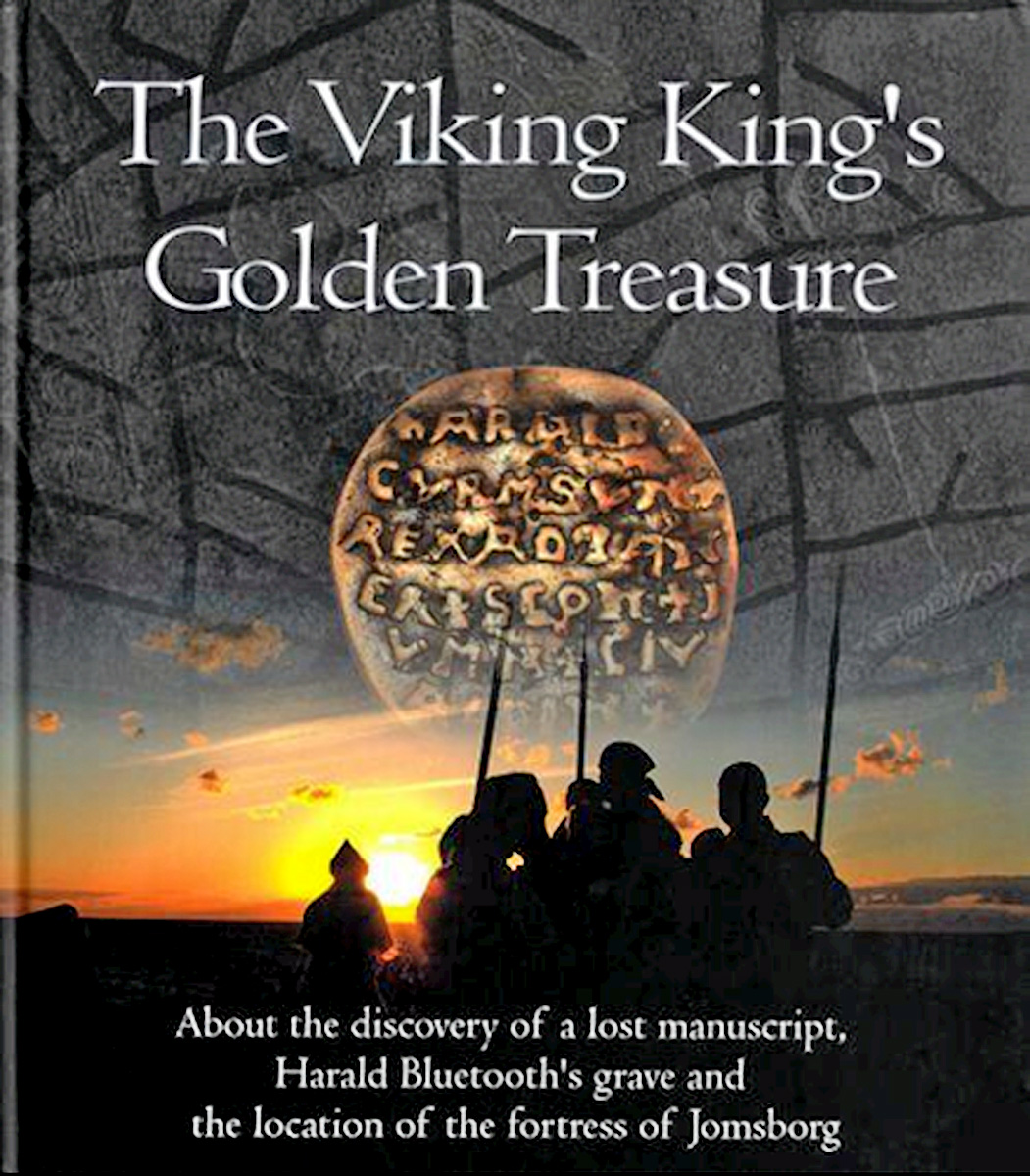 In the book "The Viking King's Golden Treasure", there is a long overview of the viking age
history. There is also a long and detailed account of how the chronicle "Gesta Wulinensis
ecclesiae pontificum", and the gold disc you see on the front cover of the book, were found
and where they come from. The book published a large part of what the Chronicle tells about
Harald Bluetooth's time. The work is ongoing, and the goal is to publish the remaining parts
of the Chronicle in a new book. This work is done by archaeologist Sven Rosborn together with
Tomas Sielski, who owns the gold disc and the source material.
In the book "The Viking King's Golden Treasure", there is a long overview of the viking age
history. There is also a long and detailed account of how the chronicle "Gesta Wulinensis
ecclesiae pontificum", and the gold disc you see on the front cover of the book, were found
and where they come from. The book published a large part of what the Chronicle tells about
Harald Bluetooth's time. The work is ongoing, and the goal is to publish the remaining parts
of the Chronicle in a new book. This work is done by archaeologist Sven Rosborn together with
Tomas Sielski, who owns the gold disc and the source material.
The sources about and from the Chronicle consist partly of a transcript made in Polish, and partly a large number of letters between Tomas Sielski's grandmother Stanislawa and Stanislawa's mother Antonina Chmielinska, and between Antonina Chmielinska and Stanislaw Lorentz, who was a professor and director of the Polish National Museum in Warsaw. Among the documents is also a diary written in the mid-1800s by the then priest in Wiejkowo in northwestern Poland.
The origin of the Chronicle "Gesta Wulinensis ecclesiae pontificum"
In the diary, which the priest in Wiejkowo in northwestern Poland wrote in the 1800s, it is stated that the Chronicle was kept in the local count's extensive library. A large number of letters and other documents show how this diary and the Chronicle came into the possession of the Sielski family at the end of the Second World War. There is a detailed account in the book "The Viking King's Gold Treasure" for those who want to read more about it.
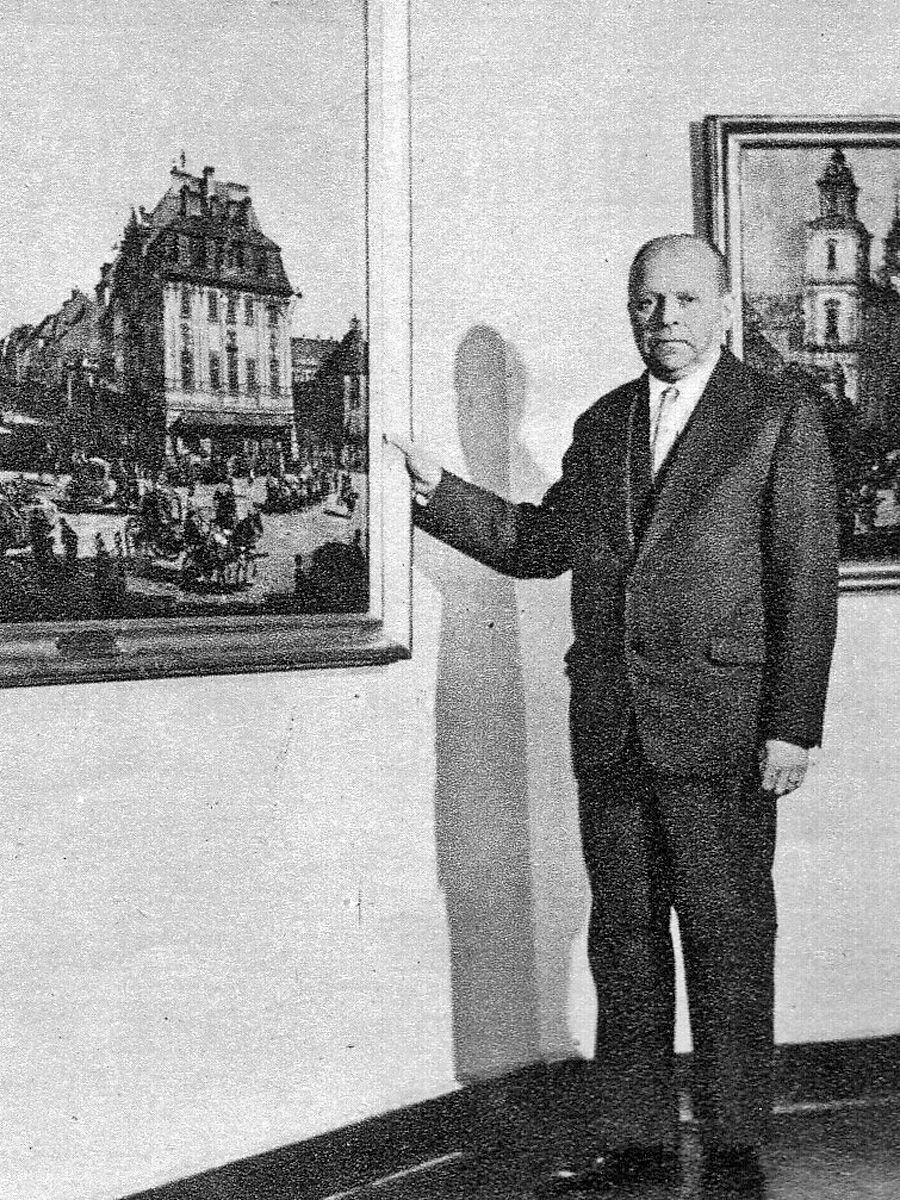 Professor Stanislaw Lorentz in the 1960s.
In preserved letters between Tomas Sielski's grandmother Stanislawa and her mother Antonina
Chmielinska, it is described how Antonina gained access to the diary, and later also to the
Chronicle. Since Antonina had knowledge of medieval Latin, she began to translate the
Chronicle into Polish in the early 1960s. It is also clear from the letters that the then
professor and director of the Polish National Museum in Warsaw, Stanislaw Lorentz, contributed to the work on the translation.
Professor Stanislaw Lorentz in the 1960s.
In preserved letters between Tomas Sielski's grandmother Stanislawa and her mother Antonina
Chmielinska, it is described how Antonina gained access to the diary, and later also to the
Chronicle. Since Antonina had knowledge of medieval Latin, she began to translate the
Chronicle into Polish in the early 1960s. It is also clear from the letters that the then
professor and director of the Polish National Museum in Warsaw, Stanislaw Lorentz, contributed to the work on the translation.
At that time, the People's Republic of Poland, under the control of the Soviet Union, was planning for Poland's 11th century anniversary in 1966. Since the information in the manuscript writes about Poland's history in a way that did not correspond to the general assumptions, Stanislaw Lorentz wrote in a letter to Antonina Chmielinska that "it is not appropriate for this material to see the light of day. I strongly advise against it." The entire content of the Chronicle was translated into Polish but then hidden away so that the information would be preserved for future generations. Unfortunately, it is not known where the original Latin document has gone or been hidden away.
How the chronicle "Gesta Wulinensis ecclesiae pontificum" was rediscovered
Stanislawa Sielska left Poland in 1988 with her son Michael Sielski and his family, including her grandson, Tomas Sielski. They brought with them all of Stanislawa Sielska's preserved letters and documents.
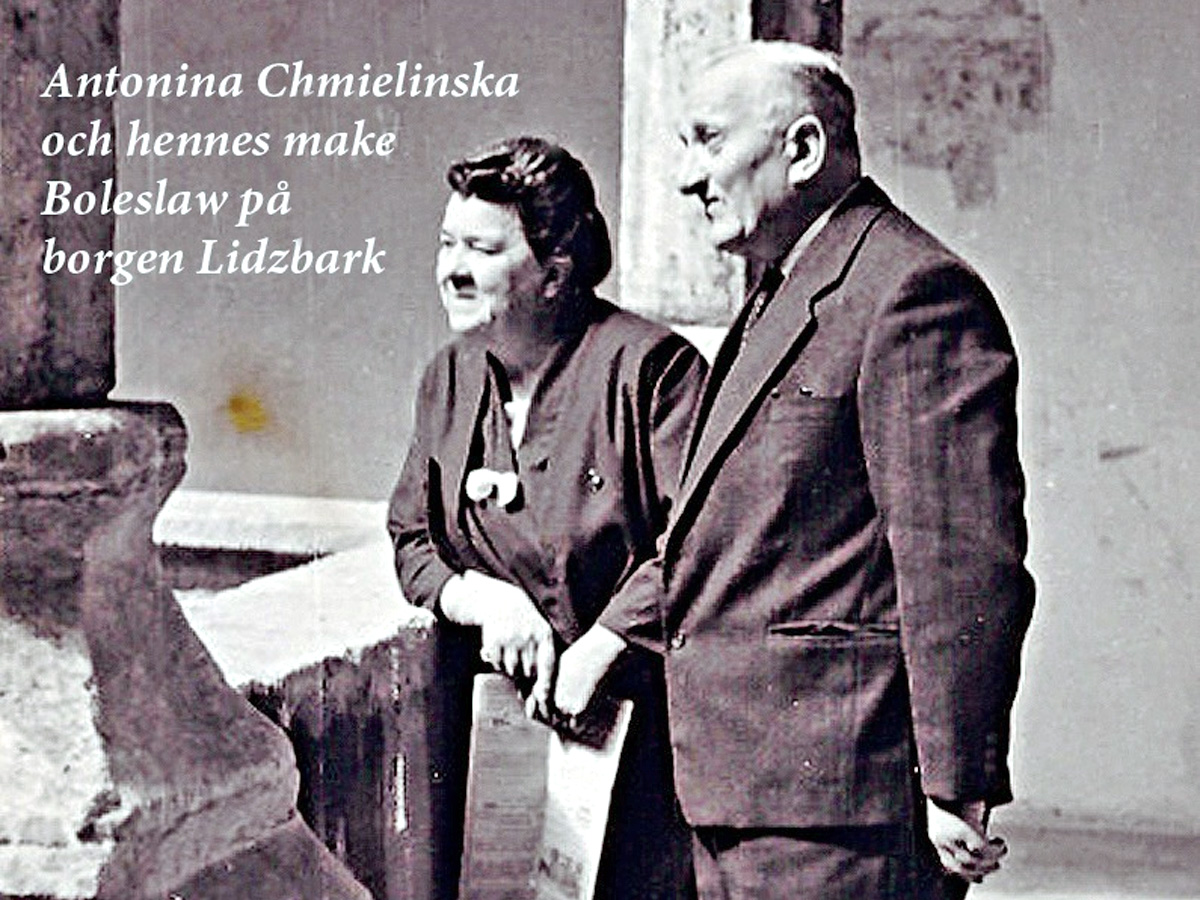 Antonina Chmielinska and her husband around 1959–1960.
When Tomas Sielski got in touch with Sven Rosborn, they began to go
through the preserved letters. In them, it appeared that Antonina Chmielinska had translated
an old Chronicle called "Gesta Wulinensis ecclesiae pontificum". Some of the contents of the
Chronicle were also revealed, but there was no information about where the translation or the
original was hidden.
Antonina Chmielinska and her husband around 1959–1960.
When Tomas Sielski got in touch with Sven Rosborn, they began to go
through the preserved letters. In them, it appeared that Antonina Chmielinska had translated
an old Chronicle called "Gesta Wulinensis ecclesiae pontificum". Some of the contents of the
Chronicle were also revealed, but there was no information about where the translation or the
original was hidden.
It was not until 2019, when the book "The Viking King's Gold Treasure" was ready to be printed, that the entire comprehensive translation of the Chronicle was found, hidden in a storage piece of furniture in Kozalin in Poland. This meant that the publication of the book was delayed by two years. Since then, Tomas Sielski and Sven Rosborn have been working with the content. Tomas Sielski translates the content from Polish to Swedish and Sven Rosborn does the scientific review of the information.
Reports and documentation from the continued work on the Chronicle
Sven Rosborn and Tomas Sielski are still working on the chronicle "Gesta Wulinensis ecclesiae pontificum". Tomas Sielski translates the text from Polish and Sven Rosborn compares what the chronicle says with existing archaeological finds, what runestones tell about the people mentioned, and what is written in later sources. The content from the entire Chronicle is intended to be published in a new book, but during the ongoing work, Sven Rosborn has several times published reports or documents with new information that they had reviewed. The Chronical tells about the history of viking age Denmark, which Scania was part of back then, but we are most interested about what is written about Lund, as our tourist information primarily deals with history that took place in Lund.
Published documents with content from the chronicle "Gesta Wulinensis ecclesiae pontificum" concerning the history of Lund
There are two ways to read the documents from the ongoing work on the Chronicle published by Sven Rosborn. You can access the documents and read them online at the Internet Archive. There is a good overview of all the published documents. The documents are also available on Sven Rosborn's page at Academia. The documents can be downloaded as PDF from both locations. However, most of it is only published in Swedish.
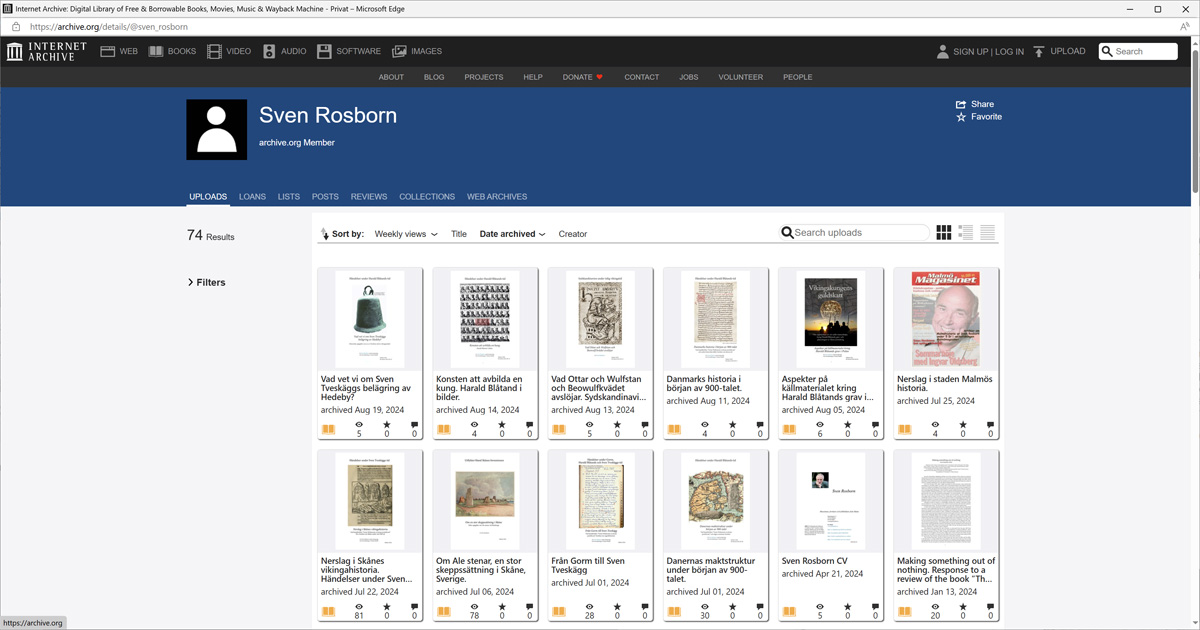 Some of Sven Rosborn's published documents at the Internet Archive.
On the Swedish version of this page, we mention some of the most interesting documents about Lund's oldest viking age history.
Sven Rosborn's and Tomas Sielski's ongoing work on the chronicle "Gesta Wulinensis ecclesiae pontificum" has now reached Sweyn Forkbeard's time. This may affect some of the interpretations published in the book "Roads towards Lund". Until new information about Lund's history during Sweyn Forkbeard’ time emerges, we use the information in the book "Roads towards Lund" as a basis for our visitor guides.
Proof that the information comes from a genuine source
What is reproduced from the Chronicle in the book "The Viking King's Gold Treasure" and the other published documents come from Antonina Chmielinska's translation made in 1963. Of course, we hope that the original will be found, but in the meantime, it is Antonina Chmielinska's translation that is available as starting point.
Sven Rosborn has published the document "Aspects of the source material around Harald Bluetooth's grave in Poland". In that he describes the origin of the source material and how they have verified that it is genuine. The document is available to read or download from here
Antonina Chmielinska's Polish translation of the Chronicle in 1963
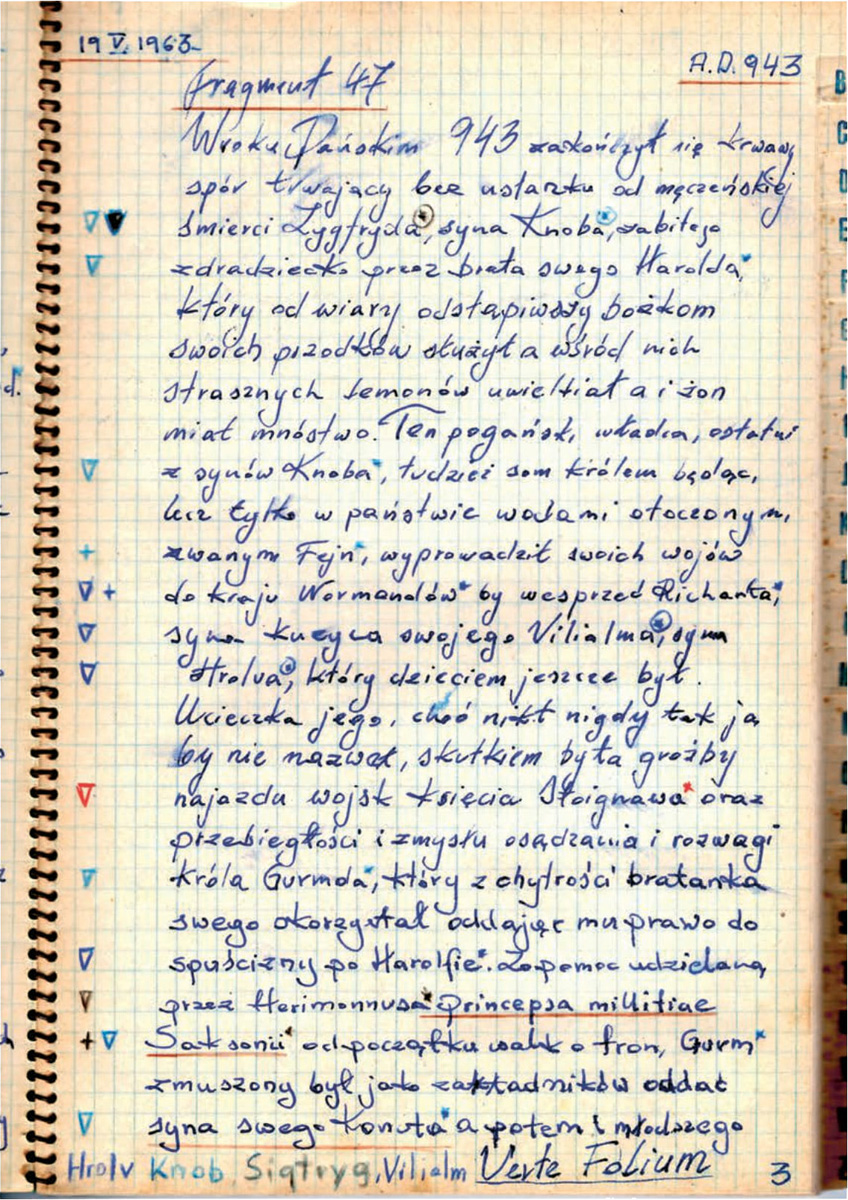 One of the pages from Antonina Chmielinska's Polish translation of the Chronicle.
Antonina Chmielinska's Polish translation of the chronicle consists of about 150 handwritten
pages, like the one seen in the picture to the right. In the document "Aspects of the
discovery of the Viking King Harald Bluetooth´s grave and a manuscript from the late 900s",
Sven Rosborn describes the investigations carried out with the help of a Polish professor of
forensic science to verify that the Polish translation was made in 1963. The results leave no
doubt that the translation was made in 1963 and that it was Antonina Chmielinska who wrote the
text. Antonina Chmielinska died in 1979, so in any case, the translation cannot have been done
later than then.
One of the pages from Antonina Chmielinska's Polish translation of the Chronicle.
Antonina Chmielinska's Polish translation of the chronicle consists of about 150 handwritten
pages, like the one seen in the picture to the right. In the document "Aspects of the
discovery of the Viking King Harald Bluetooth´s grave and a manuscript from the late 900s",
Sven Rosborn describes the investigations carried out with the help of a Polish professor of
forensic science to verify that the Polish translation was made in 1963. The results leave no
doubt that the translation was made in 1963 and that it was Antonina Chmielinska who wrote the
text. Antonina Chmielinska died in 1979, so in any case, the translation cannot have been done
later than then.
The Polish translation mentions things about the history of Lund and Denmark in the 10th century that were not known at the time of the translation, nor before Antonina Chmielinska died. But several things have become known later through archaeological findings. Sven Rosborn gives four examples of such things in the document "Aspects of the discovery of the Viking King Harald Bluetooth´s grave and a manuscript from the late 900s". Here, we give more examples of things mentioned about Lund that are verified with archaeological findings.
In Antonina Chmielinska's Polish translation of the Chronicle from 1963, three churches in Lund and one in Uppåkra are mentioned, all of which are said to have been built between 964 and 988. Three of them have been verified directly or indirectly by archaeological findings between 1982 and 2012, which is 20 years or more after the Polish translation was made, and after Antonina Chmielinska died in 1979. This constitutes strong direct and indirect evidence that what is mentioned in the translation must have come from a genuine older document written by someone who has seen, or otherwise become aware of, what is mentioned in the Polish translation.
Sweyn Forkbeard's church Trinitas, discovered in 1982
According to the Polish translation, Princess Helga of Kyjiv persuaded King Sweyn Forkbeard to make Lund the Christian capital. Sweyn Forkbeard agreed and at the same time he made Lund his royal seat. He also had a church built sacred to Trinitas. It happened sometime around the year 987, after Princess Helga's husband Toke Gormsson was killed in the battle of Fyrisvallarna outside Old Uppsala on August 10th, 986. In connection with the major archaeological investigation of Drotten at Kattesund in Lund between 1982 and 1984, traces of a wooden church dated to around the year 990, during Sweyn Forkbeard's time, were found. The church was dated based on one of the graves from the cemetery. This finding confirms what is said in the Polish translation from 1963.
A grave from the 900s discovered in Uppåkra in 1997
According to the Polish translation, Princess Helga of Kyjiv built a church in a place called "high fields" around the year 988. This was to end the practice of pagan rituals that were held in secret during the celebration of John the Baptist's birthday. The place was located three Roman miles from the southern gate to Lund, which corresponds to just over four kilometers. In connection with an archaeological investigation under the choir of the current church in Uppåkra in 1997, a grave was found. Dating with carbon 14 indicates that the skeleton in the grave is from the viking age, probably from the 10th century. This indicates that there was a wooden church there in the 10th century. This finding indirectly confirms what is said in the Polish translation from 1963.
Toke Gormsson's church, indirectly dated in 2012
According to the Polish translation, Harald Bluetooth's younger brother and tributary king of Scania, Toke Gormsson, built a church in Lund in 975, sacred to John the Baptist. On the cornerstone it was carved that it was Toke who had built the church. A runestone, saying that someone named Toke had built a church, was discovered in Lund in the 1700s, but is now in the bishop's residence in Copenhagen. On the north side of the Lund Cathedral, ancient graves were found in the 1940s, but no dating was made at the time. When the graves were dated in 2012, it turned out that the oldest were from 979–980 and 981–982. This is strong indirect evidence for the Polish translation from 1963 is genuine.
Is St. Clement's wooden Church from the 960s or from the early 11th?
According to the Polish translation, Harald Bluetooth's nephew and tributary king of Scania, Harald Knutsson, called Goldenharald, built a church in Lund sacred to St. Clement. It may have been built in 964 at the earliest, but before 970 when Goldenharald was executed. In connection with archaeological investigations of St. Clement's church of stone in 1932, eight staves and one round corner post of an earlier wooden church, located on the south side of the stone church, were found. New construction is now planned on the location where that wooden church was.
According to the antiquarian preliminary investigation, the wooden church was built sometime in the early 11th century. According to the Polish translation, however, the church was built at least 50 years earlier. If it is possible to find wood from the church in such good condition that it can be dated, and that dating shows that the church was built in the second half of the 960s instead of the 1000s, that would be very strong evidence for the authenticity of the Polish translation from 1963.
The book "Roads towards Lund"
When the book "Roads towards Lund" (Vägar mot Lund) was published in 2018, it was revealed that the old-fashioned log coffins, found on the north side of Lund Cathedral in 1908 and in 1941-1942, date to the time of Harald Bluetooth. This means that there is now archaeological evidence that Lund must have been established earlier than during Sweyn Forkbeard's time, as was believed until then. The book is only in Swedish.
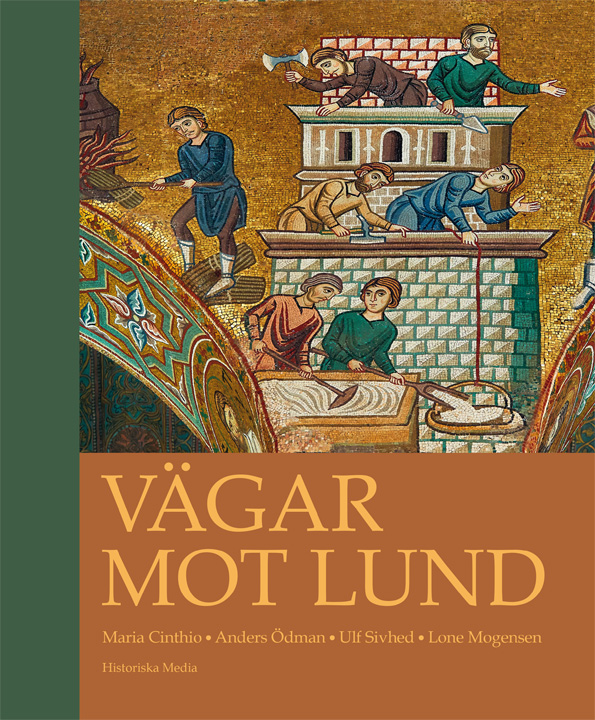 In the first 120 pages of the book, Maria Cinthio, one of the authors, goes through Lund's
oldest history and tries to interpret it in light of the fact that Lund must have been
established earlier than thought. The review is based on archaeological findings and sources
written long after the events described. That makes the information more uncertain.
In the first 120 pages of the book, Maria Cinthio, one of the authors, goes through Lund's
oldest history and tries to interpret it in light of the fact that Lund must have been
established earlier than thought. The review is based on archaeological findings and sources
written long after the events described. That makes the information more uncertain.
Previously, it was believed that the church Drotten was began to be built around year 1060. It has also been believed that a predecessor to the Lund Cathedral began to be built by King Canute the Holy in 1081, and that the construction of the current Cathedral began in 1103. In "Roads towards Lund" (Vägar mot Lund), Maria Cinthio argues that Drotten may have begun to be built as early as the 1020s and the Cathedral's predecessors around the year 1030, as some kind of monastery activity. As always, it's about how you interpret what you know, and Maria Cinhio's interpretations probably fit better with what really happened.
New book about Lund during Sweyn Forkbeard's time
Sven Rosborn has announced that there is a lot of new information about Sweyn Forkbeard's time in the chronicle "Gesta Wulinensis ecclesiae pontificum", which he and Tomas Sielski are still working on. Therefore, a new book will be published, tentatively around the summer of 2026. The picture shows what the front cover of the book will look like. The book will mostly be about Sweyn Forkbeard's time but starts back in time with Sweyn Forkbeard's family and his relationship with his stepfather Harald Bluetooth.
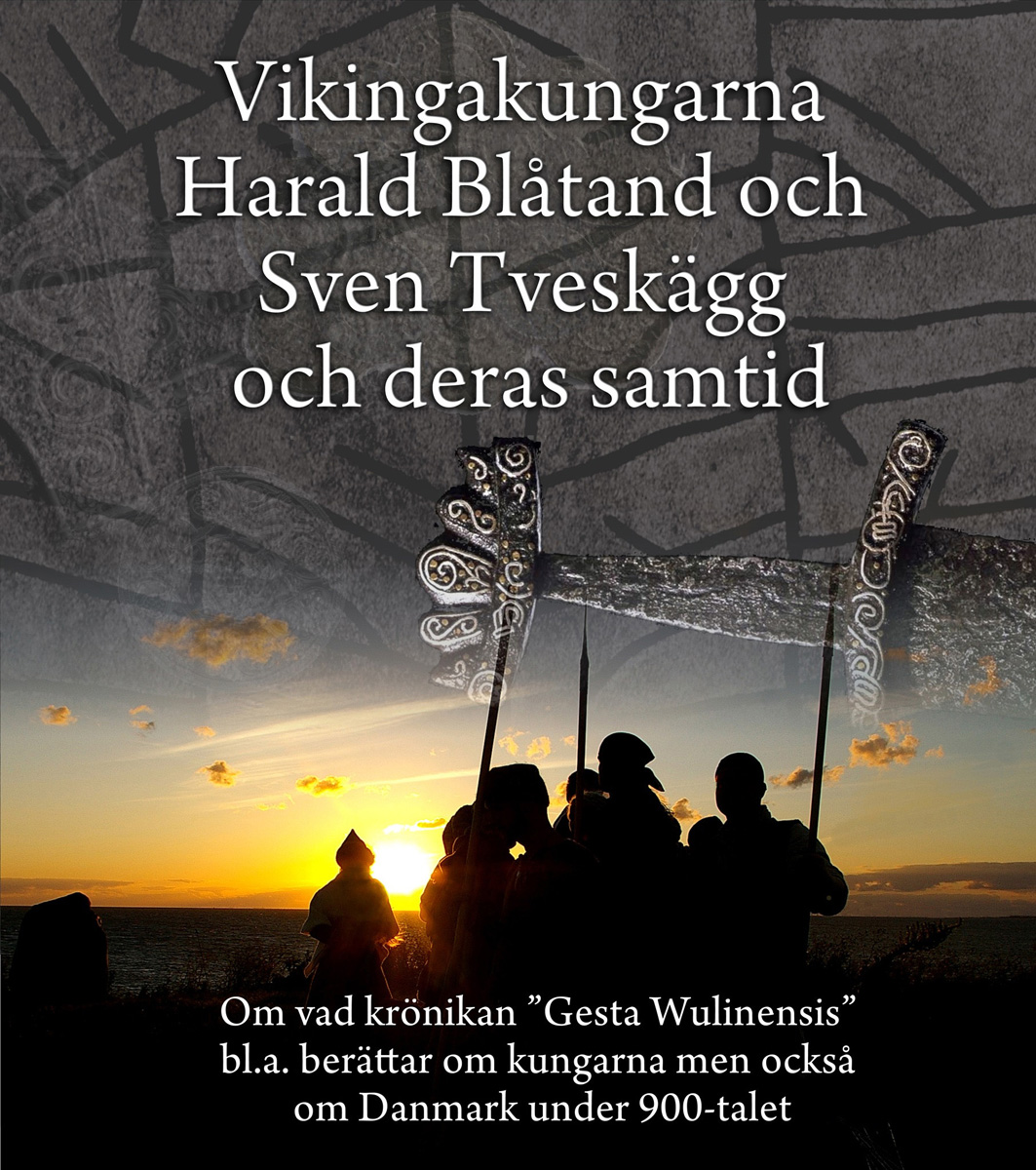 The information in "Gesta Wulinensis ecclesiae pontificum" is a contemporary written source,
unlike other written sources about Sweyn Forkbeard's time. Most of what we know so far is
based on interpretations of archaeological findings and sources that were written much later
than the events they tell about. Sven Rosborn has announced that much of Sweyn Forkbeard's
time will be rewritten. This means that the new book may contribute as much to Lund's oldest
history than the book "The Viking King's Gold Treasure" did, or perhaps even more.
The information in "Gesta Wulinensis ecclesiae pontificum" is a contemporary written source,
unlike other written sources about Sweyn Forkbeard's time. Most of what we know so far is
based on interpretations of archaeological findings and sources that were written much later
than the events they tell about. Sven Rosborn has announced that much of Sweyn Forkbeard's
time will be rewritten. This means that the new book may contribute as much to Lund's oldest
history than the book "The Viking King's Gold Treasure" did, or perhaps even more.
Sven Rosborn has given some examples of what the new book will cover. Of course, not everything is about Lund. One event that happened in Lund is that the priest Gotebald, wo had been imprisoned in Flanders, was send by Sweyn Forkbeard to Lund to become the first bishop in 987. This would mean that the diocese of Lund, which is said to have been established with the diocesan reform sometime before the year 1059, can instead be dated to when Gotebald was appointed Lund's first bishop.