![[Bild]](/common/img/default.png)
The viking age Lund
Visitor's guides
• Lund's viking age center
Information
• Lund's viking age history
• Sources to the information
Information from the chronicle "Gesta Wulinensis ecclesiae pontificum", which can be
translated as the history of the Wolin bishops, has rewritten Lund's oldest viking age history
in a way which never happened before. This has given us completely new and unique knowledge
about Lund's oldest viking age history and imply that Lund is Sweden's oldest city. It also
means that we can now tell much more about what it was like in Lund during the oldest time.
The chronicle has contributed new information about the first churches, and the viking age
fortress of the type that is usually called Trelleborg. There is also information about when
the urban area in Lund was established, about the people who ruled in Lund and Scania during
the second half of the 10th century, and events they were involved in. This page provides an
overview of the information about the viking age Lund, and therefore it may be a good idea to
start reading this. After that, you can use the visitor's guides to see and read more about the
different places where the history took place.
It is interesting to visit the site of the old town area in Uppåkra and the court site in Arendala because so much interesting history took place there but be aware that there is nothing concrete to see. Uppåkra is a small village with mostly open agricultural landscape. It is not possible to build anything there because the area will be the subject of archaeological investigations for the foreseeable future. If you want to see and know more about the viking age Lund, it is above all Lund's viking age center you should experience.
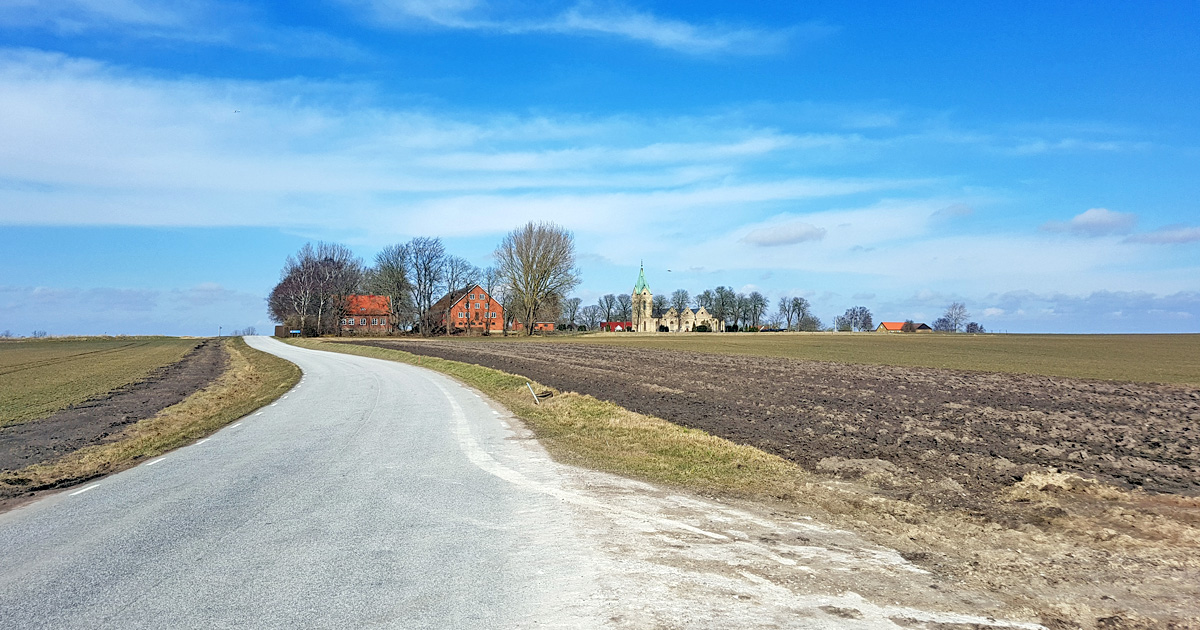 The place where the large urban area which preceded today's Lund was located in Uppåkra is
today mostly an agricultural landscape.
The place where the large urban area which preceded today's Lund was located in Uppåkra is
today mostly an agricultural landscape.
Uppåkra and Lund
The large urban area, today called Uppåkra (1), arose as a settlement during the pre-Roman Iron Age about 100 years before Christ, more than two thousand years ago. It grew over a thousand years and became northern Europe's largest viking age urban area, up to 50 hectares in size. This means that the urban area in Uppåkra was as much as seven times as large as Birka outside Stockholm, and twice as large as Hedeby (Haithabu) in what was southern Denmark at the time but now situated in the northwest corner of Germany. The urban area of Uppåkra was probably the center of the viking age Scandinavia.
The Chronicle tells about those who were Christians
Despite all the new information about Lund's oldest viking age history, we don't know more about those who lived in Uppåkra, or exactly when what is Lund (2) today took over Uppåkra's role as a center of power in Scania. This is because the Chronicle was written by a priest, and he tells about the Danish Vikings because they were Christians while those who lived in Uppåkra worshipped pagan gods such as Thor and Odin. When the court site in Arendala (3) is mentioned in the Chronicle in connection with some events in year 989, it was probably already established and known as the court site for "Skåninge county council".
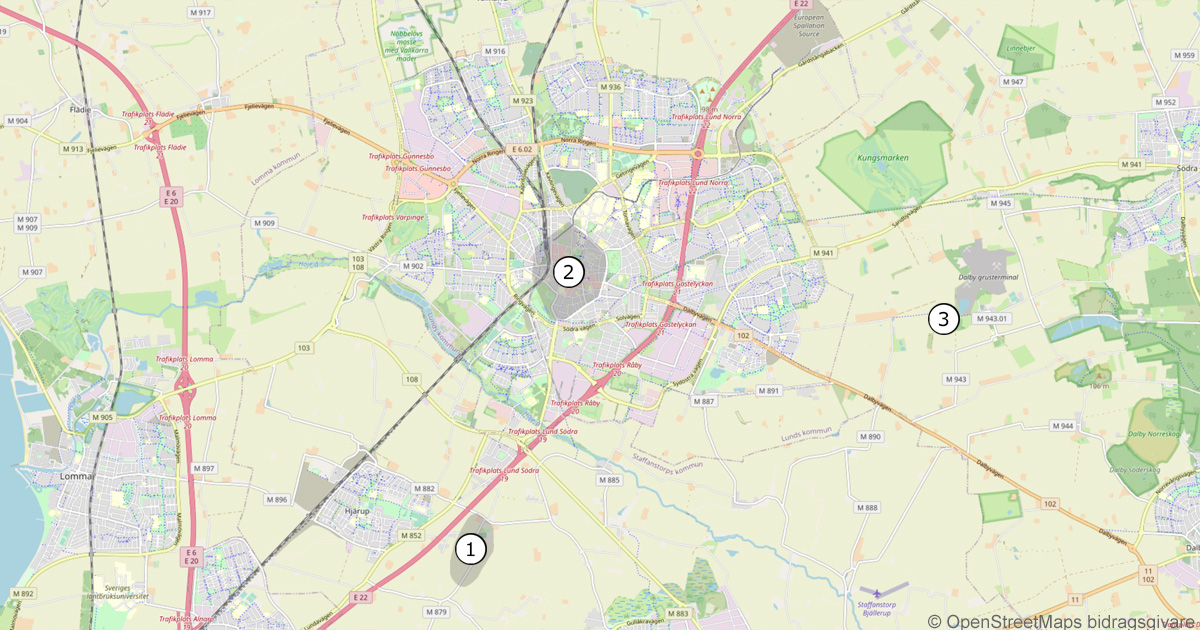 The map shows the distribution area of the viking age Uppåkra (1) and of what was the
entire Lund city (2) until the end of the 1800s. Arendala court site (3) existed
from sometime in the 900s to the second half of the 1100s.
The map shows the distribution area of the viking age Uppåkra (1) and of what was the
entire Lund city (2) until the end of the 1800s. Arendala court site (3) existed
from sometime in the 900s to the second half of the 1100s.
The introduction of Christianity
When Lund took over Uppåkra's role as the center of power in Scania, it seems to depend on the introduction of Christianity. This may have been the reason why what is Lund today was established where Lund is now instead of where Uppåkra is today.
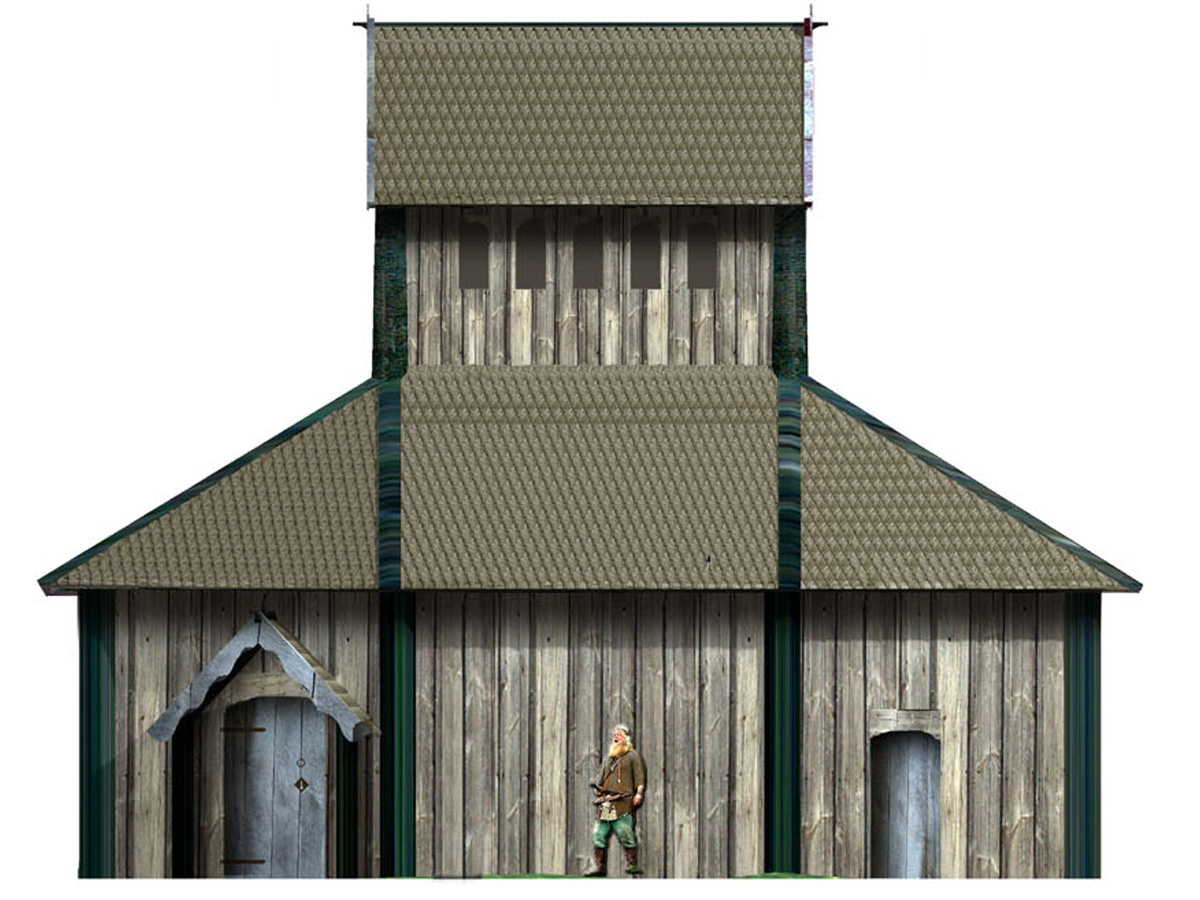 A reconstruction by Sven Rosborn showing how the worship building in Uppåkra may have looked
like.
Those who lived in Uppåkra were not Christians. They worshipped pagan gods such as Thor and
Odin. Lots of bones from both humans and animals have been found around a house from the 200s,
which has been described as a worship building.
A reconstruction by Sven Rosborn showing how the worship building in Uppåkra may have looked
like.
Those who lived in Uppåkra were not Christians. They worshipped pagan gods such as Thor and
Odin. Lots of bones from both humans and animals have been found around a house from the 200s,
which has been described as a worship building.
The sacrificial grove that was called Lund
The Chronicle "Gesta Wulinensis ecclesiae pontificum" describes the place where Lund is today as "a place that has been dedicated to pagan gods for centuries". This suggests that the place may have been a place for pagan rituals for a very long time, perhaps as far back as the 200s, which were performed by the people who lived in Uppåkra. Perhaps it was a sacrificial grove that gave the city its name, since “Lund” means grove. Another possibility is that the urban area where Uppåkra is located today was called Lund, a name that was taken over by the new city, what is Lund today.
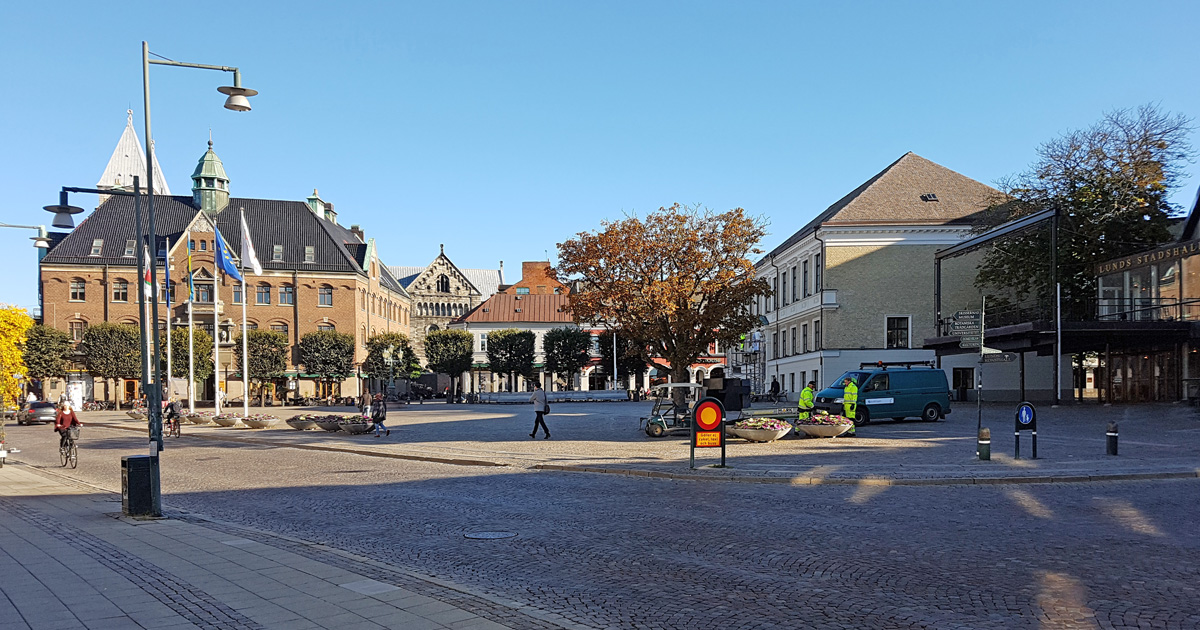 The Main square (Stortorget) in Lund where the people of Uppåkra may have had some form of
pagan sacrificial grove for several hundred years, which possibly gave the city its name.
The Main square (Stortorget) in Lund where the people of Uppåkra may have had some form of
pagan sacrificial grove for several hundred years, which possibly gave the city its name.
The worship of pagan gods where Lund is today may have been the reason why the new urban area was established here instead of in Uppåkra. The first church in Lund, a church dedicated to St. Clement, was built between 964 and 970. By then, Lund must have taken over Uppåkra's role as the center of power, but it may have happened earlier. There was a Björn Jarl who was Christian and called the king of Scania.
Lunds viking age city area
How big the first established city area in Lund was, is not known. From the beginning, there was Lund's first church, St. Clemens, which was built between 964 and 970, and a royal estate that may have existed even before 964. In the 1130s, the medieval city wall, known as a clear boundary, was built around the area that made up the entire Lund city for 900 years. During the second half of the 1800s, Lund began to grow outside that area and in 150 years the city has grown into the large city it is today.
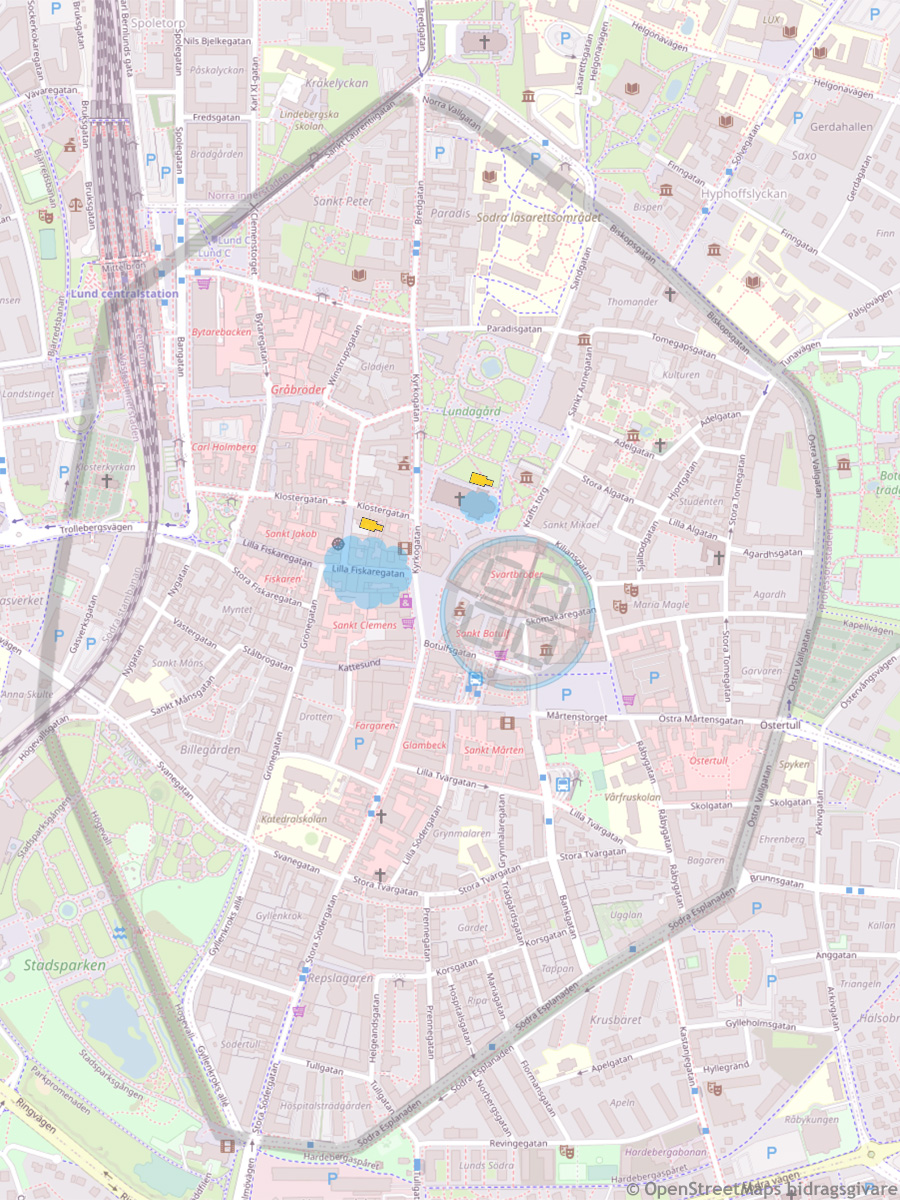 Lund's viking age city area in the 970s and the medieval city wall that was built in the
1130s.
In the early 970s, a round Viking fortress, of the type usually called Trelleborg, was built.
Then in 975, St. John the Baptist's church was built as Lund's second church. According to the
Chronicle, a city area was first established around the year 987 on the orders of Princess
Helga of Kyjiv, who then ruled Lund. At that time, the square was built, which was longer but
narrower than the Main Square (Stortorget) is today. The street network, still existing in
Lund city center, was also built at that time, which means that many streets are more than
thousand years old.
Lund's viking age city area in the 970s and the medieval city wall that was built in the
1130s.
In the early 970s, a round Viking fortress, of the type usually called Trelleborg, was built.
Then in 975, St. John the Baptist's church was built as Lund's second church. According to the
Chronicle, a city area was first established around the year 987 on the orders of Princess
Helga of Kyjiv, who then ruled Lund. At that time, the square was built, which was longer but
narrower than the Main Square (Stortorget) is today. The street network, still existing in
Lund city center, was also built at that time, which means that many streets are more than
thousand years old.
An interesting thing is the mention of "gates", which suggests that some kind of city wall may have been built around the city area already then, but there is no more information about it. The area surrounded by the medieval city wall, built in the 1130s, was at its largest about 1.75 times the size of the old town area in Uppåkra. The original city area may have been larger than that. Older plot boundaries have been found in a few places outside the area surrounded by the medieval city wall.
The size of the population in viking age Lund
There is no information about the size of the population in the old town area, which today is Uppåkra. But the size of the population in what is Lund today has been estimated at around 2,000 people in early 11th century. So, there were a lot of people living in Lund already then. The Chronicle tells of "baptizing this pagan people" when John the Baptist's church was inaugurated in 975. That could be interpreted as the people in the old town area, todays Uppåkra, being forced to move to the new city area in Lund and forced to become Christians by being baptized. This could then explain the large city area in Lund and the large population early on, but it is not possible to verify this interpretation with archaeological findings.
Lund's viking age center in the 990s
Thanks to the information published from the Chronicle so far, much more is known about what it looked like in Lund's viking age center during the second half of the 10th century until the year 990. The visitor's guide to Lund's viking age center tells about all the viking age places in the center.
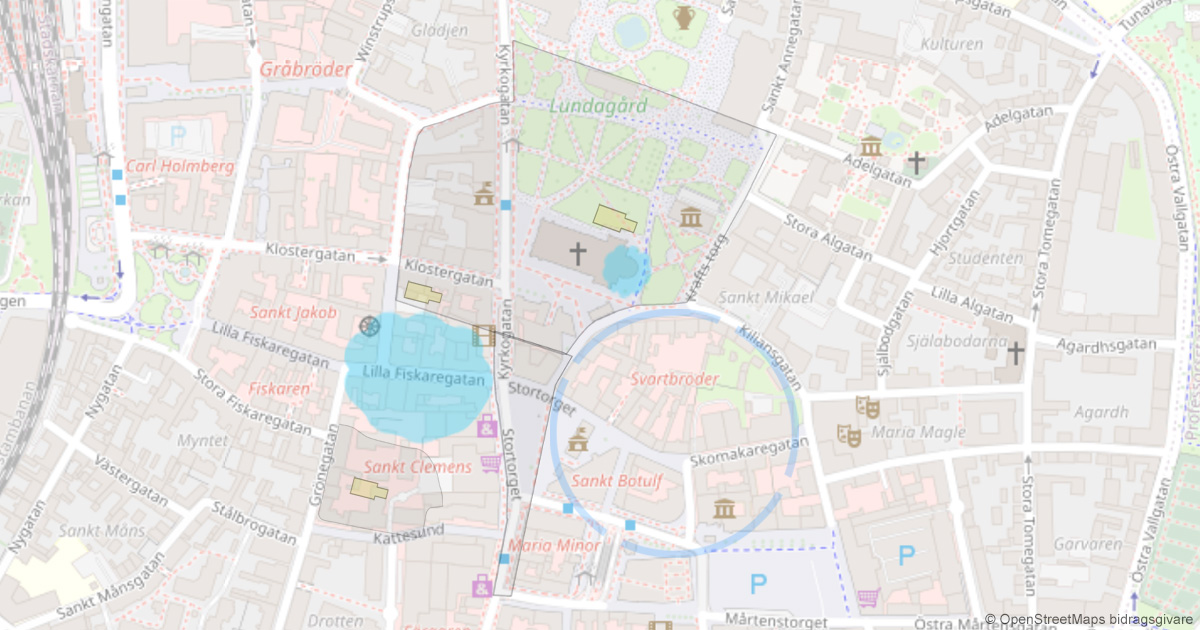 Lund's viking age center as it may have looked in 990.
Lund's viking age center in the 11th Century
Information from the Chronicle about the time after the year 990 will eventually be published. Until then, what is known about the viking age of Lund from the year 990 and later is mainly based on interpretations of archaeological findings and written sources, written long after the events described. This makes that information more uncertain, and probably much of that needs to be rewritten.
During the viking age was Lund formally part of the Archbishopric of Hamburg-Bremen. When Harald Bluetooth was King of Denmark, German influence dominated. This was to change during Swein Forkbeard´s time, when the many Viking raids to England meant that Lund got an Anglo-Saxon population and a city life following English model. Until around 1066 when Henrik who is still considered the first bishop of the diocese of Lund died, all the bishops of Lund came from England. But England did not belong to the archbishopric of Hamburg-Bremen. This led to recurring conflicts with the archbishopric of Hamburg-Bremen throughout the viking age and well into the 12th century. Lund became the archbishopric of all the Christian Scandinavia in 1103, and that are often seen as the beginning of the Middle Ages.
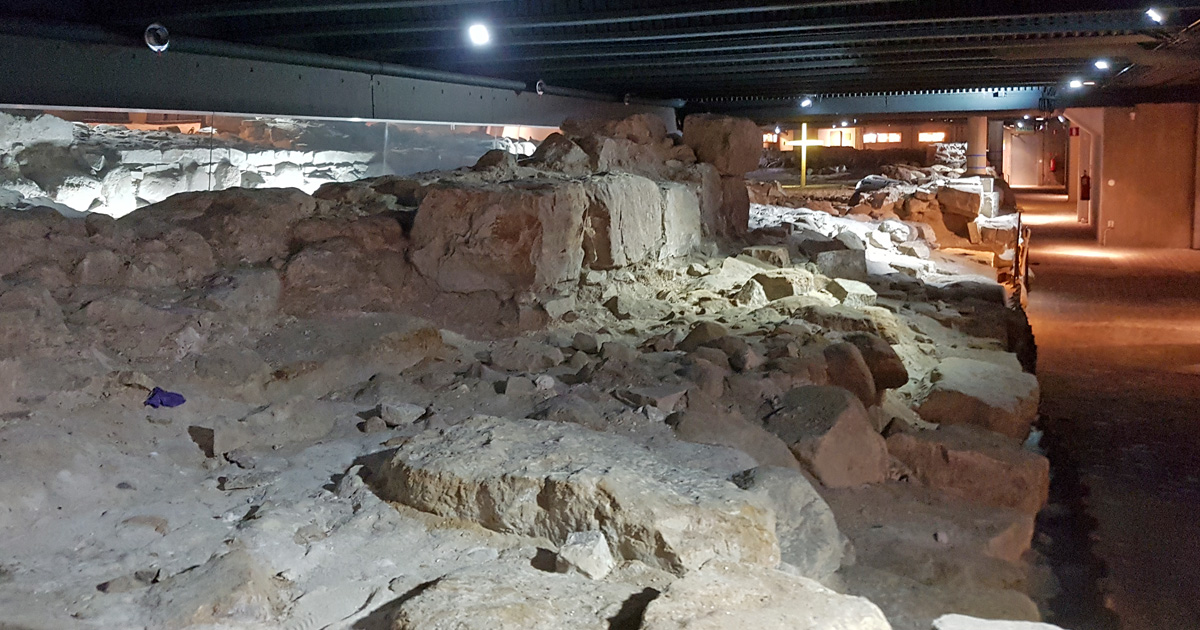 The preserved ruin of Drotten, which became Lund's first cathedral before the year 1059