![[Bild]](/common/img/default.png)
Lund's viking age center
Attraction
The Viking age Lund
Stroll
about 2 hours
High resolution map
• Drotten church ruin
• Runestones in Lund
Information
• Lund's viking age history
• Sources to the information
Information from the chronicle "Gesta Wulinensis ecclesiae pontificum", which can be
translated as the history of the Wolin bishops, has rewritten Lund's history during the 10th
century in a way that never happened before. This has given completely new and unique
knowledge about Lund's old viking age history, and therefore we can now tell much more about
what it looked like in the center of Lund during its oldest time. It also implies that Lund is
Sweden's oldest city. There is information about where the first churches were, and when the
city area and the square in were built. There is also information about the viking age
fortress of the type usually called Trelleborg, and about the people who ruled over Lund and
Scania during the second half of the 10th century. This visitor's guide shows and tells about
places in viking age Lund until Lund became an archbishopric in 1103, which is regarded as the
beginning of the middle ages. There are references to some other visitor's guides with additional
information for those who want to know more. It can be a good idea to start reading the general
introduction to the viking age Lund.
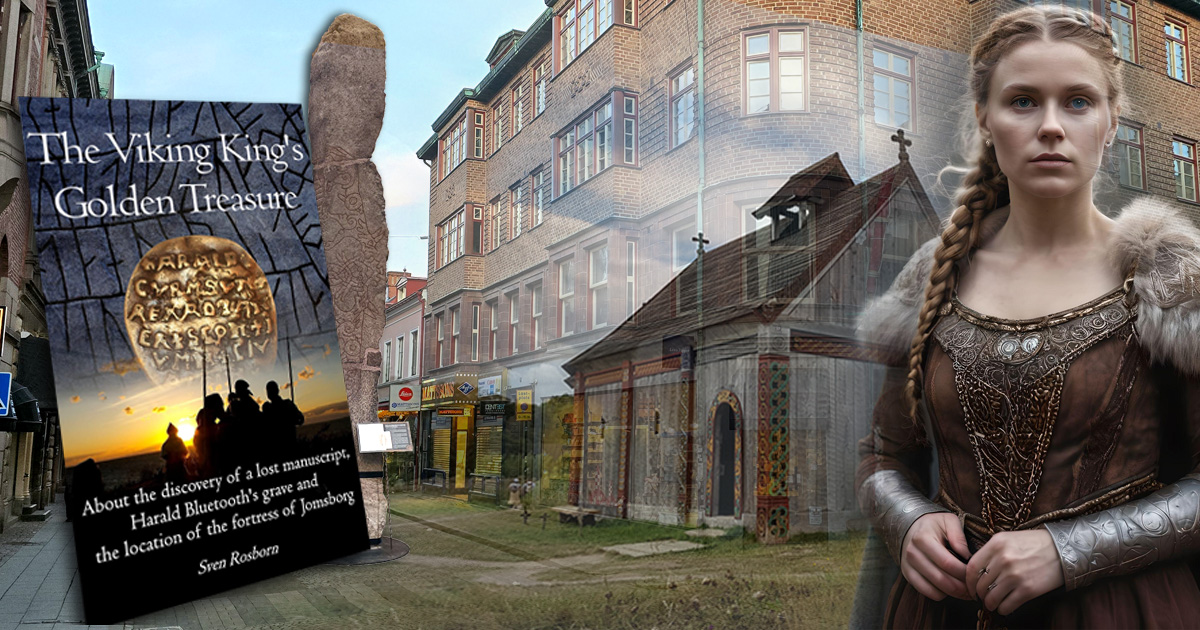
The information from the Chronicle that has been published so far tells about the time up to the year 990. Information about the period after 990 will also be published eventually, but until then, the information in this visitor's guide from year 990 to the beginning of the 12th century is mainly based on interpretation of archaeological findings and the written sources written long after the events described. This makes that information more uncertain.
Historically interesting places in Lund's viking age center
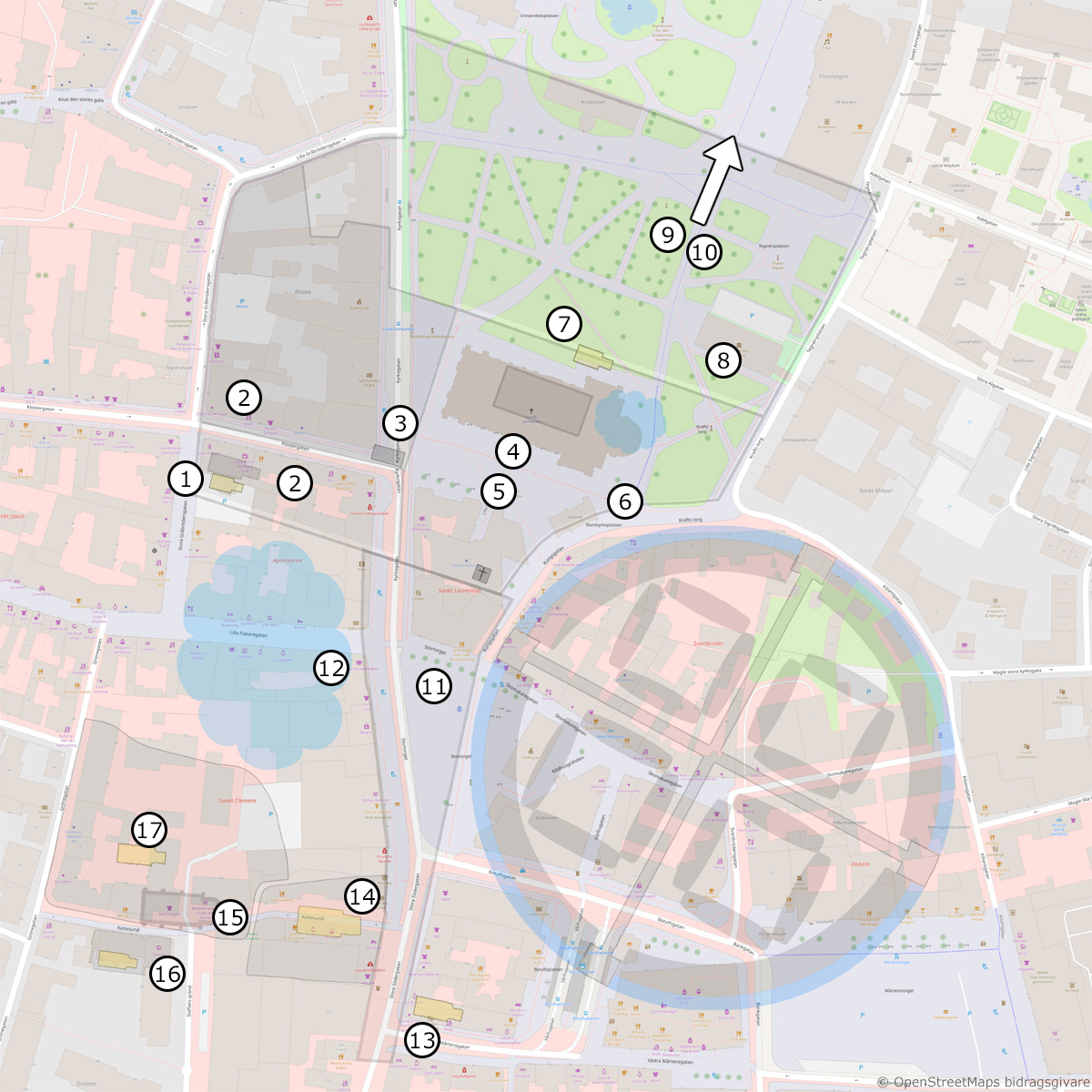
The map below shows what it may have looked like in the viking age Lund city and the places described in this visitor's guide. Not everything you see on the map was present at the same time. In the description you can read when in time the numbered places were present. There is also a high-resolution map if you want to see the places more precisely. It is good to be aware that most of the marked places described in this visitor's guide do not show anything concrete. Unfortunately, the municipality is not interested in making Lund's history visible in a clearer way to make more tourism out of it, as we have proposed.
1) Lund's first church Saint Clemens
The Chronicle tell that St. Clement's church, which was located at nowadays Cloister street (Klostergatan) in Lund, was built by Harald Bluetooth's nephew, who was called Goldenharald. The church must have been built between 964, when Goldenharald invaded the western part of Scania, and 970, when he was executed after trying to take power over Denmark by hire a man to murder Harald Bluetooth. It is the oldest church known to have been built where Lund is located today. The church will probably be the subject of an archaeological investigation soon, as it will be built on the site.
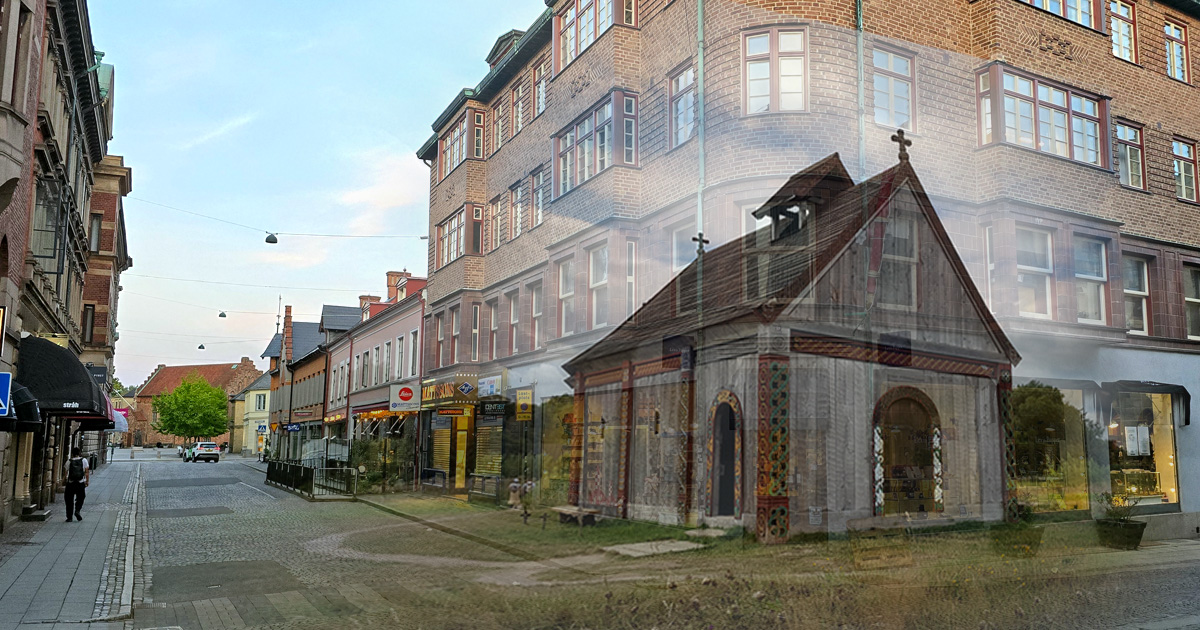 The Cloister street (Klostergatan) in Lund where St. Clement's church was located,
although, the wooden church was further into the block than in the picture.
The Cloister street (Klostergatan) in Lund where St. Clement's church was located,
although, the wooden church was further into the block than in the picture.
According to the Chronicle received the church a relic from St. Clemens in 977. It was probably part of the lower jaw. Princess Helga from Kyjiv in today Ukraine brought the relic with her from the ancient city of Chersonesos, located in the northern part of what today is the Sevastopol in Crimea. She married Toke Gormsson, who was Harald Bluetooth's younger brother and tributary king of Scania. Helga ruled Lund until she died in year 1004.
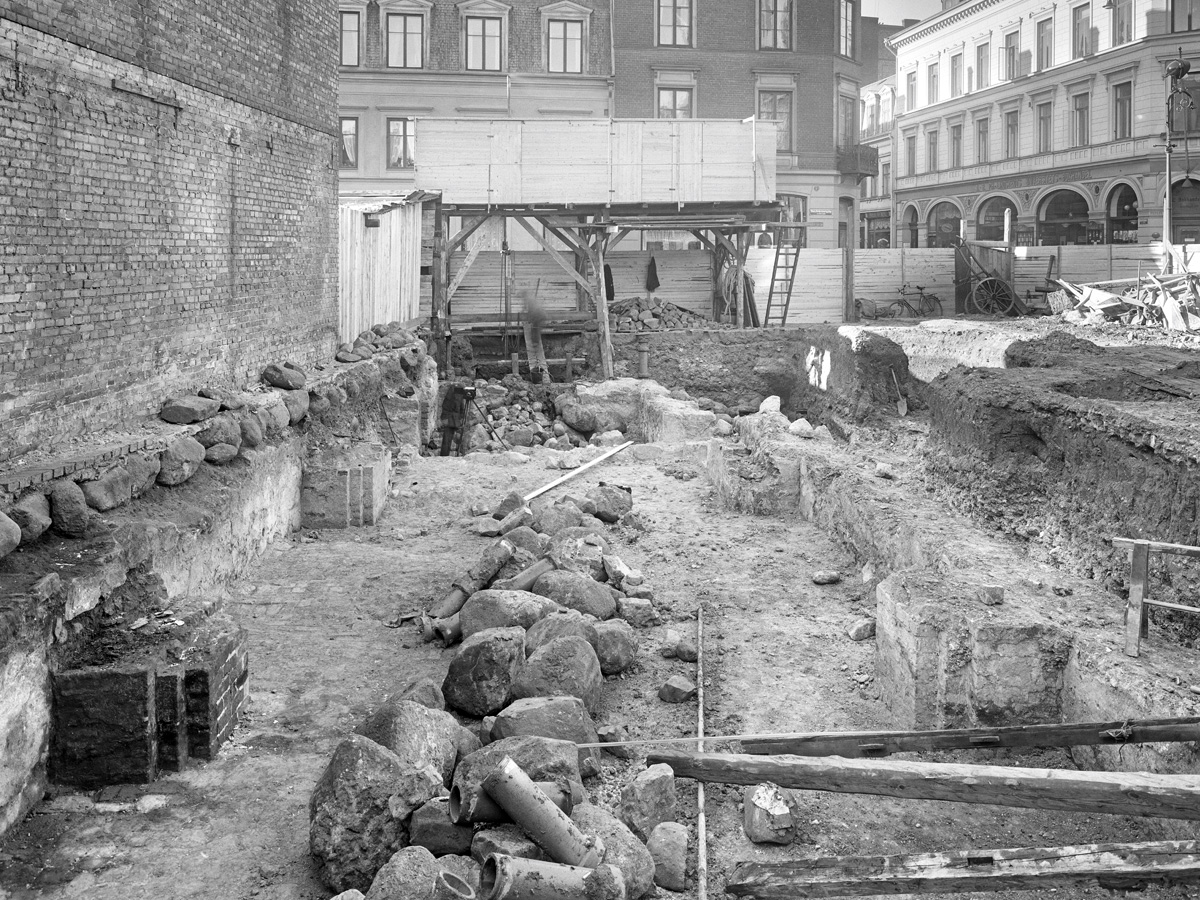 Archaeological investigation of St. Clement's church 1932.
The houses straight ahead and to the right are still there. Churches dedicated to St. Clement
have been linked to royal estates in several cases. According to the Chronicle, the church was
built near Gouldenharald's royal estate, which then probably existed before the church was
built. Churches dedicated to St. Clement have also been found near Harald Bluetooth's round
fortresses of the type usually called Trelleborg. According to the Chronicle, Harald
Bluetooth's younger brother and tributary king of Scania, Toke Gormsson, built such a fortress
here in Lund, probably sometime between the years 971 and 973.
Archaeological investigation of St. Clement's church 1932.
The houses straight ahead and to the right are still there. Churches dedicated to St. Clement
have been linked to royal estates in several cases. According to the Chronicle, the church was
built near Gouldenharald's royal estate, which then probably existed before the church was
built. Churches dedicated to St. Clement have also been found near Harald Bluetooth's round
fortresses of the type usually called Trelleborg. According to the Chronicle, Harald
Bluetooth's younger brother and tributary king of Scania, Toke Gormsson, built such a fortress
here in Lund, probably sometime between the years 971 and 973.
The wooden church was later replaced with a stone church, probably in the 1020s, on the initiative of King Canute the Great. The stone church was excavated archaeologically in 1932 before building the house on the place today. The church, which was built with stone, was 19 meters long, with a longhouse and straight choir without apse. During the excavation, eight staves and a round corner post were found for a building located on the south side of the church. It has been assumed that this was the eastern part of the northern longhouse wall of a previous wooden church.
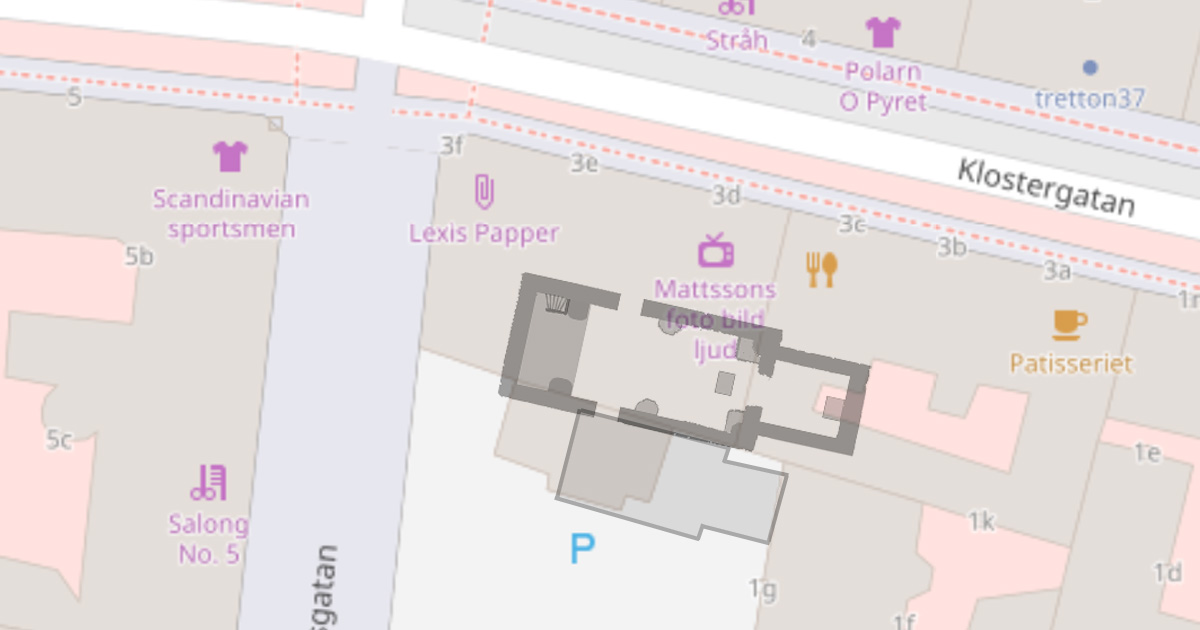 Map showing how St. Clement's church of stone and the former wooden church were placed in the
neighborhood.
Map showing how St. Clement's church of stone and the former wooden church were placed in the
neighborhood.
Construction of an apartment building is being planned on the undeveloped area south of the building, which was built after the archaeological investigation of St. Clement's church in 1932. The new construction will need to be preceded by an archaeological investigation. A demolition permit has been granted for the outbuilding, a garage building from 1898. There will be a good chance of finding traces of St. Clement's wooden church under the outbuilding, but of course, it is unclear how much wood can be found and whether it can be dated.
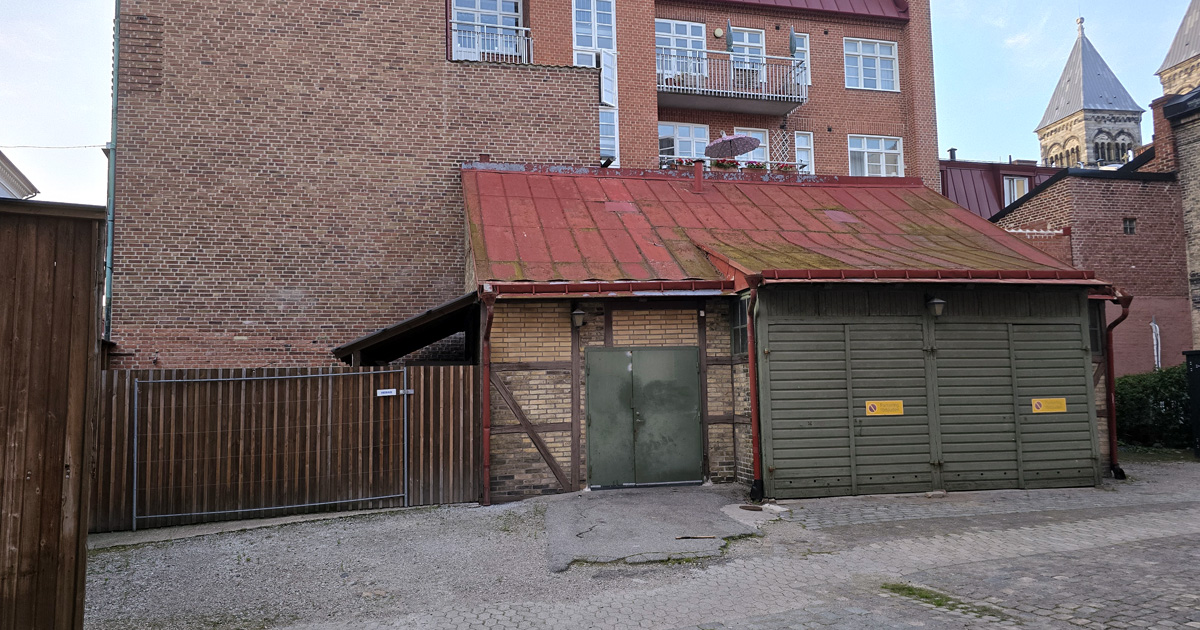 The outbuilding at the Large Grey Friars street (Stora Gråbrödersgatan), whose northern wall
can be seen to the left in the picture above from 1932.
The outbuilding at the Large Grey Friars street (Stora Gråbrödersgatan), whose northern wall
can be seen to the left in the picture above from 1932.
2) The Royal Estate in Lund
The Chronicle tells that Goldenharald had St. Clement's church built near "the prince's palace". Presumably it does not refer to some kind of castle, but to what must have been the first royal estate in Lund, and the "prince" refers to Goldenharald himself. This can be interpreted as the royal estate already existed when the church was built, sometime between the years 964 and 970. Perhaps the royal estate was established as early as 964 after Goldenharald invaded and took control of the western part of Scania. It is even possible that there was a royal estate in Lund before that. The chronicle describes that there was a Björn Jarl, who was called the king of Scania, before the Danish invasion of the western Scania.
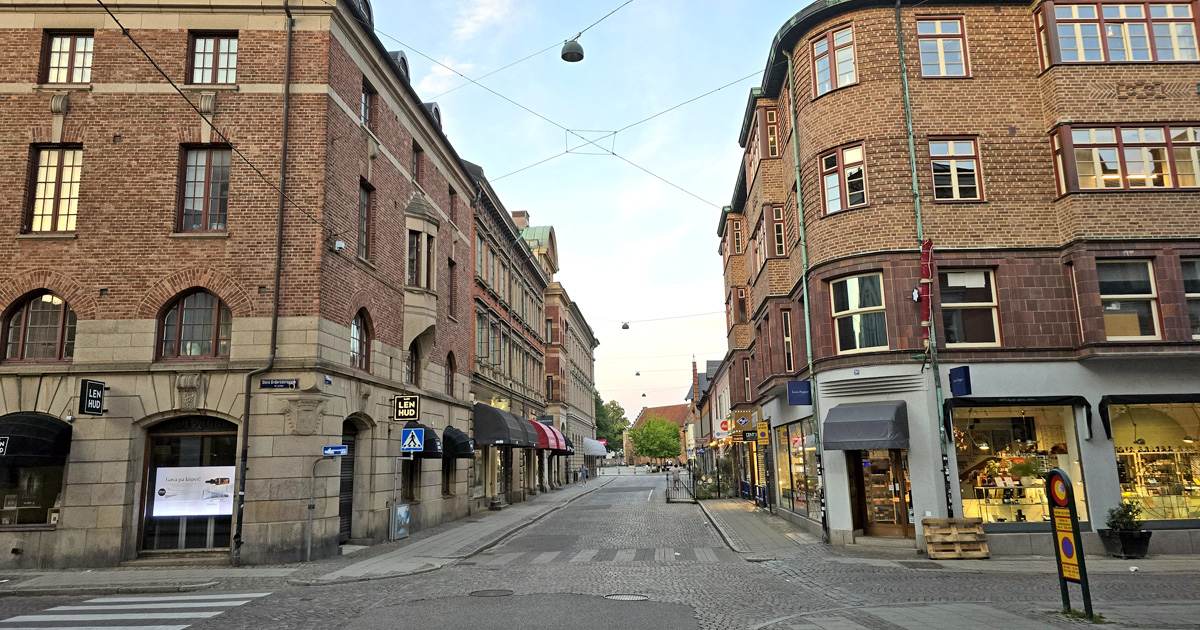 The royal estate should have been located in the neighborhood to the left in the picture or
even further away in to the right.
The royal estate should have been located in the neighborhood to the left in the picture or
even further away in to the right.
Since the church was built near the royal estate, the original royal estate should have been located in the southern part of the block north of the church, or east of the church, the places marked with (2) in the map below. It has long been assumed that the entire area marked (A), including the area marked (B), was set aside for the royal estate when the city area of Lund was established, which, according to the Chronicle, was around the year 987.
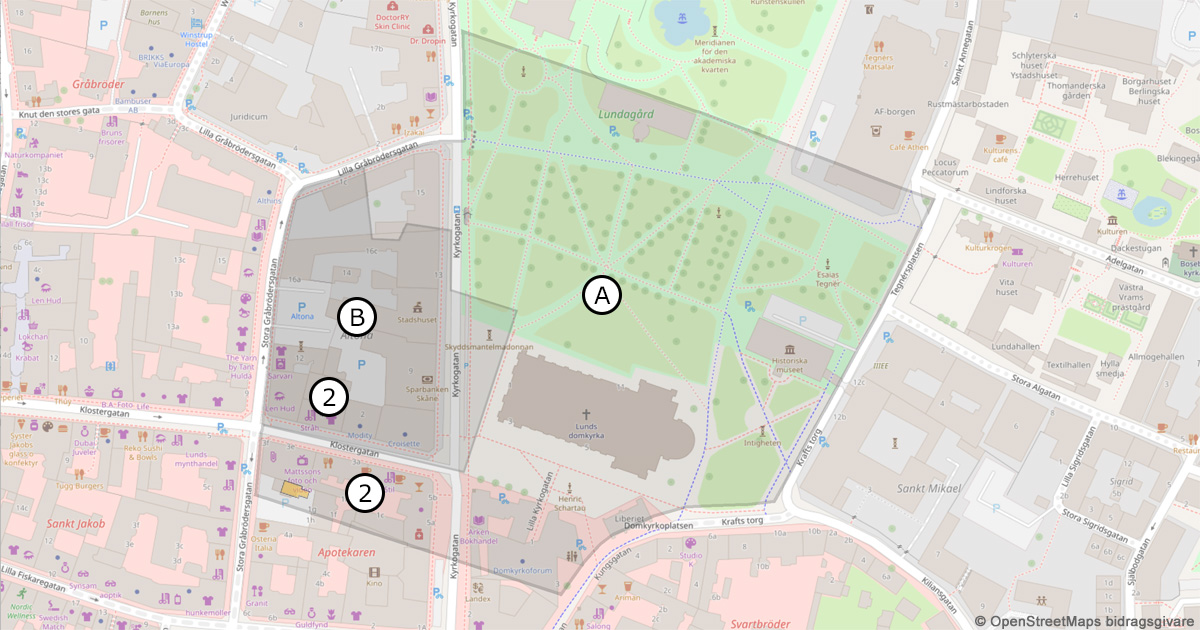 The royal estate area in different times during the viking age Lund.
Around year 1030, during the time of king Canute the Great, some kind of monastery activity seems to have been established where the Lund Cathedral is today. When Lund became an archbishopric in 1103, the area where the park Lundagård is now was set aside for the archbishop's residence. The area marked (B) was then what remained of the royal estate until 1375 when Queen Margareta I, donated it to the cathedral chapter to finance an annual mass for her father, King Valdemar Atterdag, who died that year. Even though there was a royal estate in Lund for over 400 years, very little is known about it.
3) The first residence of the cathedral school
At the intersection of Cloister Street (Klostergatan) and Church Street (Kyrkogatan) there was a small building which was demolished when Church Street was pass through in 1702. It was probably built around 1030, during the time of king Canute the Great and has been referred to as King Canute the Great's treasury. The building probably belonged to the royal estate from the beginning, and there is also said that there was a tower building next to, possibly a gate tower as part of the royal estate. The building probably became the first residence of the cathedral school when it was formed, at the same time as the cathedral chapter and a canonical community, through King Canute the Holy's deed of gift on May 21, 1085.
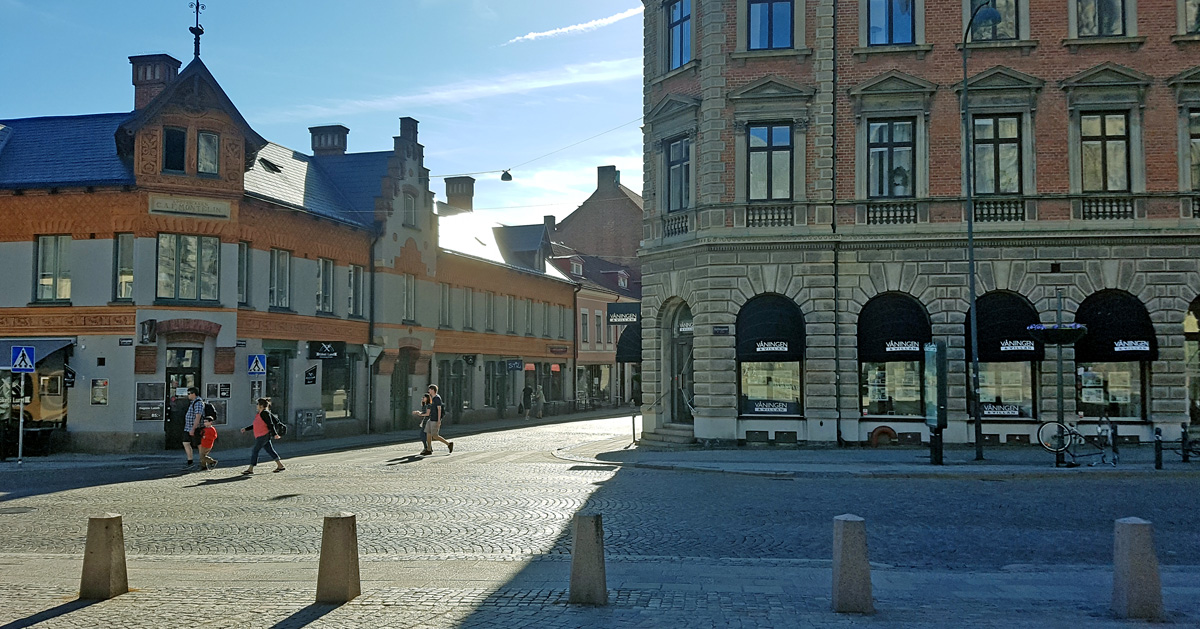 In the intersection of Klostergatan and Kyrkogatan, the first building of the cathedral school
was located. The first mint may have been in the block to the left in the picture, and the
block to the right belonged to the royal estate until 1375.
In the intersection of Klostergatan and Kyrkogatan, the first building of the cathedral school
was located. The first mint may have been in the block to the left in the picture, and the
block to the right belonged to the royal estate until 1375.
The building was probably the residence of the cathedral school until 1470 when it moved into a larger building north of and partly across the current Church Street (Kyrkogatan). During the latter part of the middle ages, the building was called the "Old School". The Cathedral School still exists, without interruption in teaching, and is now the high school Katedralskolan in Lund.
The building was 16 meters long and 8 meters wide and originally had one-meter-wide walls, built with sandstone squares without plinths. This is an older building technique, why it has been assumed that it may have been built around 1030. That is at the same time as St. Clement's church of stone and the building for the monastery where Lund Cathedral is located now was built. The house was rebuilt with bricks sometime in the middle ages. The map below shows where the building was in relation to the current streets.
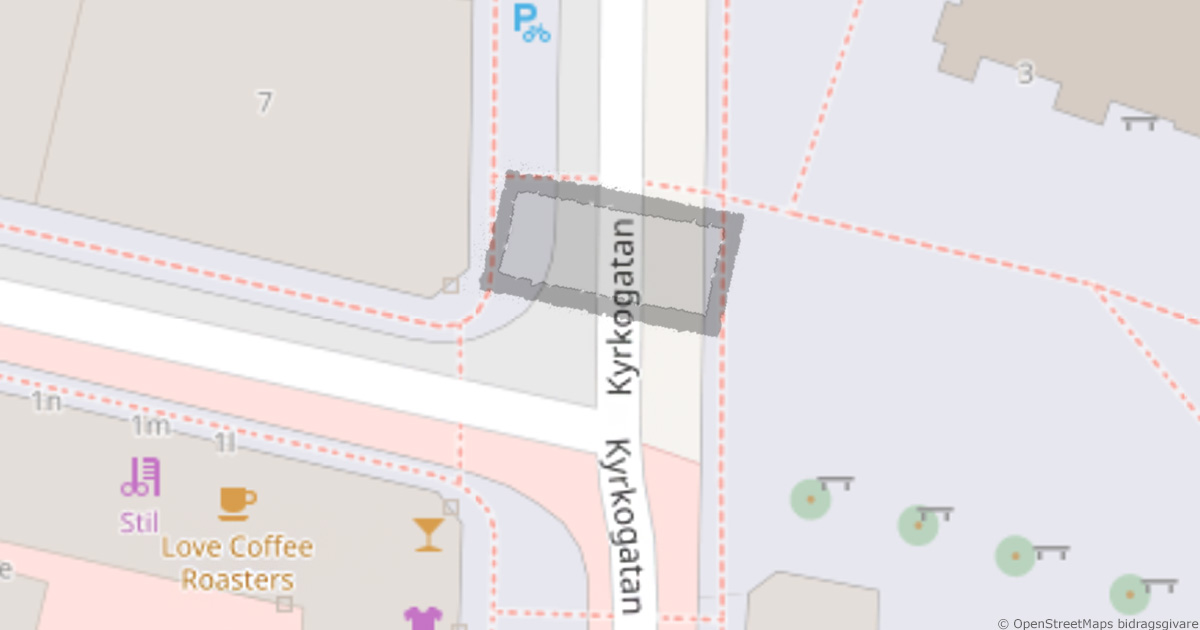 The first cathedral school building as it was located over the current Kyrkogatan until 1702.
The building was found in 1954 and was excavated archaeologically in August 2024. Its foundation walls are still under the street.
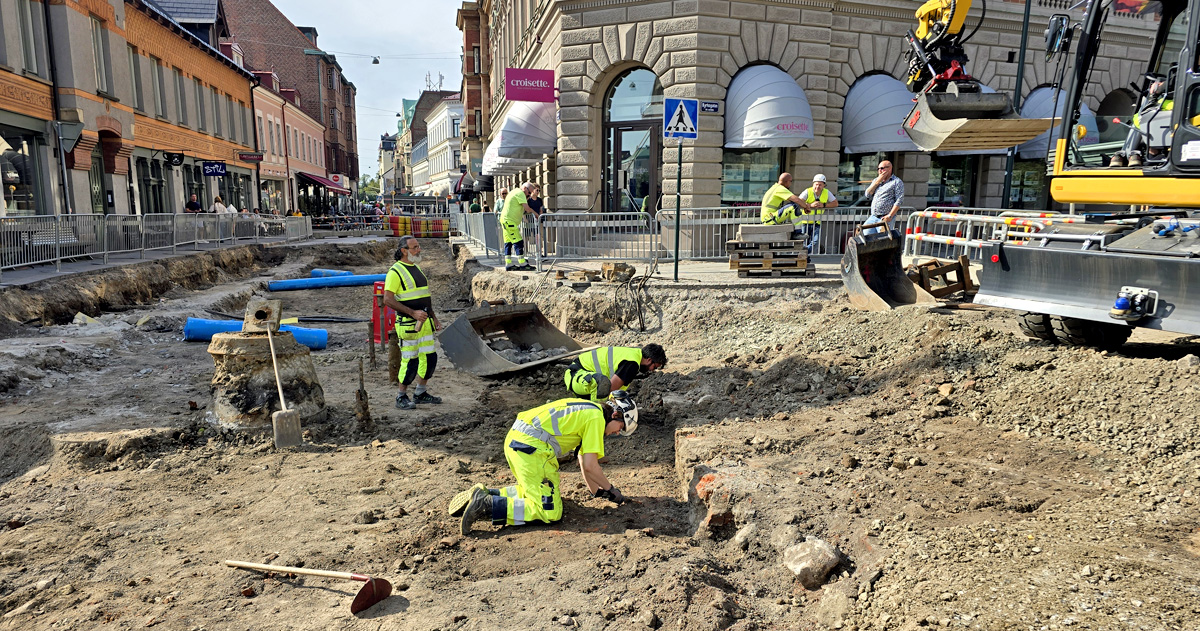 Archaeological investigation in August 2024, part of the cathedral school southern foundation wall can be seen.
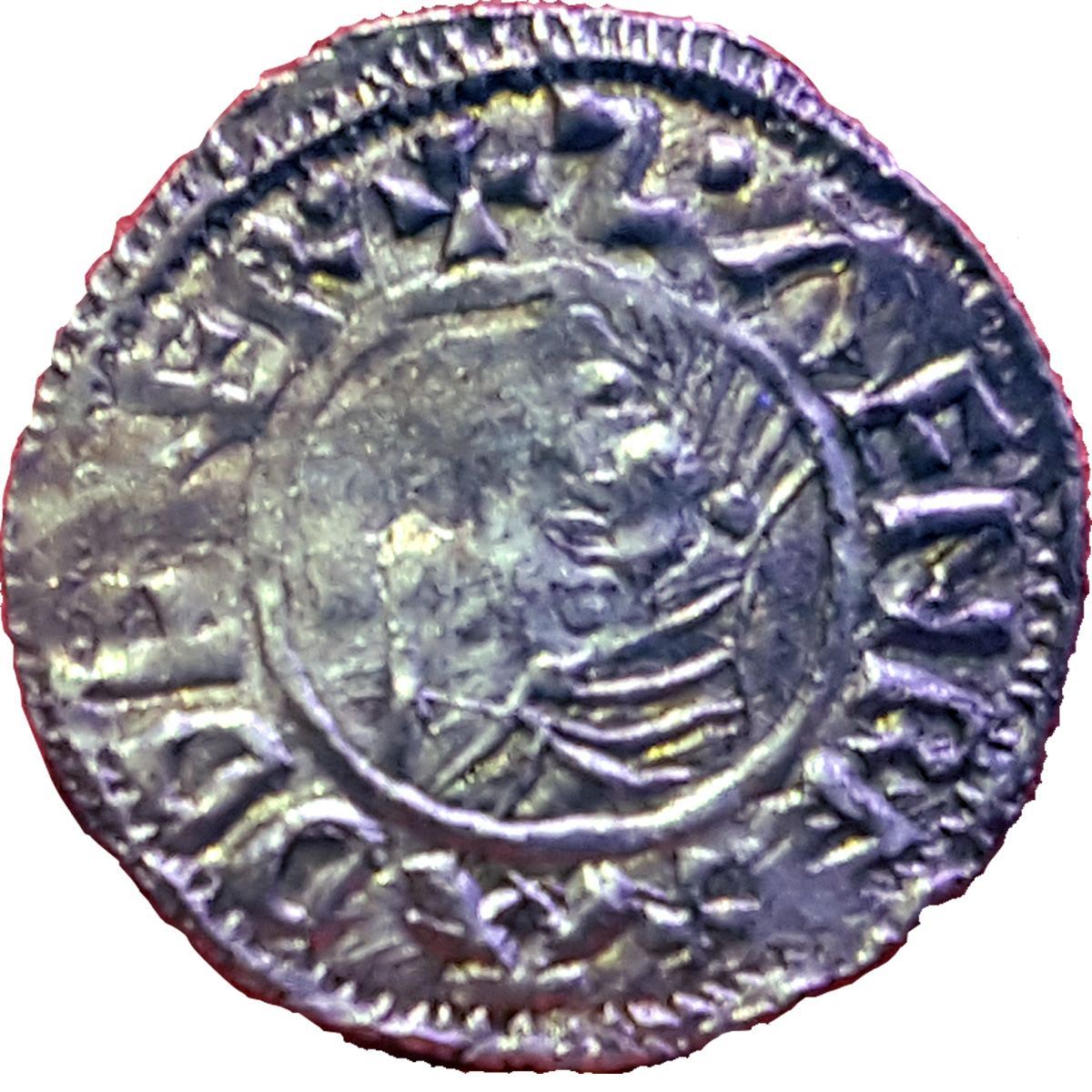 King Sweyn Forkbeard's coin.
It is possible that coins began to be minted in Lund already during Harald Bluetooth's time as
king. But, during Sweyn Forkbeard's time as king, Lund became Denmark's main mint for a very
long time. The location of the oldest mint has not been found but was probably somewhere
within the area of the royal estate. One location that has been proposed is in the block south
of the old cathedral school building, i.e., in the eastern part on the south side of Cloister
Street (Klostergatan), which is east of St. Clemens Church, where the pharmacy the Swan
(Svanen) is now located.
King Sweyn Forkbeard's coin.
It is possible that coins began to be minted in Lund already during Harald Bluetooth's time as
king. But, during Sweyn Forkbeard's time as king, Lund became Denmark's main mint for a very
long time. The location of the oldest mint has not been found but was probably somewhere
within the area of the royal estate. One location that has been proposed is in the block south
of the old cathedral school building, i.e., in the eastern part on the south side of Cloister
Street (Klostergatan), which is east of St. Clemens Church, where the pharmacy the Swan
(Svanen) is now located.
Around the year 995, the first Danish coins with an inscription were stuck here in Lund, to King Sweyn Forkbeard. On them it was written SVEN REX AD DENER, which means "Sweyn king of Denmark". On the other side it said GODWINE M-AN DENER which means "Godwine minter in Denmark". He was probably a mint master Sweyn Forkbeard brought to Lund from England.
4) King Canute the Great's monastic activities
Under the floor of Lund Cathedral, mainly in the north aisle, there are remains of a large stone building. The building technique suggests that it may have been built as early as around 1030. There is still not much known about what the building was used for or what it looked like, because it is difficult to access to examine it, and many theories have been put forward. What seems most likely is that it could have been some kind of early monastic activity with a cloister church which was built around the year 1030, during the time of King Canute the Great. Perhaps it was called "St. Laurentius' brotherhood" or something similar. The cemetery on the south and east sides of the Lund Cathedral, with graves from around 1030, as well as the square-crucifix at the cemetery's border with Stortorget, may have belonged to this activity.
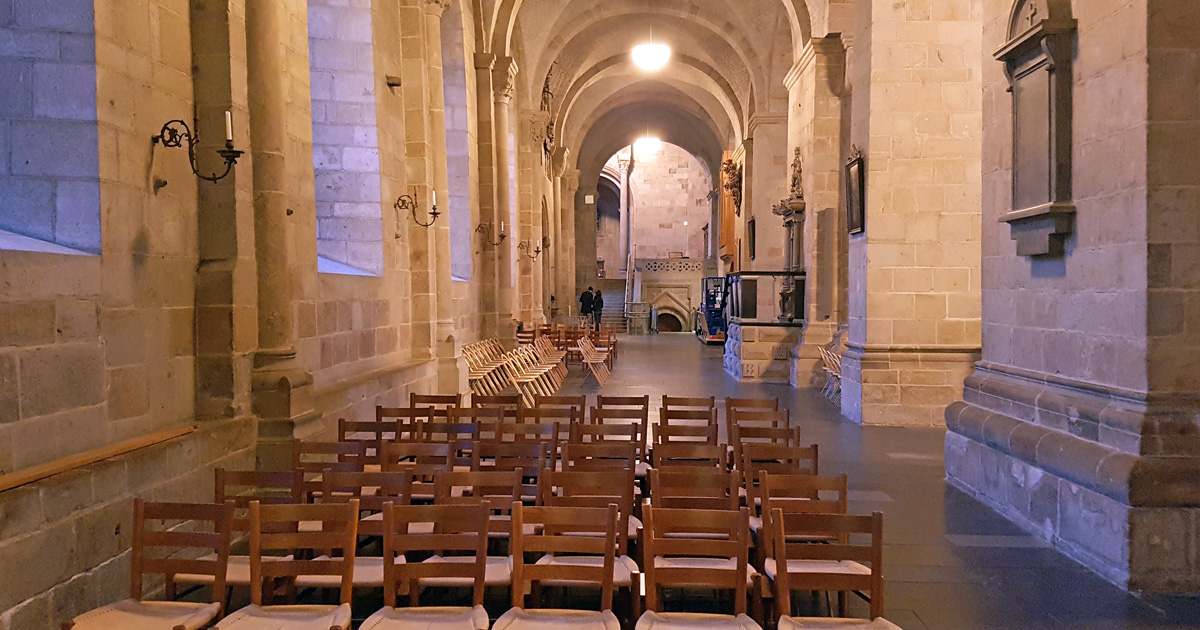 The north aisle of Lund Cathedral, where remains of the monastery building from around 1030
are hidden under the floor.
The north aisle of Lund Cathedral, where remains of the monastery building from around 1030
are hidden under the floor.
There are some written notices suggesting that there may have been some kind of monastic activity. When the south side altar in the crypt was inaugurated January 11, 1131, "venerable relics whose names are known only to God, and which have been transferred from the altar of the old monastery church" are mentioned. In King Canute the Holy's deed of gift on May 21, 1085, it is written "But royal rights attached to the said land shall in all cases belong to the priest and the other brothers who serve God in this place".
5) The Square-crucifix at Lilla Kyrkogatan
The passage from The Cathedral Plaza (Domkyrkoplatsen), passing the yellow brick building built in 1868, to the north entrance of the Cathedral Forum (Domkyrkoforum), which was built in 2010-2011, is a remaining of Small church Street (Lilla Kyrkogatan). It went up to the Main Square (Stortorget) until the large brick building on the south side of the Cathedral Forum was built in 1915.
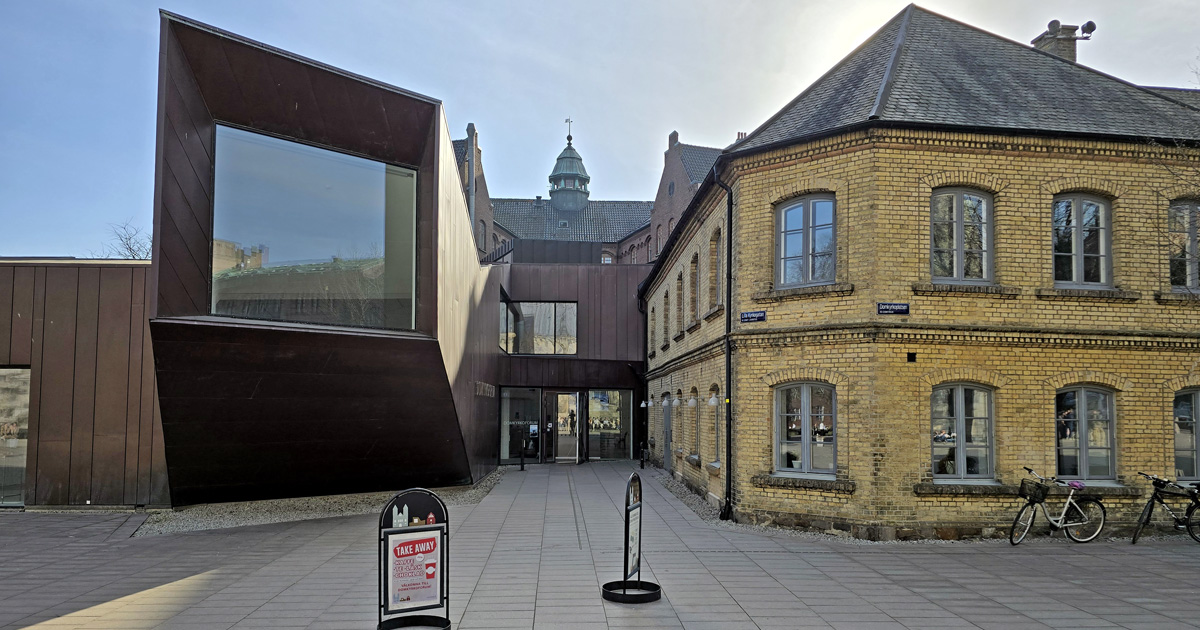 A remnant of Small Church Street (Lilla Kyrkogatan) in Lund that previously went all the way
to the square.
A remnant of Small Church Street (Lilla Kyrkogatan) in Lund that previously went all the way
to the square.
In the middle ages there was a gate at the border of the square to the cathedral area. What the street was called then is not known, but after the Reformation it was called Kirkestrædet. When the Main Square (Stortorget) was established, according to the Chronicle around the year 987, it stretched further north than today, and its northern boundary was roughly where the north side of the brick building and the south side of the Cathedral Forum are now.
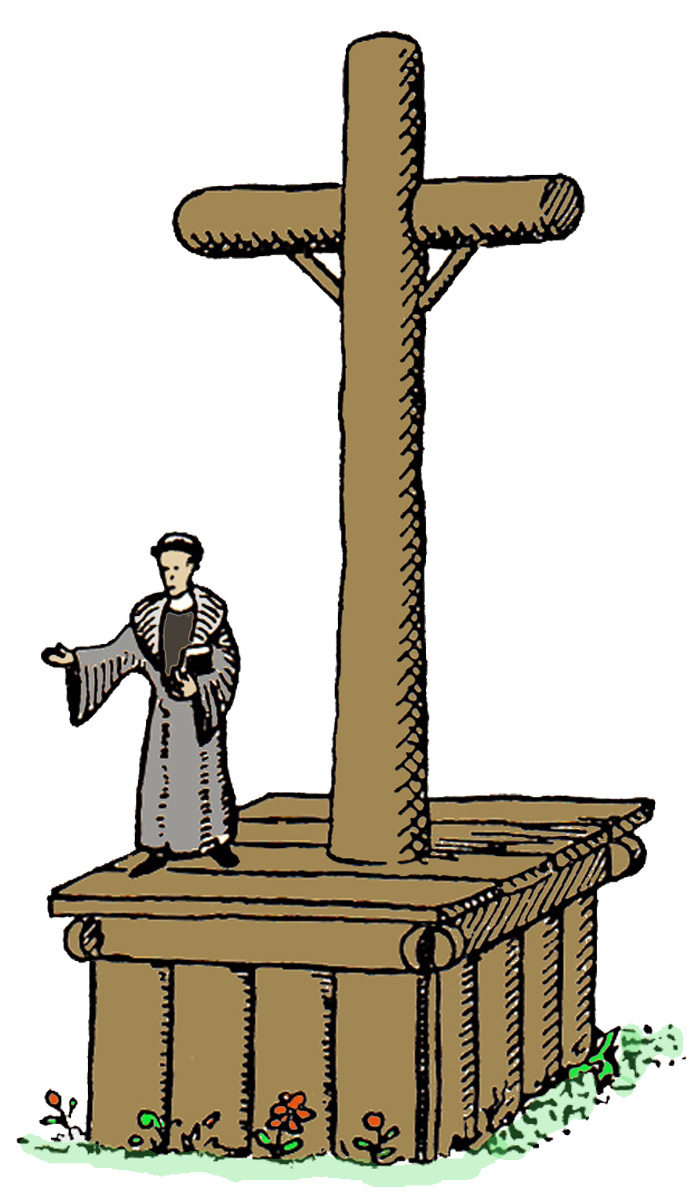 The Square-crucifix as it may have looked.
On the east side of Small Church Street (Lilla Kyrkogatan) at the border of the square, to the
left in the picture above, the remains of a 1.5 by 1.5 meter large and up to three-meter-high
platform were found in 1944. It was made of oak, filled with large stones and in the middle,
there were remains of a pole with a diameter of 62 centimeters. The pole was buried about 1.5
meters below ground level.
The Square-crucifix as it may have looked.
On the east side of Small Church Street (Lilla Kyrkogatan) at the border of the square, to the
left in the picture above, the remains of a 1.5 by 1.5 meter large and up to three-meter-high
platform were found in 1944. It was made of oak, filled with large stones and in the middle,
there were remains of a pole with a diameter of 62 centimeters. The pole was buried about 1.5
meters below ground level.
The city antiquarian at the time, Ragnar Blomqvist, interpreted it as a high crucifix which may have symbolized that the king guaranteed the peace of the square. Ragnar Blomqvist made the illustration seen in the picture. The wood in the platform has been dated dendrochronologically, with the growth rings in the wood, to around the year 1042. This means that it was raised about 40 years before the Lund Cathedral began to be built. Therefore, the square-crucifix may have belonged to the building that was there before the cathedral began to be built, which may have been some kind of monastery activity.
In the middle ages, the high crucifix may have been the starting point for ecclesiastical processions, and perhaps a place where agreements were made and ecclesiastical judgments were proclaimed and enforced.
6) The fortress (Trelleborgen) in Lund
It has long been assumed that there must have been something in the way when King Street (Kungsgatan) in Lund, which continues with Killians Street (Kiliansgatan), was drawn, because they form a semicircle. As early as 2002, a Danish archaeologist suggested that the streets could have been drawn around a round Viking fortress of the type usually called Trelleborg. It is not archaeologically proven that there was a fortress (Trelleborg) in the block surrounded by the streets, but a circular stream that was found along Kiliansgatan could be interpreted as an archaeological trace of a moat which surrounded the fortress and constitutes indirect evidence that it existed.
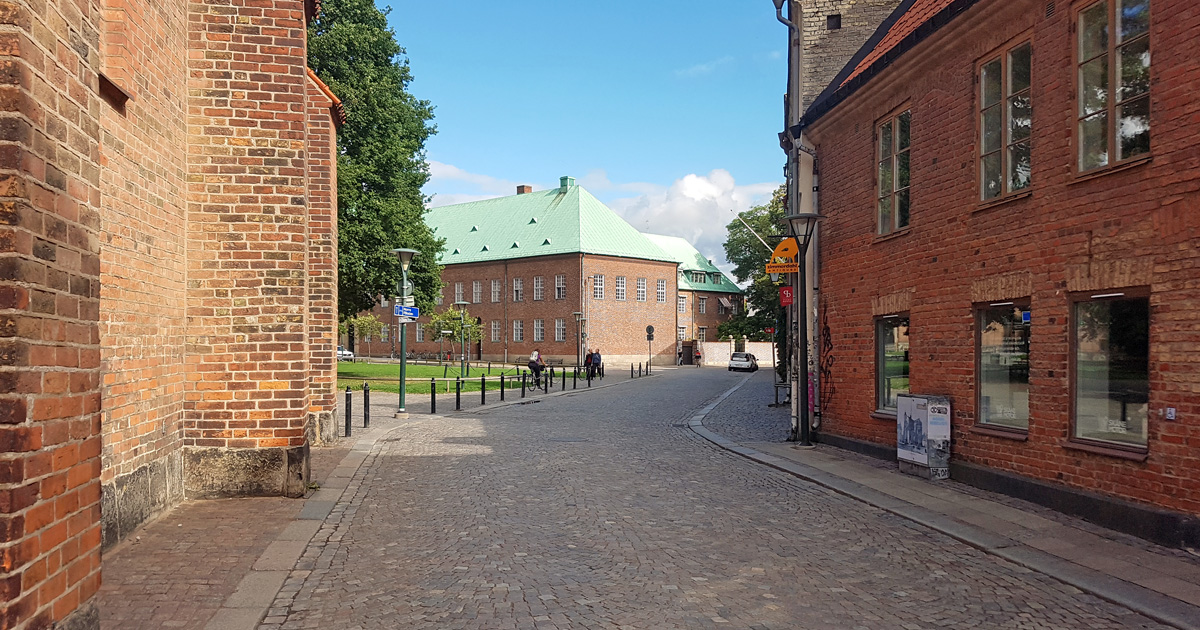 King Street (Kungsgatan) in Lund, which continues with Killian Street (Kiliansgatan), further
away in the picture, forms a semicircle.
King Street (Kungsgatan) in Lund, which continues with Killian Street (Kiliansgatan), further
away in the picture, forms a semicircle.
According to the Chronicle, there was a fortress in Lund, which was built by Toke Gormsson, Harald Bluetooth's younger brother and tributary king in Scania, sometime between the years 971 and 973. Princess Helga of Kyjiv, who ruled over Lund, ordered that the walls should be torn down after Toke Gormsson's death, on 10 August 986, but the moat was left for the time being. The chronicle also tells that Helga ordered the houses, roads, gates and square to be built as in her beloved city in Greece, where she spent many years as a child. Which Greek city is not specified. Kungsgatan and Kiliansgatan must therefore have been drawn around the year 987, around the moat that still existed at that time.
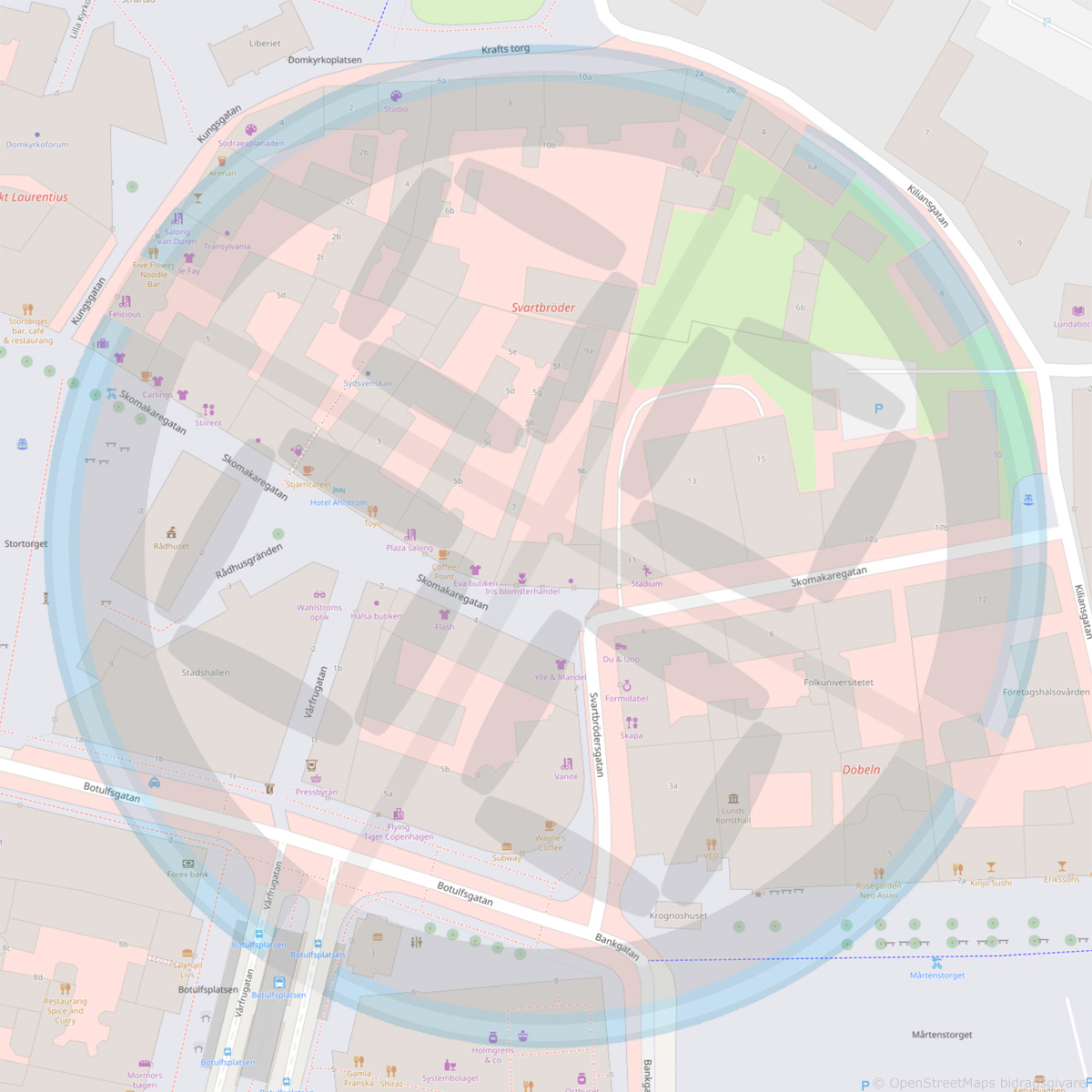 The Fortress (Trelleborgen) as it may have been located.
Since no archaeological traces of the fortress have been found, it is not possible to say what
it looked like. If it was built like other fortresses, it might have looked like at the map to
the right. The fortresses used to be built with a high embankment, often reinforced with a
wooden palisade and a moat in the outside, the moat could be drained or contain water. They
had four openings and streets that ran like a cross through the fortress. Inside, there were
large halls in groups of four, where each building could accommodate at least 60-70 people.
Such as the fortress is drawn on the map, the diameter may have been 160-180 meters and could
accommodate about 1,000 Vikings (meaning solders).
The Fortress (Trelleborgen) as it may have been located.
Since no archaeological traces of the fortress have been found, it is not possible to say what
it looked like. If it was built like other fortresses, it might have looked like at the map to
the right. The fortresses used to be built with a high embankment, often reinforced with a
wooden palisade and a moat in the outside, the moat could be drained or contain water. They
had four openings and streets that ran like a cross through the fortress. Inside, there were
large halls in groups of four, where each building could accommodate at least 60-70 people.
Such as the fortress is drawn on the map, the diameter may have been 160-180 meters and could
accommodate about 1,000 Vikings (meaning solders).
The fortresses (Trelleborgar) were built in strategic locations for Harald Bluetooth's Vikings, in the sense of warriors or soldiers, so they were used as a kind of military garrisons. The fortress, which was probably here in Lund, may then have been used to take control of the area. In other places where fortresses have been found, there has also been a church dedicated to St. Clemens, even so here in Lund. The church was located only about 150 meters northwest of the presumed fortress.
7) Church of John the Baptist
During excavations on the north side of Lund Cathedral in 1908 and 1941-1942, graves with ancient log coffins were found. In 2012, some of the log coffins were dated. The oldest was dated to the winter 979–980, which means that the cemetery must have been built in the Viking Age, during Harald Bluetooth's time as king of Denmark. This is archaeological evidence implying that Lund must have been built earlier than around the year 990, as previously assumed. No remains of the church have been found, but since a large part of the surface has not been investigated archaeologically, it may be possible to find archaeological traces of a church during a major archaeological investigation at the site.
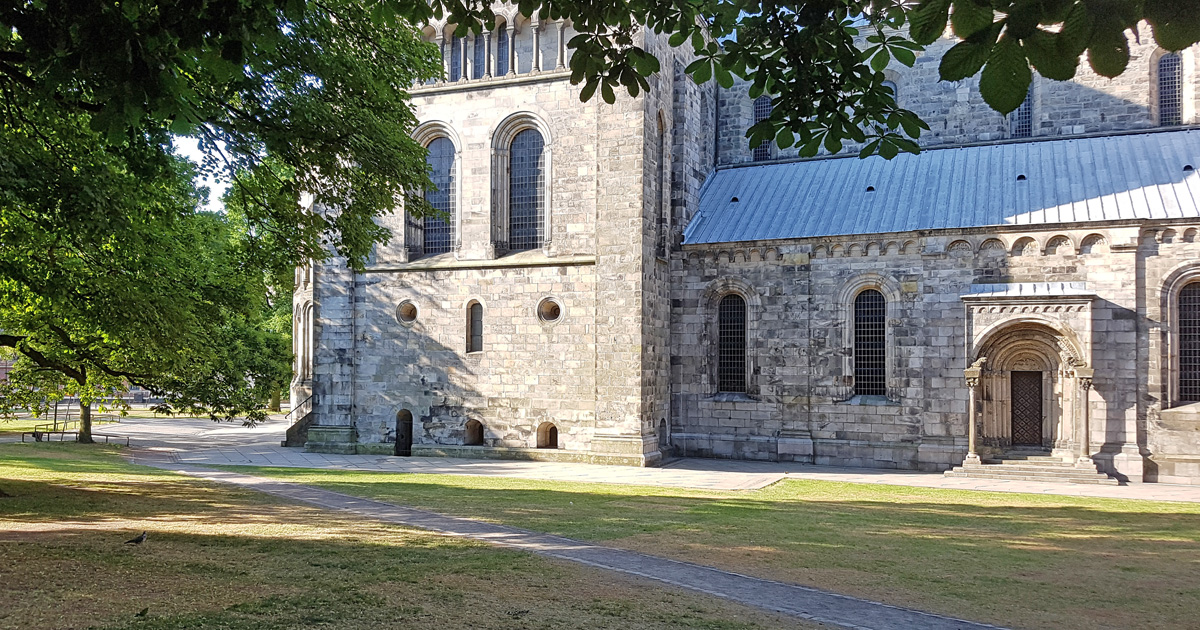 The place where the cemetery of St. John the Baptist's church was located in the 970s.
The Chronicle tells that the church was built in 975 by Toke Gormsson, who was Harald Bluetooth's younger brother and tributary king of Scania. The construction was done to fulfill a promise Toke made the year before, to build a church if everyone survived an attack from Hakon Jarl, who was Harald Bluetooth's tributary king in Norway. The Chronicle's narrator, the priest Avico, says that he sanctified the cornerstone, on which it was carved that Toke had built the church. That cornerstone is a runestone which was found in a fence at Large Cross Street (Stora Tvärgatan) here in Lund in the 1790s. Today it is walled into the doorway to the bishop's residence in Copenhagen. Part of the runestone is missing, but the text that is on what is left means "Toke had the church made and ...".
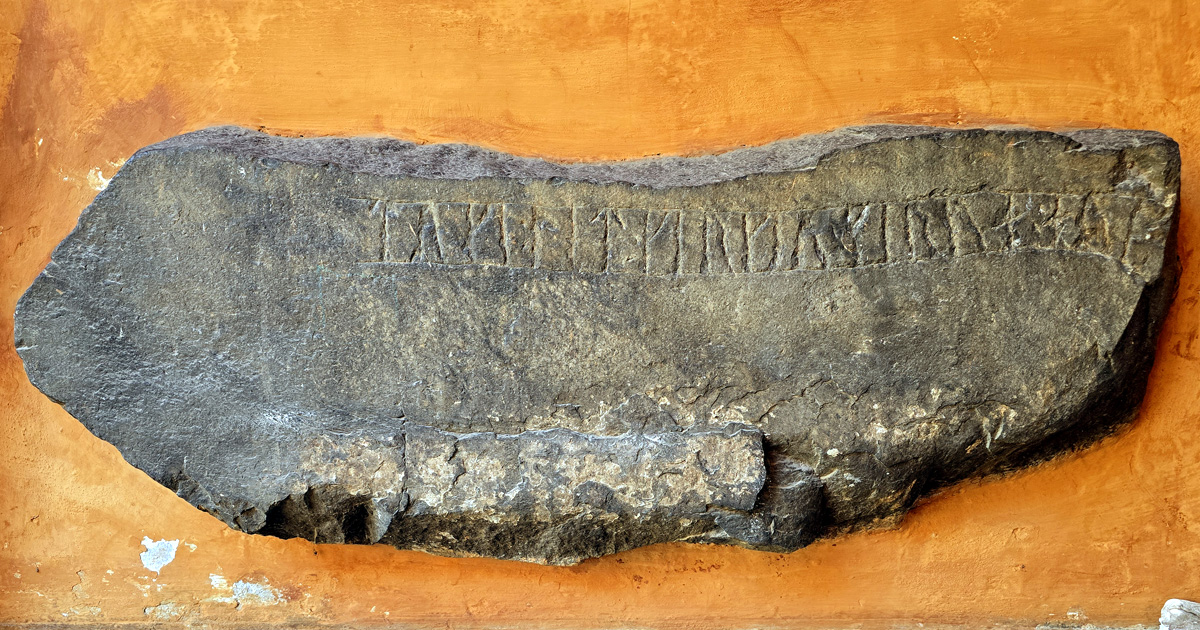 Runestone found in Lund that tells about the church Toke Gormsson had built in 975.
The priest Avico also says that it was he who inaugurated the church and sanctified it to John the Baptist. In addition, three priests from the bishopric of Hamburg were sent to Lund to do missionary work. Based on the dating of the various graves found in connection with archaeological investigations, the cemetery seems to have been taken out of use around the year 1010.
8) The Hunnestad Monument
In the glazed entrance to the Historical Museum in Lund there are some runestones. They have become particularly interesting because of the Chronicle telling about the people mentioned on them. As a visitor, you can see the runestones without paying admission to the Historical Museum. It is good to be aware that the museum does not tell who the people mentioned were, but gives the impression that it is unknown, because they claim the Chronicle as a forgery. The information in this visitor's guide therefore differs from the information provided by the Lund Historical Museum.
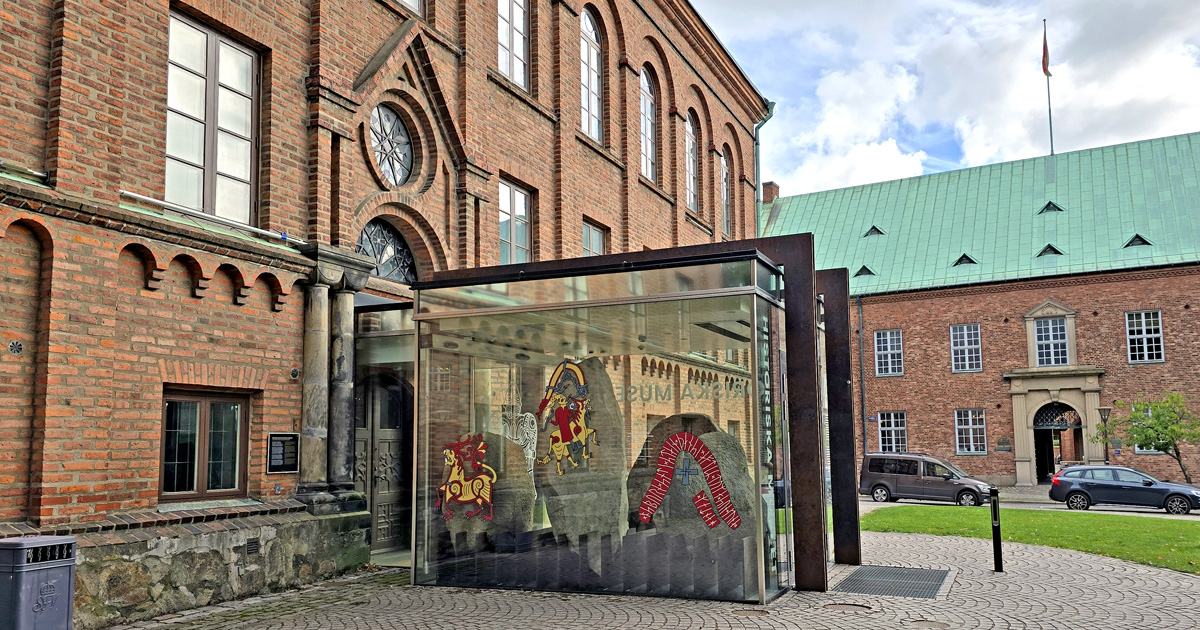 The runestones from the Hunnestad Monument in the glazed entrance to the Lund History Museum.
The Hunnestad Monument originally consisted of eight runestones, four of which have been found and now can be seen here in Lund. On two of the runestones there are runes that tell about Toma and his father Kunar Hantar or Kunar Handrian, which was his Christian name. The Chronicle tells of how they, their brothers and men returned with great wealth to Scania in 989, after serving 20 years in the Eastern Roman emperor's Varangian Guard in Constantinople, today's Istanbul.
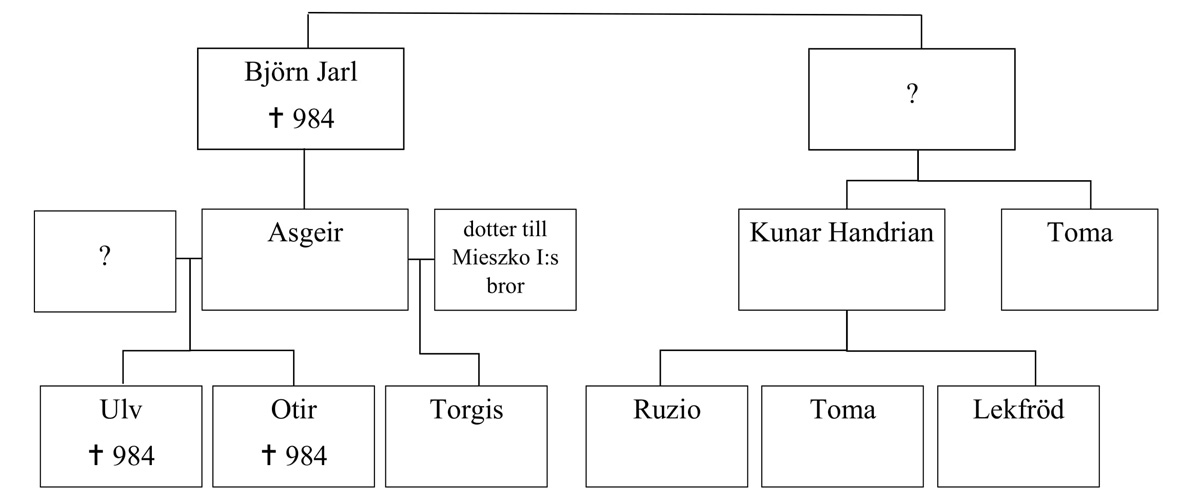 The family tree of Kunar, his uncle Björn Jarl and their descendants.
The men disembarked just west of Ystad. They discovered that most of their families, many of whom were descendants of their uncle Björn Jarl, had been killed by Harald Bluetooth's younger brother and tributary king of Scania, Toke Gormsson, in 983. Their property had been taken over by strangers, and they were treated hostilely and had to flee. They then went ashore in a small fishing village that they named Symitharos, which is today's Simrishamn. They got the villagers on their side and reclaimed their lost possessions. Then they marched towards Lund to administer justice. Kunar, the oldest of the brothers, was appointed as their leader.
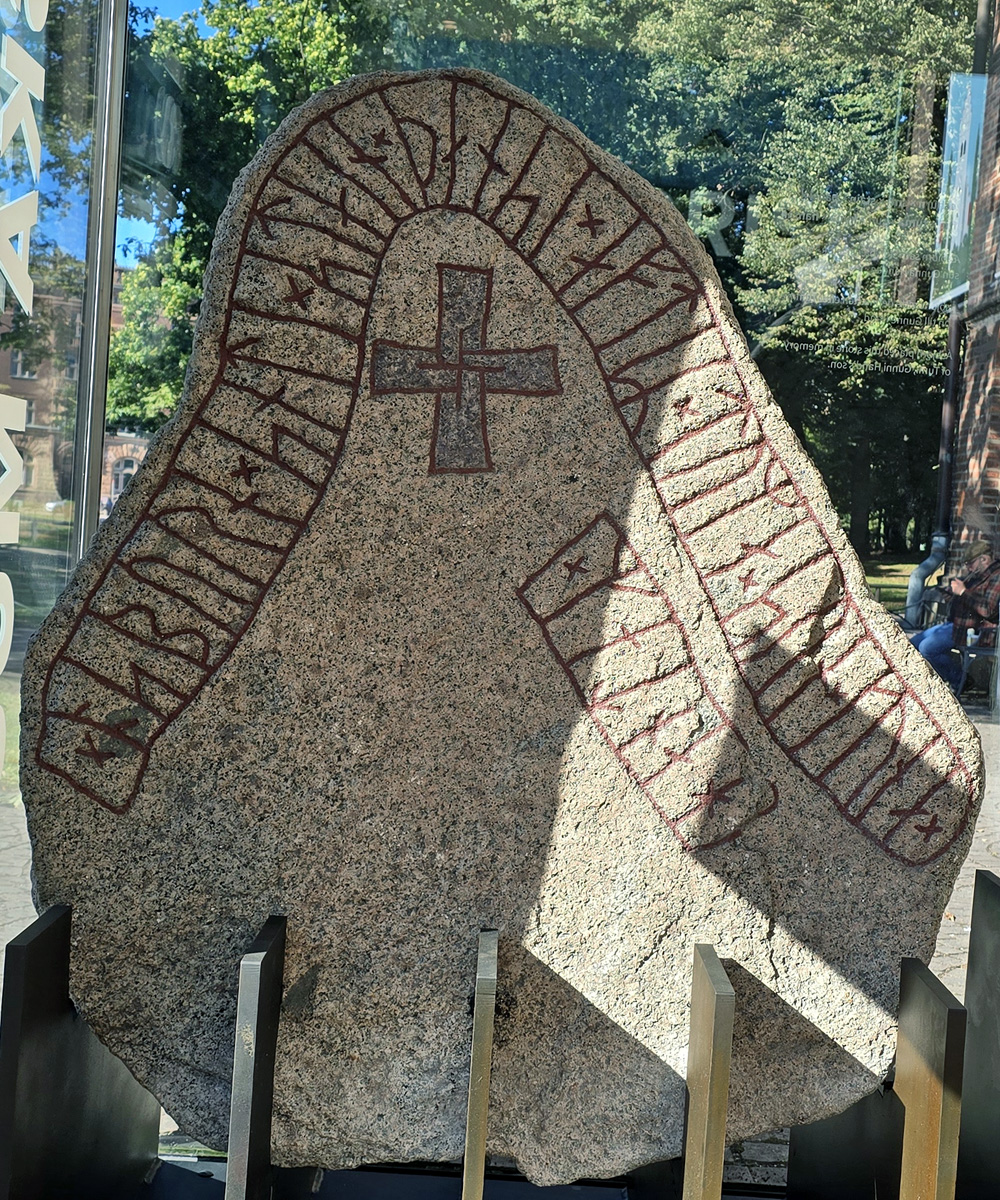 One of the runestones where Kunar and Toma are mentioned.
When they arrived in Lund, they set up their camp in what today is Uppåkra. In Uppåkra,
Princess Helga of Kyjiv, Toke Gormsson's widow who ruled over Lund, had recently built a
church to end the practice of pagan rituals that still were held there in secret. When Kunar
and his entourage arrived, Princess Helga sent word to Kunar to meet in negotiations at
Arendala court site instead of spilling Christian blood by resorting to battle.
One of the runestones where Kunar and Toma are mentioned.
When they arrived in Lund, they set up their camp in what today is Uppåkra. In Uppåkra,
Princess Helga of Kyjiv, Toke Gormsson's widow who ruled over Lund, had recently built a
church to end the practice of pagan rituals that still were held there in secret. When Kunar
and his entourage arrived, Princess Helga sent word to Kunar to meet in negotiations at
Arendala court site instead of spilling Christian blood by resorting to battle.
After four days, the negotiations ended with Scania being divided into two parts. The eastern part was to be ruled by Kunar's son Toma. He settled in a place where three main roads met where he rebuilt a village he called Tomathorp, today's Tommarp. The central and western parts of Scania were to be ruled by Torgis, the only one not killed by Toke Gormsson, with Lund as his seat and capital of Scania. King Sweyn Forkbeard had sovereignty over all parts of Scania, but the people were to be ruled by Toma and Torgis. To consolidate the agreement, Torgis married Princess Helga.
Torgis, who married Princess Helga, later raised the tall runestone Lundagårdsstenen, which you can read about in point (10) below. Lundagårdsstenen has also become particularly interesting because the chronicle "Gesta Wulinensis ecclesiae pontificum" tells about those mentioned on it.
9) The Runestone hillock
The Runestone hillock is a monument located about 150 meters north of the Lund History Museum. It was established in 1868 as a gift from the Association for Scanian Antiquities and History to Lund University 200th anniversary. The six runestones standing around the small hillock were carved during the viking age, in the late 900s and early thousands. They have no known connection to Lund's viking age history, which is mainly because we do not know what they are about. However, there is an interesting interpretation for the stone called the Valleberga stone. According to this interpretation, the men mentioned, Manne and Svenne, may have been personal soldiers or bodyguards in King Canute the Great's court in England, which was called Tingalidet. The visitor's guide about the Runestone Hillock tells more about the six runestones.
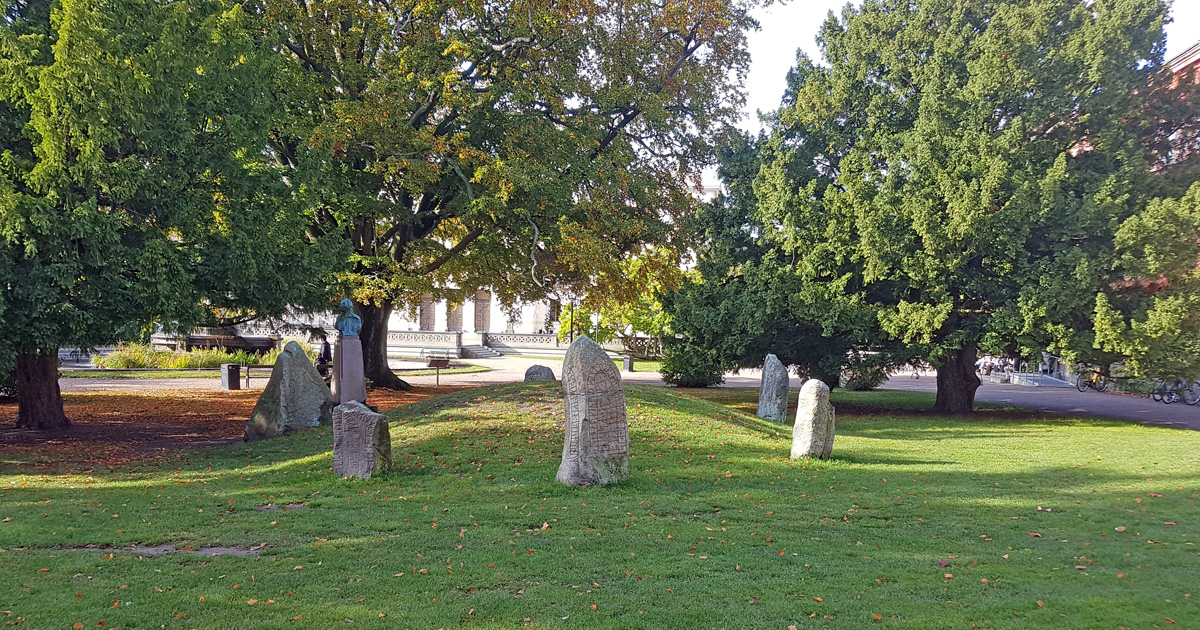 The Runestone hillock with its six runestones. The runestone in the middle in the picture is
the so-called Valleberga stone.
The Runestone hillock with its six runestones. The runestone in the middle in the picture is
the so-called Valleberga stone.
10) The Lundagård runestone
The Lundagård runestone, which is believed to be the tallest runestone ever found in Scandinavia, has become a particularly interesting remain from the viking age Lund because the Chronicle tells about the people mentioned. The runestone is currently placed in the entrance hall to the University Main Library , just over 500 meters north of the Historical Museum. There is a historical connection between the Lundagård runestone and the runestones from the Hunnestad monument, which stand in the glazed entrance to the Lund History Museum. Torgis, who raised the Lundagård runestone, was a relative of Kunar and Toma, who are some of those mentioned on the runestones on the Hunnestad monument. Torgis was involved in the events in Lund in 989, together with among others, Kunar and Toma, who you can read about under point (8) about the Hunnestad monument.
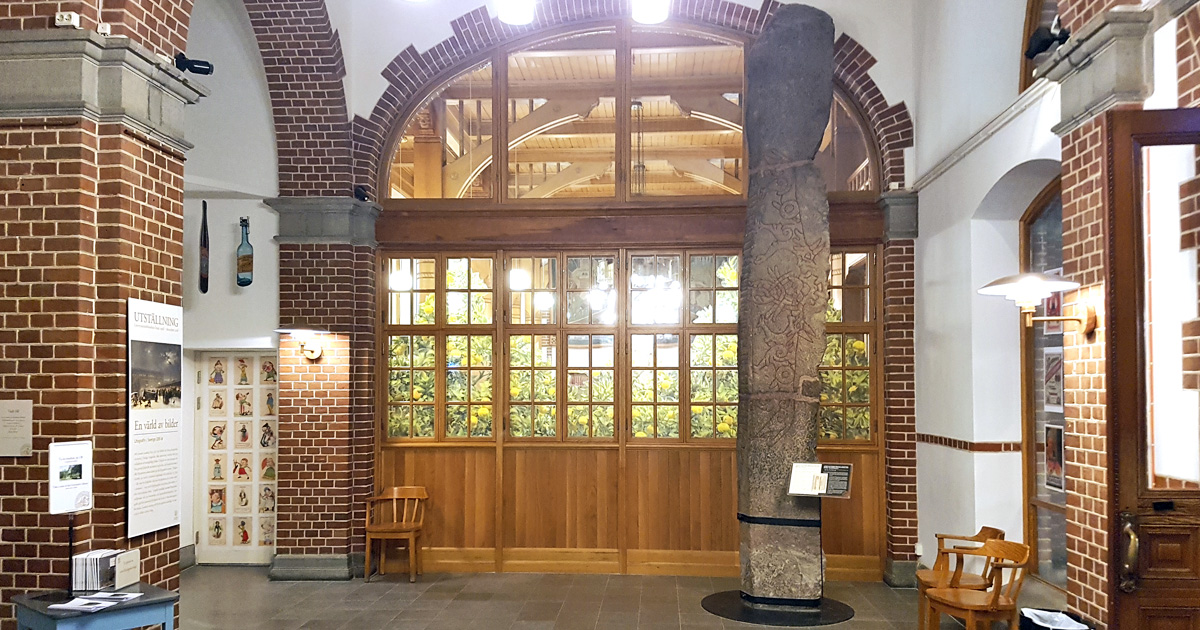 The tallest runestone in the Nordic countries, the Lundagård runestone, in the entrance hall
to the University Main Library.
The tallest runestone in the Nordic countries, the Lundagård runestone, in the entrance hall
to the University Main Library.
Along the narrow sides there is a runic inscription that begins and ends with crosses on each side, which shows that the people mentioned were Christians. The runic inscription means roughly
Torgis, son of Esge Bjorn's son, raised these stones after his two brothers, Olof and Ottar, good land holders.
The Chronicle tells who the people mentioned were. In the family tree under item (8) about the Hunnestad monument, you can see their relationship with each other. Torgi's father's name was Asgeir and Björn was Torgi's grandfather. Torgi's brothers were named Olof and Otir. In the Chronicle, Björn is mentioned as a jarl, and is said to have been the king of Scania until year 964. At that time, Björn Jarl was banished from the western part of Scania by Harald Bluetooth's nephew Goldenharald, who became the tributary king of Scania.
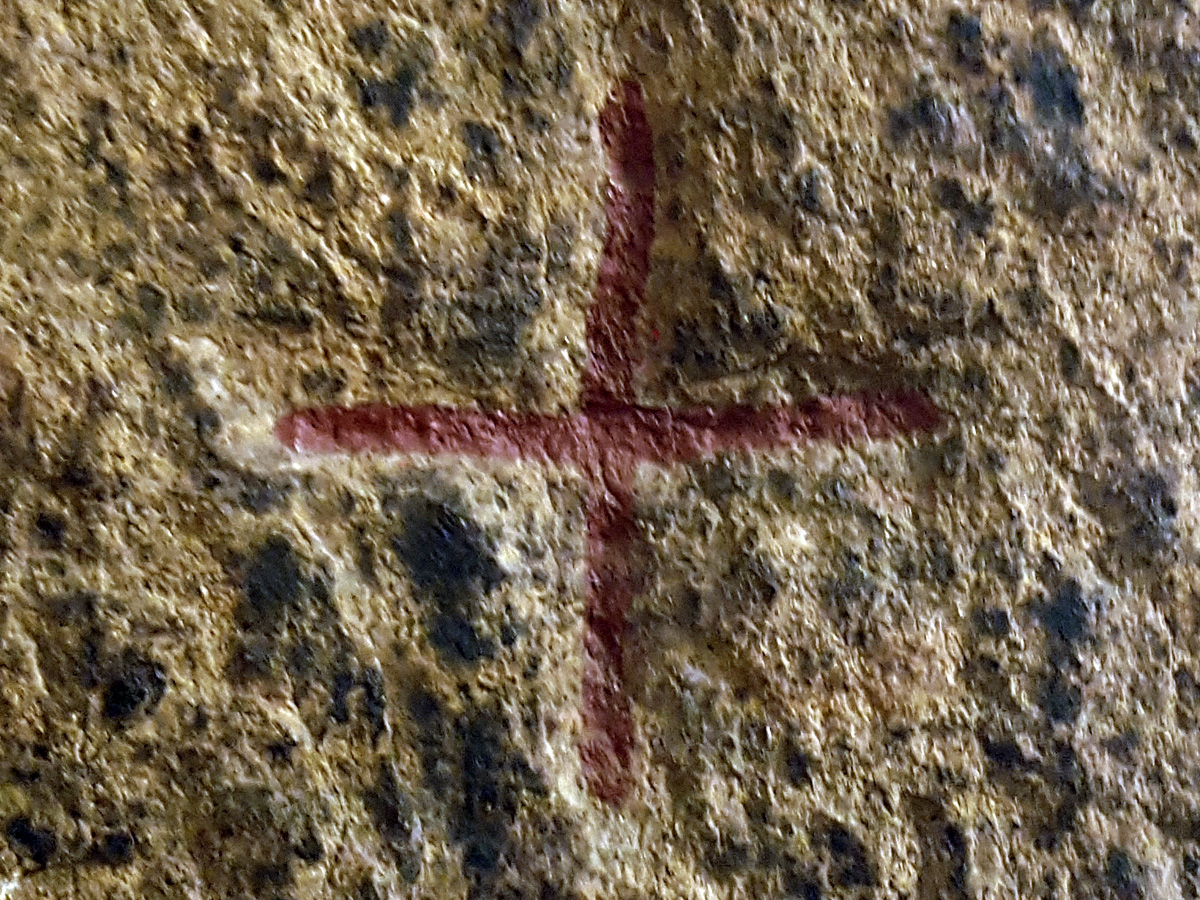 The crucifix at the bottom of the Lundagård runestone side facing the room.
From the year 971, Harald Bluetooth's younger brother Toke Gormsson was the tributary king of
Scania. He was deposed in 983 after being disgraced by Harald Bluetooth. Björn Jarl was then
reinstated as king of Scania. At the same time, Harald Bluetooth handed over the regency of
Denmark to Sibir Fultarsson, who then reinstated Toke Gormsson the following year. Toke
Gormsson met Björn Jarl in battle at Halör, at today's Höllviken, where Björn Jarl took his
own life after being left alone on the battlefield.
The crucifix at the bottom of the Lundagård runestone side facing the room.
From the year 971, Harald Bluetooth's younger brother Toke Gormsson was the tributary king of
Scania. He was deposed in 983 after being disgraced by Harald Bluetooth. Björn Jarl was then
reinstated as king of Scania. At the same time, Harald Bluetooth handed over the regency of
Denmark to Sibir Fultarsson, who then reinstated Toke Gormsson the following year. Toke
Gormsson met Björn Jarl in battle at Halör, at today's Höllviken, where Björn Jarl took his
own life after being left alone on the battlefield.
After defeating Bjorn Jarl, Toke Gormsson ordered that all male descendants of Bjorn Jarl should be executed or castrated so that no one from his family could claim power over Scania again. Not even the two young brothers, Olof and Ottar, were spared, even though they had never posed any threat to Toke Gormsson. The only one who was not killed was their half-brother Torgis, who was only eight years old.
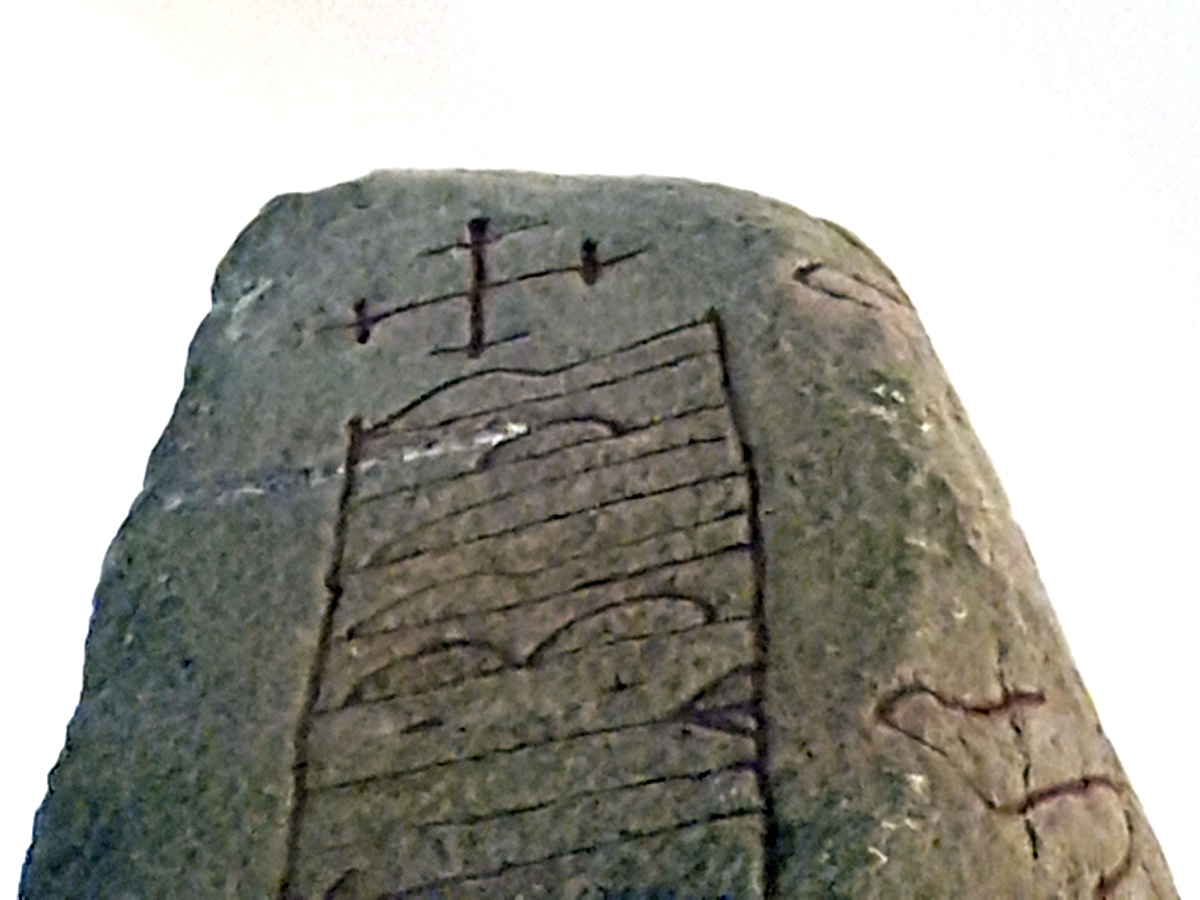 A crossed crucifix at the top of the narrow side of the Lundagård runestone, facing the wall.
The events of 989 are about when Kunar and Toma, who are mentioned on the runestones from the
Hunnestad monument, returned home after serving 20 years in the Eastern Roman emperor's
Varangian guard in Constantinople, today's Istanbul. They discovered that most of their
families had been killed by Toke Gormsson in 983.
A crossed crucifix at the top of the narrow side of the Lundagård runestone, facing the wall.
The events of 989 are about when Kunar and Toma, who are mentioned on the runestones from the
Hunnestad monument, returned home after serving 20 years in the Eastern Roman emperor's
Varangian guard in Constantinople, today's Istanbul. They discovered that most of their
families had been killed by Toke Gormsson in 983.
On the wide side, facing the room, there is a large picture. There is also a picture at the top of the wide side that faces the corner. The picture and the runes along the narrow side towards the wall are difficult to see because the runestone is placed in a corner. The crucifix at the top of the narrow side facing the wall is interesting because it is a so-called crossed crucifix. There are different interpretations of the images but no definite information about what they depict.
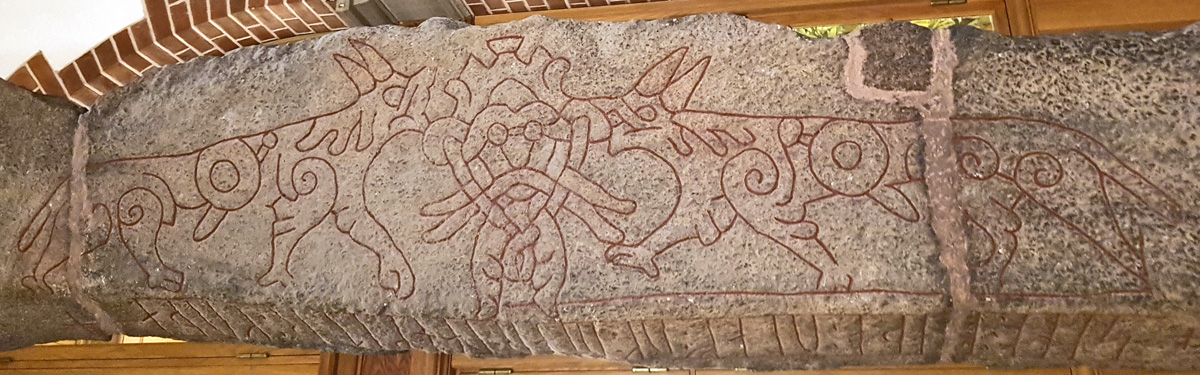 The large picture facing the room. The stone is shown lying down in this picture.
In 989, Torgis who raised the Lundagård runestone, married Toke Gormsson's widow, Princess Helga from Kyjiv who ruled over Lund. They have a son named Ulf. Sometime around 1015 he married King Sweyn Forkbeard's daughter Estrid. They became the parents of Svend Estridsen, who was king of Denmark between 1047 and 1076, and who became the father of several of the following Danish kings.
11) Stortorget in Lund - Sweden's oldest square
According to the Chronicle, The Main Square (Stortorget) in Lund was laid out around the year 987 and is thus Sweden's oldest square. Princess Helga of Kyjiv ruled Lund after her husband Toke Gormsson's death, she gave orders on how the city of Lund should be designed.
After Tuca's death, Princess Helga ordered the destruction of the fortress and defensive walls and the construction of houses, roads, gates and square should be built as her beloved city in Greece, where she spent many years as a child. Only the moat remained of the fortress, and the community no longer resembled any other communities in the land of the Danes.
Since the streets and blocks in Lund never were straightened, as in many Swedish cities during the 1600s, most of the street network in Lund's viking age center probably still has the same shape as when it was built around the year 987. The history of the Main Square (Stortorget) in the middle ages and later is also interesting, but this visitor's guide mainly describes the viking age history.
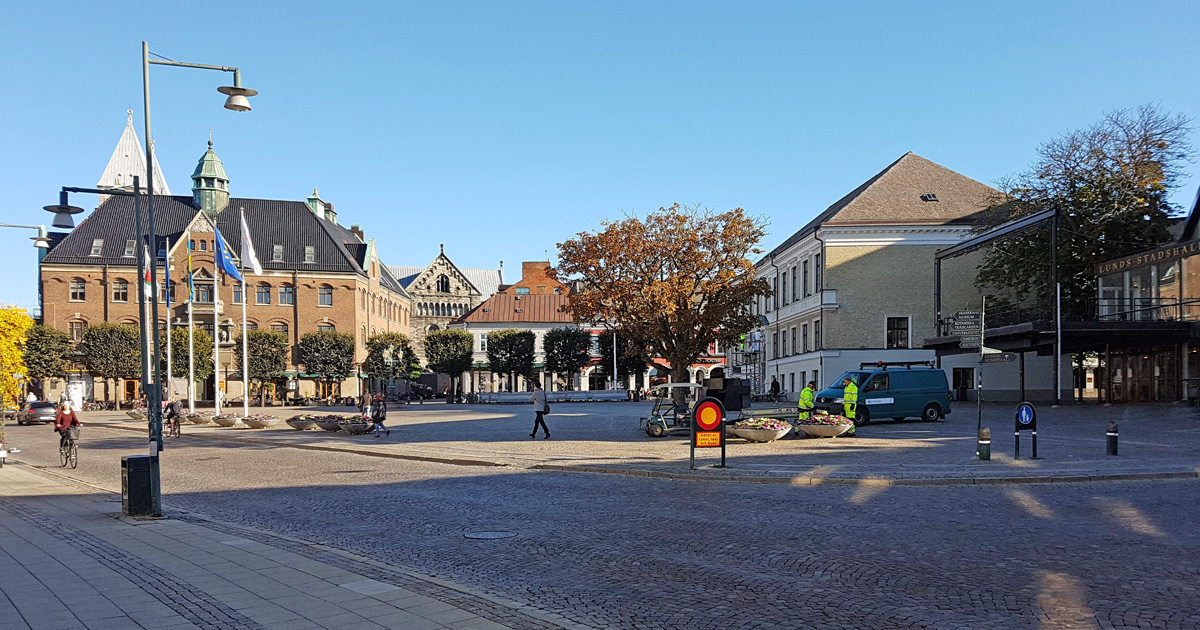 The Main Square (Stortorget) in Lund, Sweden's oldest square, which was probably laid out
around the year 987
The Main Square (Stortorget) in Lund, Sweden's oldest square, which was probably laid out
around the year 987
It has long been assumed that the entire original city of Lund was laid out at the same time by dividing it into blocks with plots and streets, marked with about one decimeter deep dug gutters as plot boundaries. According to the Chronicle, this should have happened around the year 987, presumably using geometric methods that gave the neighborhoods and streets their peculiar and slightly crooked shapes. How large the original city area was is unknown. When the medieval city wall was built around Lund in the 1130s, it surrounded an area of about 84 hectares, but remains of gutters have been found in several different places slightly outside that area as well.
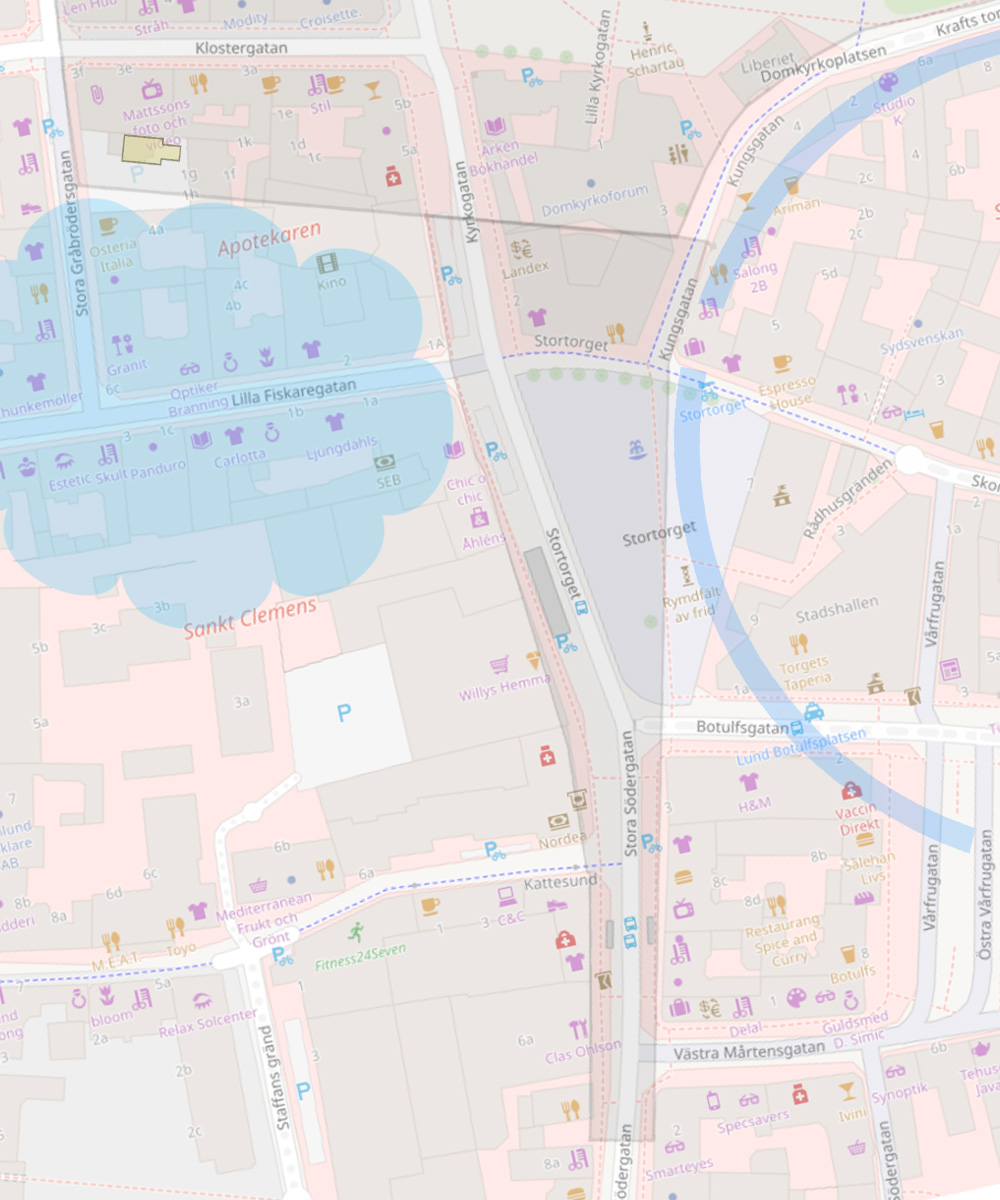 The Main Square (Stortorget) and its surroundings as it may have looked from around the year
987.
The only block that differs in its form from all others is on the northeast side of the Main
Square (Stortorget). According to the Chronicle, this is because the moat from the fortress
was left behind when the ramparts were demolished, which explains why the street had to be
drawn around in a semicircle.
The Main Square (Stortorget) and its surroundings as it may have looked from around the year
987.
The only block that differs in its form from all others is on the northeast side of the Main
Square (Stortorget). According to the Chronicle, this is because the moat from the fortress
was left behind when the ramparts were demolished, which explains why the street had to be
drawn around in a semicircle.
There is no clear information about where the original royal estate was located, only that it was located near St. Clement's church northwest of the square. In connection with the construction of the city area, it is assumed that the entire area north of the square was set aside for the royal estate. Around the year 1030, the area directly north of the square may have become a cemetery in connection with the establishment of monastery activities on the site where the cathedral is located today.
Lund's city area is located on a long slope, but topographical studies have shown that there was a plateau in the sloping terrain on the east side of the square and up towards the cathedral. This may explain why that location was chosen for the fortress, when it was built sometime between 971 and 973. On the west side of the square there was a larger pond or lower waterlogged area.
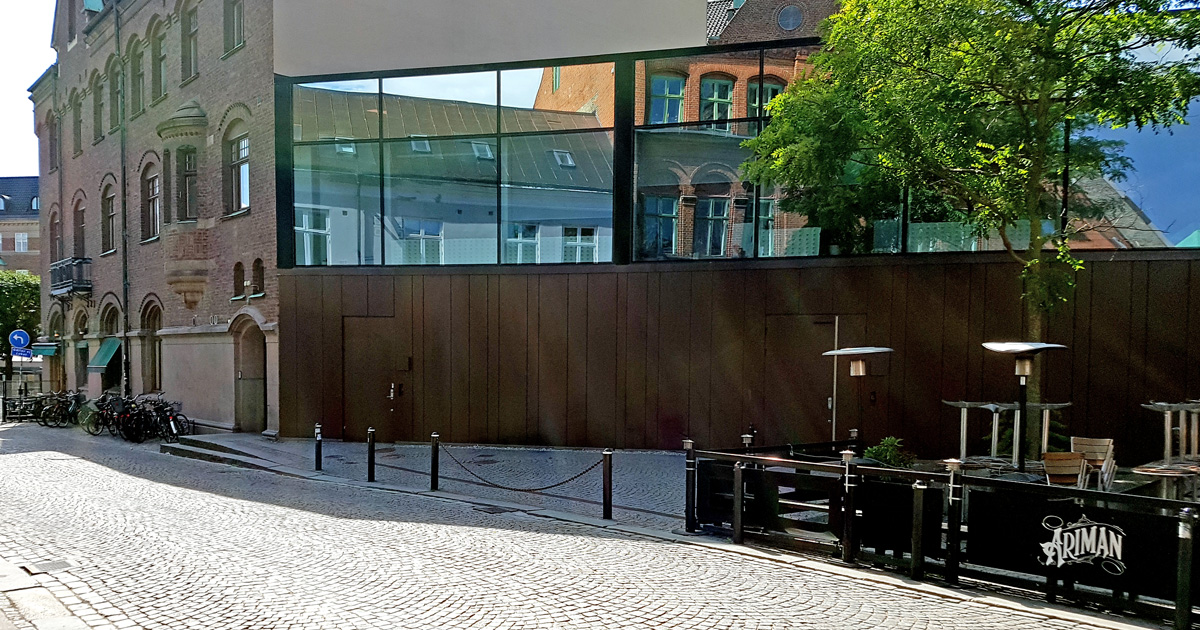 The northern border of the Main Square (Stortorget) was approximately at the white gable above
the windows.
The northern border of the Main Square (Stortorget) was approximately at the white gable above
the windows.
There was probably early on some kind of square or larger open area where the Main Square (Stortorget) is now, but there is no information about what it looked like. When the square was built around the year 987, it was narrower but longer than today, and that was the case well into the middle ages. The square stretched up to the northern facade of the large brown brick house, located on the north side of the square today. To the south, the street, the Large South Street (Stora Södergatan) today, turned into a square somewhere south of the current West Mårtens Street (Västra Mårtensgatan).
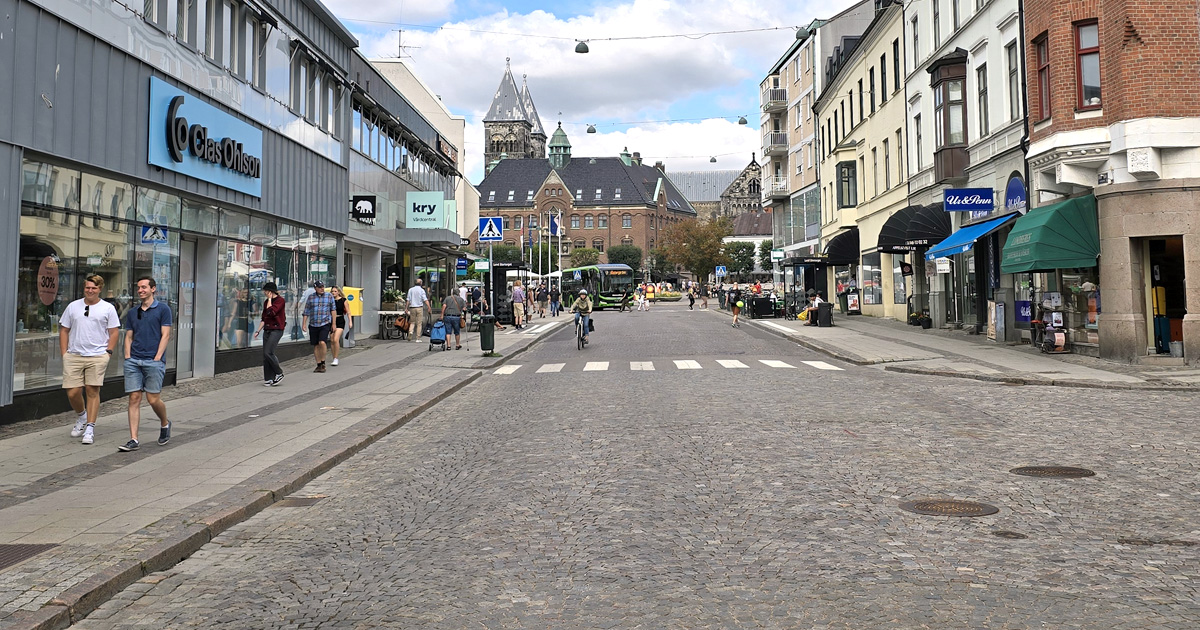 From the south, the street turned into a square about here
12) The pond on the west side of the Main Square
On the west side of the Main Square (Stortorget), there was a larger pond or a lower waterlogged area until sometime around the year 1050-1051. There is no information about how large it was or what range it had. The reason why it is known is archaeological investigations that show that large parts of the area south of it were covered with a layer of several decimeters thick flood mud.
In particular, the south-east corner of the cemetery around the wooden Trinity church, built by Sweyn Forkbeard, and later around the church of Drotten, was covered by the flood mud. With dendrochronological dating, it has been shown that the area was flooded sometime around 1050-1051. The pond or a lower waterlogged area probably caused recurrent flooding during persistent rain. If it had broken, the sloping terrain could have caused a disaster for the buildings south of it. Therefore it is likely that the pond was opened in a controlled manner, which caused part of the cemetery to be flooded.
13) St. Mary's church at the square
At the south-eastern end of the square was the church, which in a written source from the period 1095-1103 is called "capella sanctae Mariae in foro", which can be translated as St. Mary's church at the square. It was built with wood, probably in the early 1060s, and was located where the five-floor building along Western Mårten Street (Västra Mårtensgatan) is today. The church was excavated archaeologically in 1911, before that house was built. In spring of 2020, older graves with wooden coffins were found, showing that the cemetery around the church stretched at least as far south as the middle of Västra Mårtensgatan.
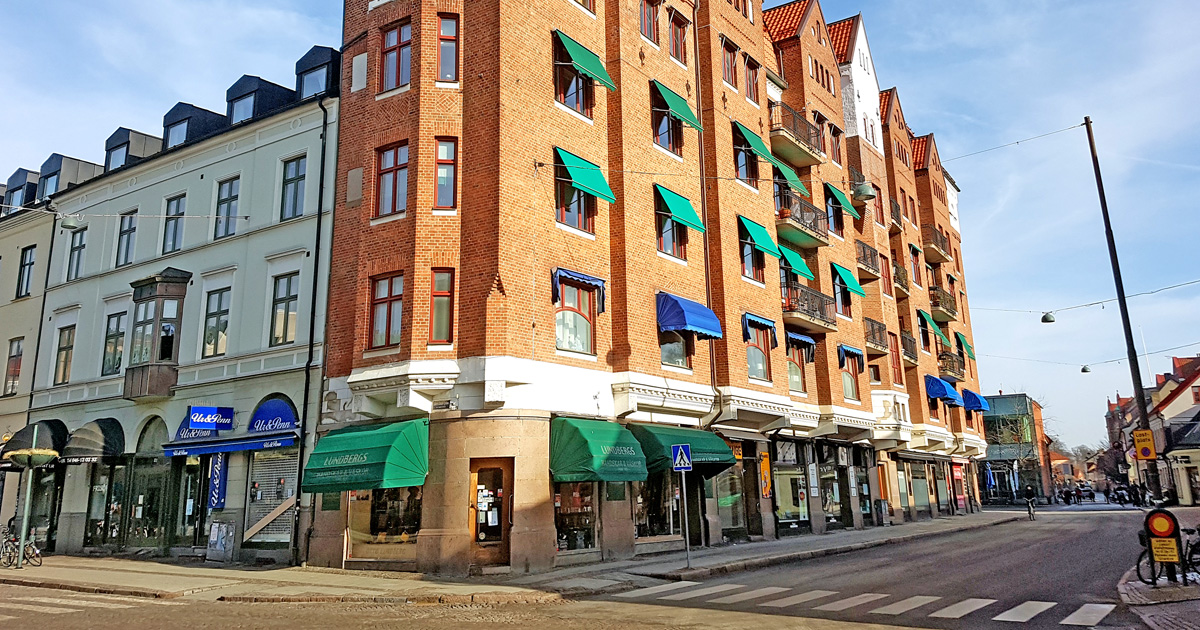 In under the high five-floor building, the church of St. Mary in foro was located in the 1060s.
According to the above-mentioned written source, King Erik Ejegod donated the church together with a large estate to the priesthood of the Cathedral chapter. This indicates that the church was founded by the king, which in that case was King Svend Estridsen who was the king of Denmark at the time when the church was built, or someone close to the king. The wooden church was probably demolished shortly after it was donated to the Cathedral chapter and replaced with a Romanesque church of stone in the early 12th century.
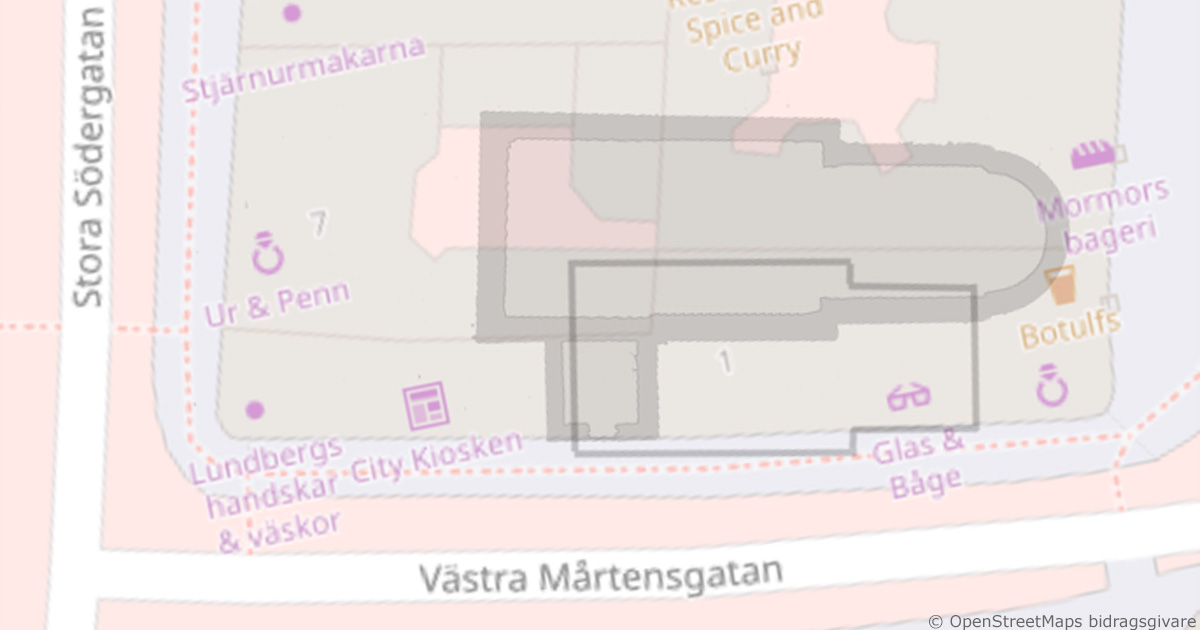 Map showing the location of the wooden church and the later Romanesque stone church.
The wooden church had an almost quadratic 8 by 8-meter choir. The rectangular longhouse will then have been 16 meters long and 10 meters wide. Inside the church there were two rows of thick oak posts both in the choir and the longhouse. They supported the roof of the church and made the church three-aisled. The planks in the walls of the church were 48 to 61 cm wide and 17 to 22 cm thick, made of split oak trunks where the naturally round side of the trunk formed the outside of the church. Both the posts and the wall planks were buried in the earth. There was also a well inside the church, made of a hollowed-out oak trunk. There were other buildings on the site before the church was built, so the well may have belonged to the earlier settlement.
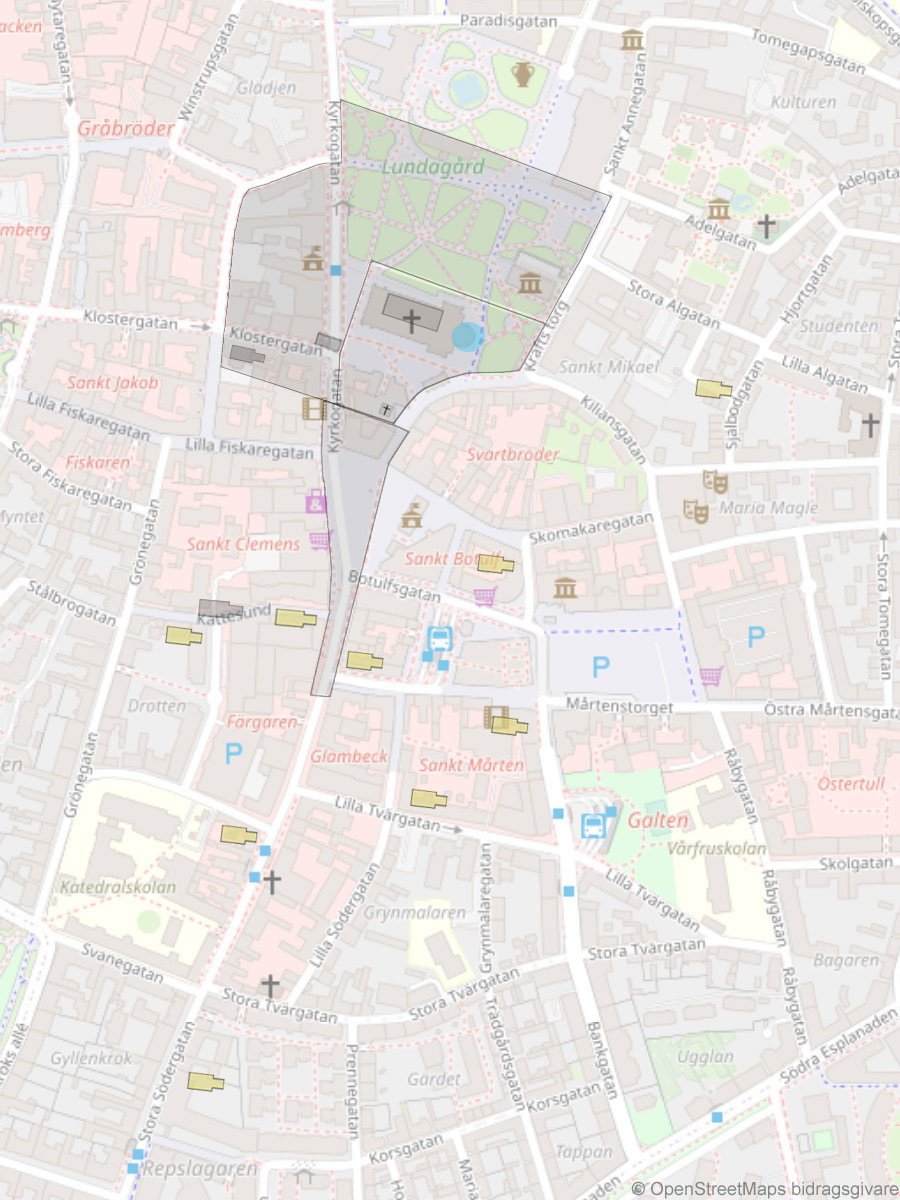 Map of all Lund's churches in the 1060s
The first wave of church building in Lund took place in the 1060s, probably as a reaction to
the diocesan reform that was carried out at the latest in 1059. The reform led to the division
of the then Lund diocese into two bishoprics, one in Lund and one in Dalby.
Map of all Lund's churches in the 1060s
The first wave of church building in Lund took place in the 1060s, probably as a reaction to
the diocesan reform that was carried out at the latest in 1059. The reform led to the division
of the then Lund diocese into two bishoprics, one in Lund and one in Dalby.
St. Mary's church on the square was just one of seven wooden churches built in the 1060s. At that time, there were already the southern and eastern Kattesund churches of wood, the churches Drotten and St. Clemens of stone, as well as some kind of monastery located where Lund Cathedral is today.
The seven wooden churches were replaced by stone churches when the second wave of church building began in the 12th century, as a reaction to Lund being elevated to an archbishopric in 1103 for a church province that encompassed all Christian Scandinavia.
Later in the 12th century, a larger church was built, also dedicated to St. Mary, in another location. Then, this church began to be called St. Mary Minor, or Our Lady Little in its Danish name form.
14) The Eastern Kattesund church
The location of the walls and inner posts of a large wooden church from around the year 1050, has been marked with white paving stones in the wide pavement at Kattesund. This church is said to be the largest stave church which has been found in the Nordic countries. Who had the church built or to whom it was consecrated is unknown. Therefore, the church is usually called the Eastern Kattesund church.
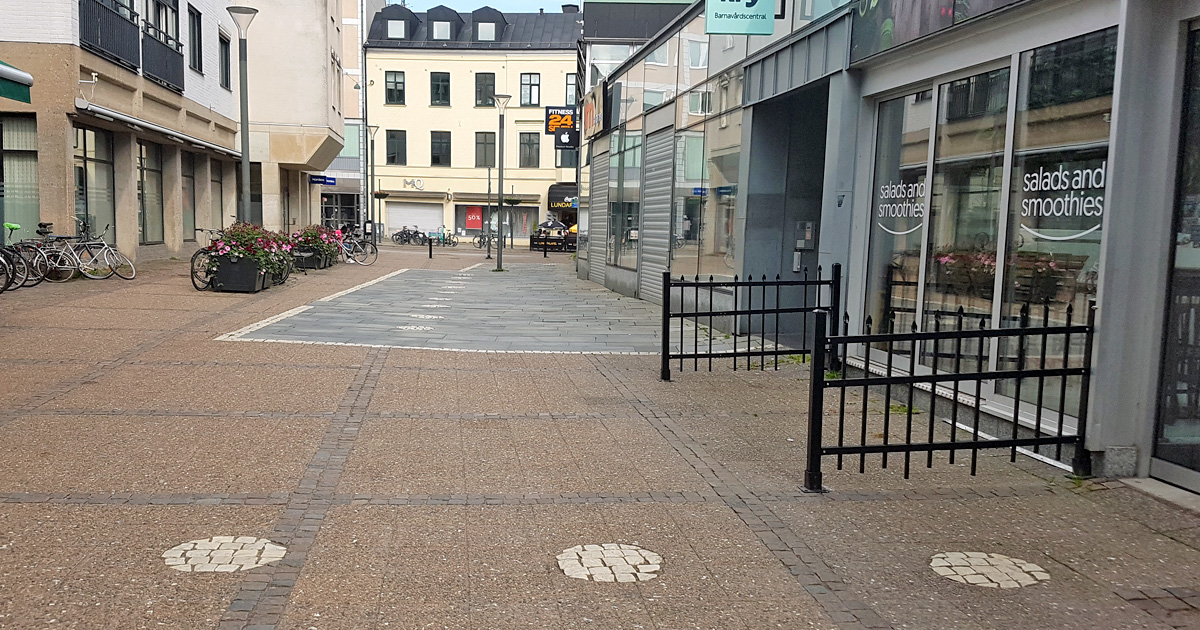 Marking of the Eastern Kattesund church in the pavement at Kattesund.
The church was 26 meters long with an 18 meter long and 11-meter-wide longhouse and 8 by 8 meters choir. In the north wall of the longhouse, just over 5 meters from the western gable, there was a doorway that was one meter wide, and there was probably a corresponding doorway in the south wall. However, there seems to have been no entrance from the west.
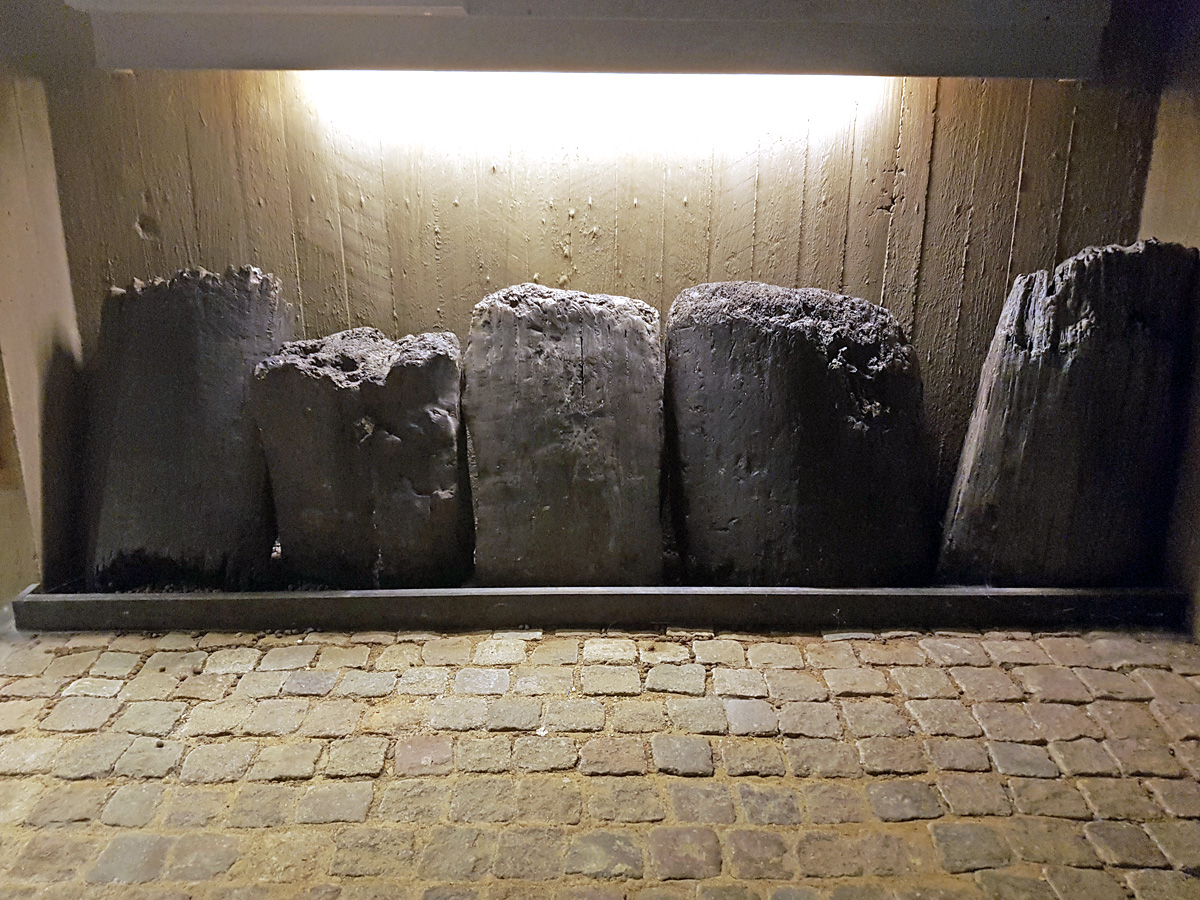 Some of the staves that were part of the walls of the Eastern Kattesund church can be seen
in Drotten's church ruin.
There were two rows of pillars inside, supporting the roof. Inside the church there were also
eight strong oak pillars with a diameter of about 55 centimeters. Those could have been the
central pillars of a basilica where the longhouse was higher than the side aisles, but most
likely they supported a continuous ridge roof in a church with a three-aisled longhouse. On
the west side of the church, there were five strong pillars in the ground. It is possible that
they were part of a bell tower.
Some of the staves that were part of the walls of the Eastern Kattesund church can be seen
in Drotten's church ruin.
There were two rows of pillars inside, supporting the roof. Inside the church there were also
eight strong oak pillars with a diameter of about 55 centimeters. Those could have been the
central pillars of a basilica where the longhouse was higher than the side aisles, but most
likely they supported a continuous ridge roof in a church with a three-aisled longhouse. On
the west side of the church, there were five strong pillars in the ground. It is possible that
they were part of a bell tower.
In the unmanned basement museum Drottens church ruin you can see remains of some of the staves that were part of the walls. The dating of the staves shows that the church was repaired in the 1070s. The cemetery around the church was 45 by 60 meters in size with dug trenches around as boundary markers. 320 of the cemetery's graves have been found.
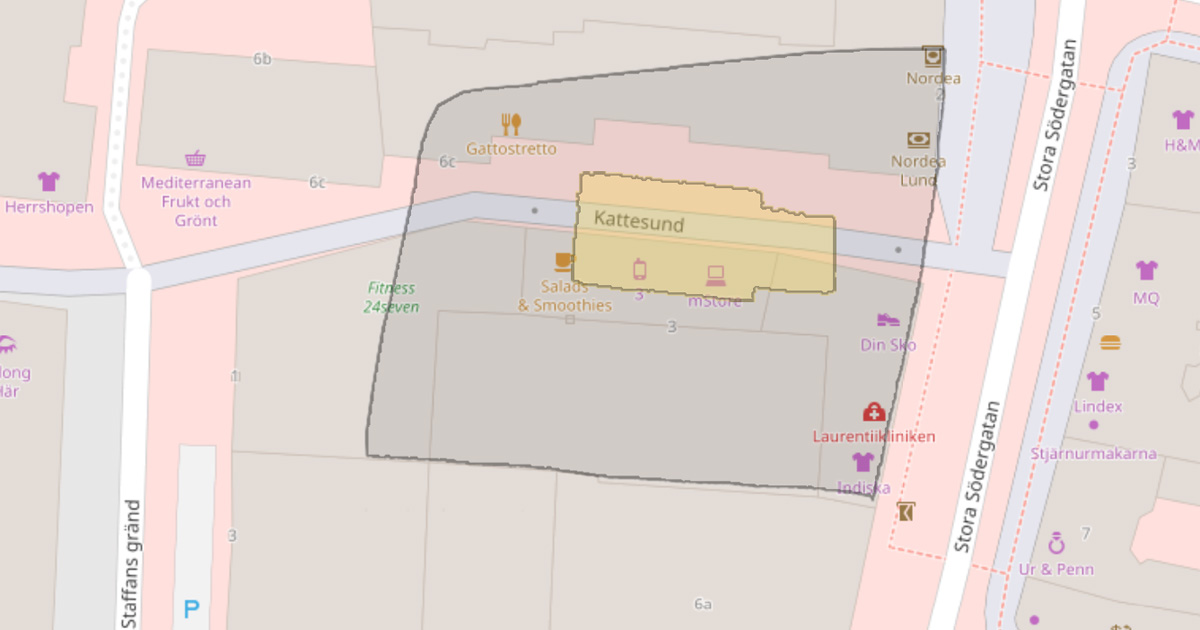 Map of the location of the Eastern Kattesund church and the surrounding cemetery.
15) Lund's first Cathedral, Trinitas Salvator, also called Drotten
The walls of what was Lund's first Cathedral and Scandinavia's first archbishop's church have been marked with grey stones on the pavement at Kattesund. The church was called Trinitas Salvator because it was consecrated to the Trinity and the Savior. It was also called Drotten, which comes from the Nordic word drott, which means ruler. The history of the church is very complex but constitutes a large and interesting part of Lund's viking age history during the 11th century.
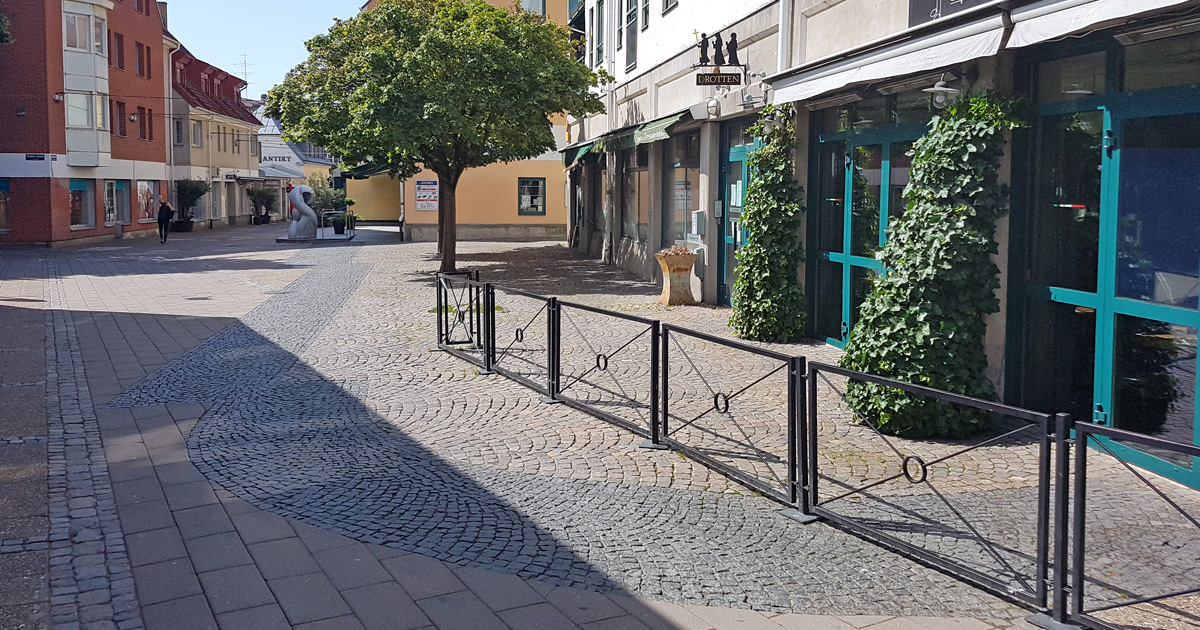 Grey marking on the pavement showing where the walls of the church Drotten were, after the
second rebuilding in the middle ages. The entrance to the unmanned basement museum Drotten
church ruin is to the right in the picture.
Grey marking on the pavement showing where the walls of the church Drotten were, after the
second rebuilding in the middle ages. The entrance to the unmanned basement museum Drotten
church ruin is to the right in the picture.
Before the major excavation of Drotten began, a picture was taken over the area on August 24, 1982. The place was used as a large parking lot. In the middle of the picture, you can see a wall with a round arch. The wall is still there today, in the yard behind the houses. On the far right you can see a loading dock that also still exists inside the yard.
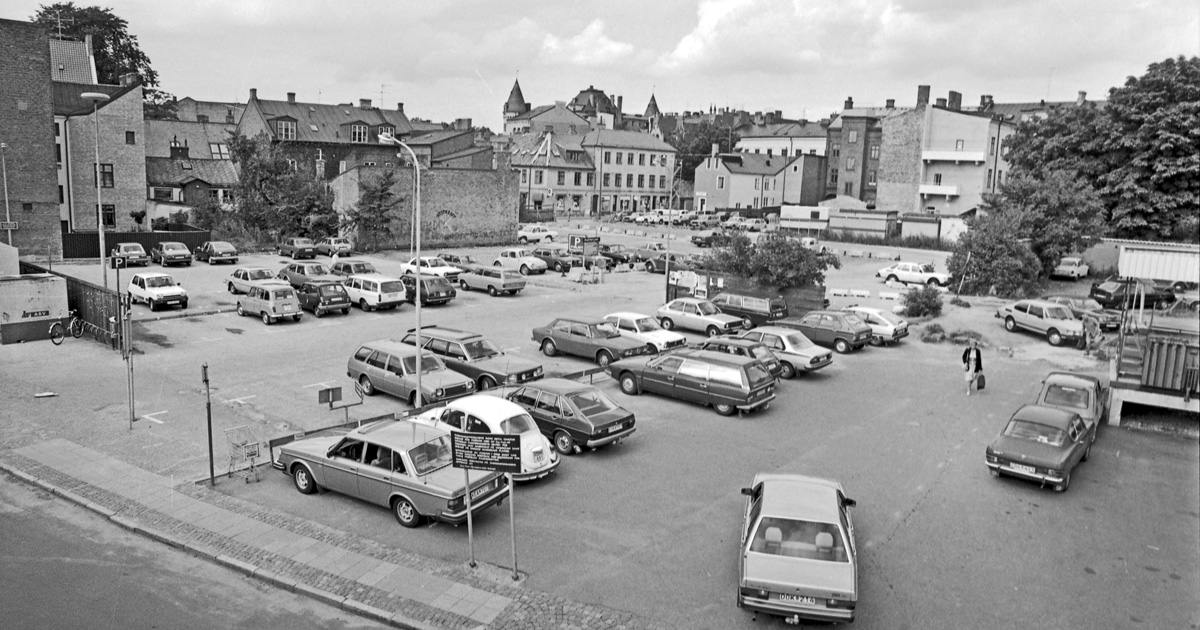 A picture of the Kattesund area, taken by Hagblom Photo on August 24, 1982.
The church's building history is mainly based on interpretations of the finds made when the church was investigated archaeologically between 1982 and 1984. While the archaeological investigation was ongoing, public opinion began to grow in favor of preserving the ruins of the church. This led to the ruin being preserved as the unmanned basement museum Drotten church ruin, but it also makes the dating of the church's building history more uncertain. It is free to visit Drotten's church ruin when it is open through the Old Lund Association's office or through the restaurant Gattostretto.
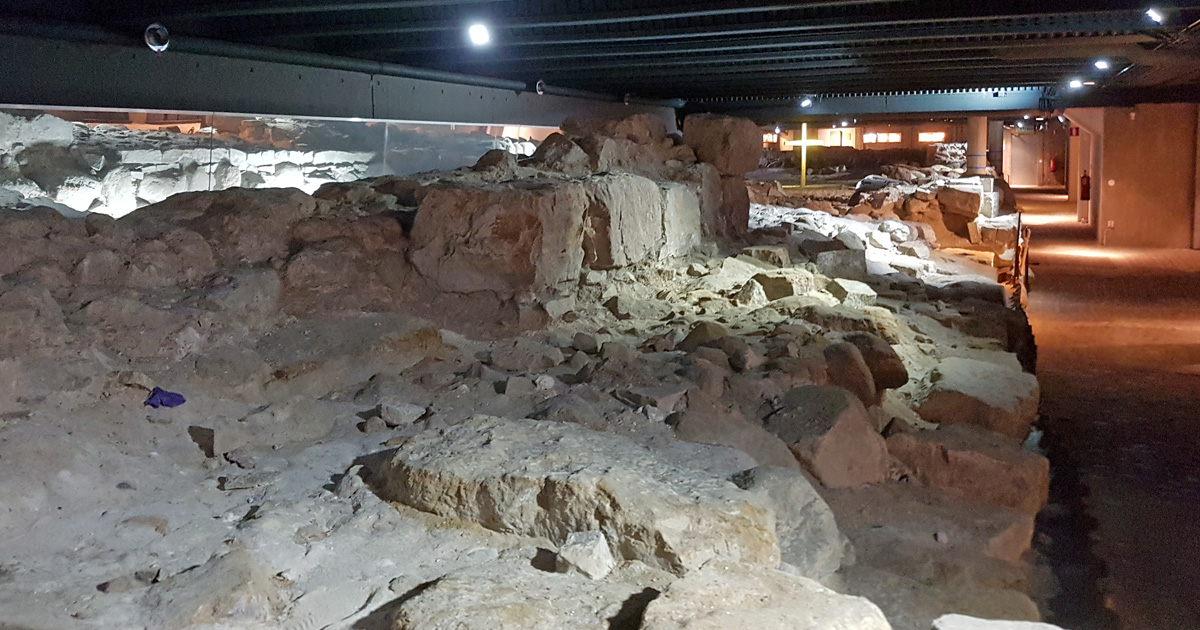 The unmanned basement museum Drotten church ruin where you can see the preserved ruin of the
church.
The unmanned basement museum Drotten church ruin where you can see the preserved ruin of the
church.
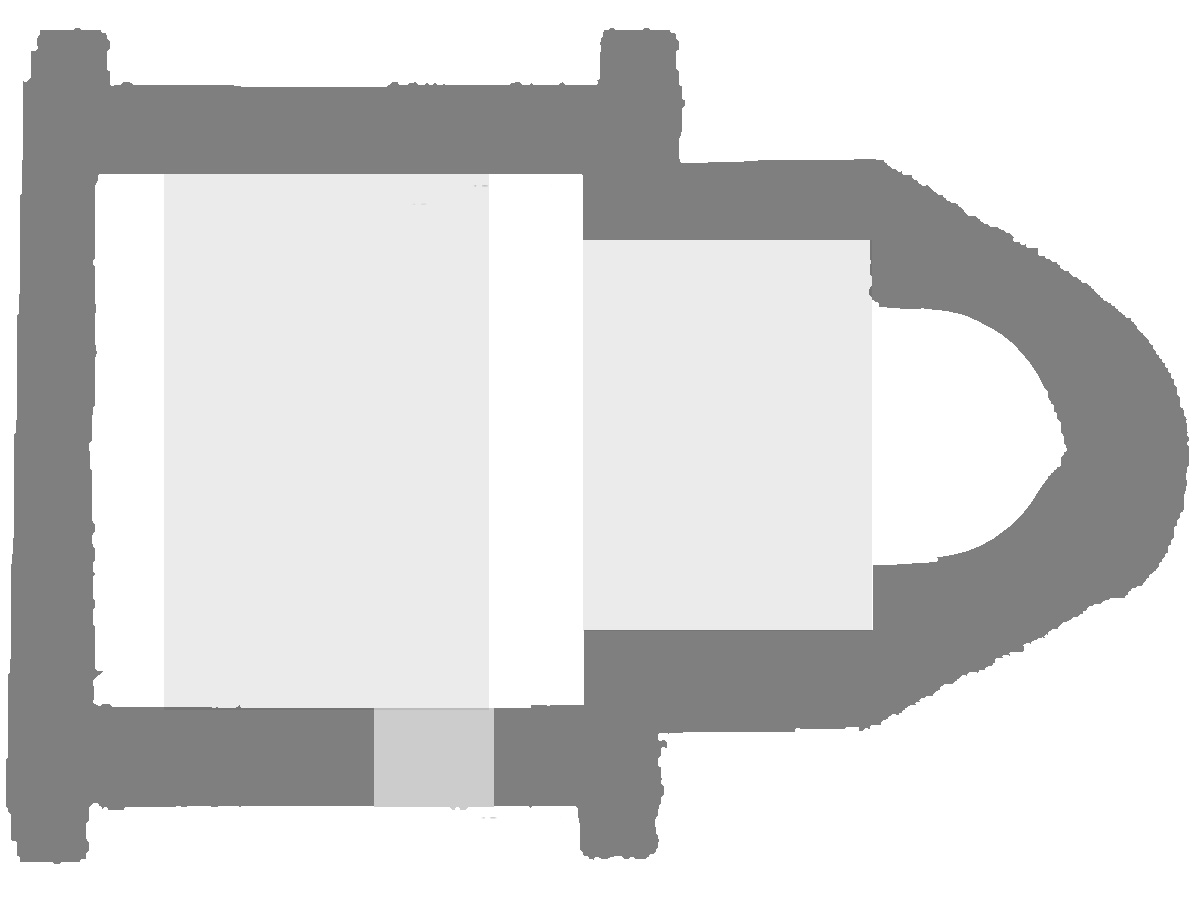 Drotten, as the church may have looked around the year 1030.
The church was probably built by King Canute the Great in the 1020s, under leadership of
Bishop Bernhard from England. The church replaced a wooden church dedicated to Trinity, which
King Sweyn Forkbeard had built around the year 987, according to the Chronicle. When Bishop
Bernhard died, around the year 1030, he was buried in Lund. It seems that the construction of
the church came to a halt at that time, and the longhouse was ended with a straight wall to
the west. The church then had a short choir with an apse to the east, but no tower. There was
a larger burial chamber under the short longhouse where Bishop Bernhard may have been buried.
Drotten, as the church may have looked around the year 1030.
The church was probably built by King Canute the Great in the 1020s, under leadership of
Bishop Bernhard from England. The church replaced a wooden church dedicated to Trinity, which
King Sweyn Forkbeard had built around the year 987, according to the Chronicle. When Bishop
Bernhard died, around the year 1030, he was buried in Lund. It seems that the construction of
the church came to a halt at that time, and the longhouse was ended with a straight wall to
the west. The church then had a short choir with an apse to the east, but no tower. There was
a larger burial chamber under the short longhouse where Bishop Bernhard may have been buried.
According to a written source, King Sweyn Forkbeard died in England in the beginning of 1014. His remains were brought home to Denmark to be buried in the church he had built himself. It may have been in the wooden church that he, according to the Chronicle, had built here in Lund around year 987. His son, King Canute the Great, may have had his father's remains moved to the burial chamber under the choir of this church when the wooden church was taken out of use.
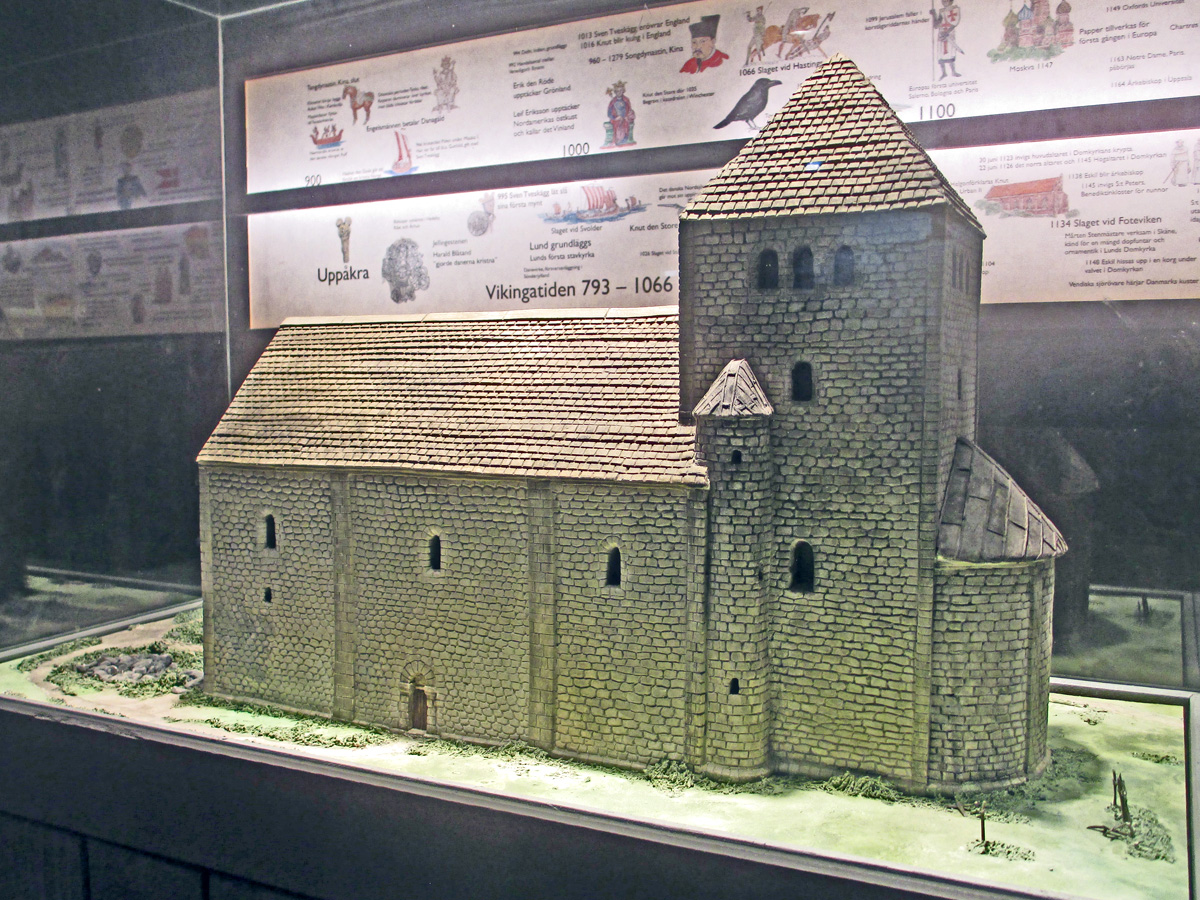 Drotten as it may have looked as completed around the year 1050.
Henrik from the Orkney Islands outside northern Scotland became the new bishop of Lund,
probably in the early 1040s. He resumed the construction of Drotten, which then was completed
around the year 1050 with a tower over the choir to the east. Svend Estridsen, who became king
of Denmark in 1047, had the goal of break free Denmark away from the archbishopric of
Hamburg-Bremen and form a Danish ecclesiastical province with its own archbishop. The
archbishop of Hamburg-Bremen opposed this, so instead they began to cooperate, and Denmark was
divided into more bishoprics. At the latest 1059, the bishopric Lund was divided into two
bishoprics, with Henrik of England as bishop of Lund and Egino from Germany as bishop of Dalby.
Henrik is still considered the first bishop of the Lund diocese and Drotten must therefore be
seen as Lund's first cathedral. The diocesan division also led to the first wave of church
building in Lund, which meant that there were seven new wooden churches built in Lund during
the 1060s.
Drotten as it may have looked as completed around the year 1050.
Henrik from the Orkney Islands outside northern Scotland became the new bishop of Lund,
probably in the early 1040s. He resumed the construction of Drotten, which then was completed
around the year 1050 with a tower over the choir to the east. Svend Estridsen, who became king
of Denmark in 1047, had the goal of break free Denmark away from the archbishopric of
Hamburg-Bremen and form a Danish ecclesiastical province with its own archbishop. The
archbishop of Hamburg-Bremen opposed this, so instead they began to cooperate, and Denmark was
divided into more bishoprics. At the latest 1059, the bishopric Lund was divided into two
bishoprics, with Henrik of England as bishop of Lund and Egino from Germany as bishop of Dalby.
Henrik is still considered the first bishop of the Lund diocese and Drotten must therefore be
seen as Lund's first cathedral. The diocesan division also led to the first wave of church
building in Lund, which meant that there were seven new wooden churches built in Lund during
the 1060s.
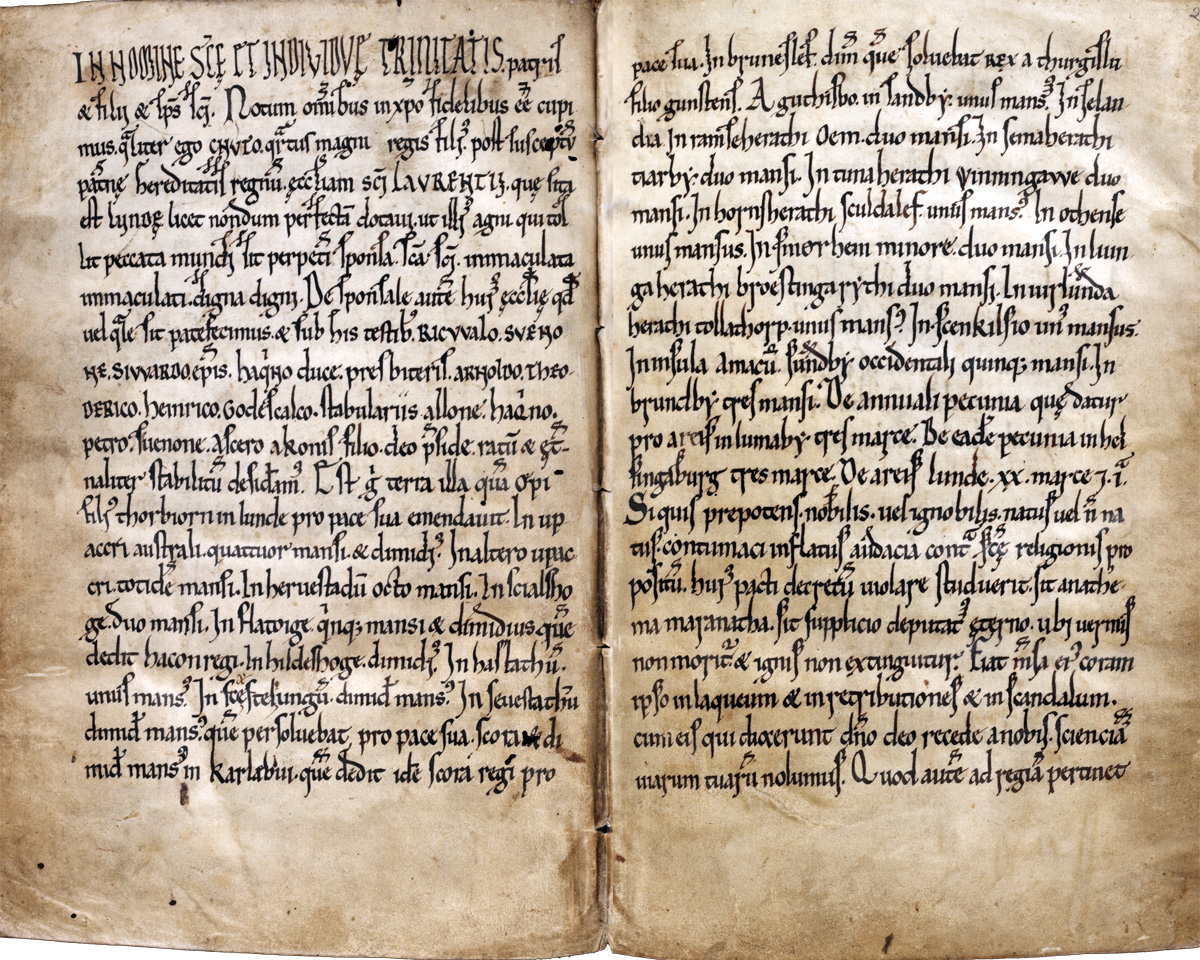 King Canute the Holy's deed of gift from 1085.
Bishop Henrik died around 1066-1067. Then, the two bishoprics were merged into one bishopric
with Egino as bishop. He thus became the second bishop of the Lund diocese. With King Canute
the Holy's deed of gift, on May 21, 1085, the foundation was laid for a Cathedral chapter with
a canonical community and a Cathedral school. Lund Cathedral began to be built by King Canute
the Holy in 1081. Drotten served as a Cathedral until the current Cathedral was inaugurated on
September 1, 1145.
King Canute the Holy's deed of gift from 1085.
Bishop Henrik died around 1066-1067. Then, the two bishoprics were merged into one bishopric
with Egino as bishop. He thus became the second bishop of the Lund diocese. With King Canute
the Holy's deed of gift, on May 21, 1085, the foundation was laid for a Cathedral chapter with
a canonical community and a Cathedral school. Lund Cathedral began to be built by King Canute
the Holy in 1081. Drotten served as a Cathedral until the current Cathedral was inaugurated on
September 1, 1145.
In the second half of the 11th century, a long-standing conflict arose between the Pope and the German Emperor, called the Investiture Battle. The Danish king sided with the pope, and this contributed to the pope's decision to break free Denmark in 1103 and form a new Nordic church province with Denmark, Sweden, Norway, Iceland, the Faroe Islands, the Shetland Islands and the Isle of Man. The following year, the Pope's envoy Albericus came to Lund and hung a pallium, the emblem of archbishopric, over Bishop Asser Svendsen's shoulders. Drotten thus became the first archbishopric church in the Nordic countries.
16) The South Kattesund church
In the block on the southwest side of Drotten, remains of a small wooden church have been found. It was preceded by a bell casting workshop, dated to around 1042-1043, which consisted of a shed over two bell casting pits. It is believed that at least one of the bells was intended for the church Drotten. The church was located under the beige house beyond the red brick house in the picture below. The two bell-casting pits were found under the western part of the church. The cemetery around the church was under the beige house and the red brick house.
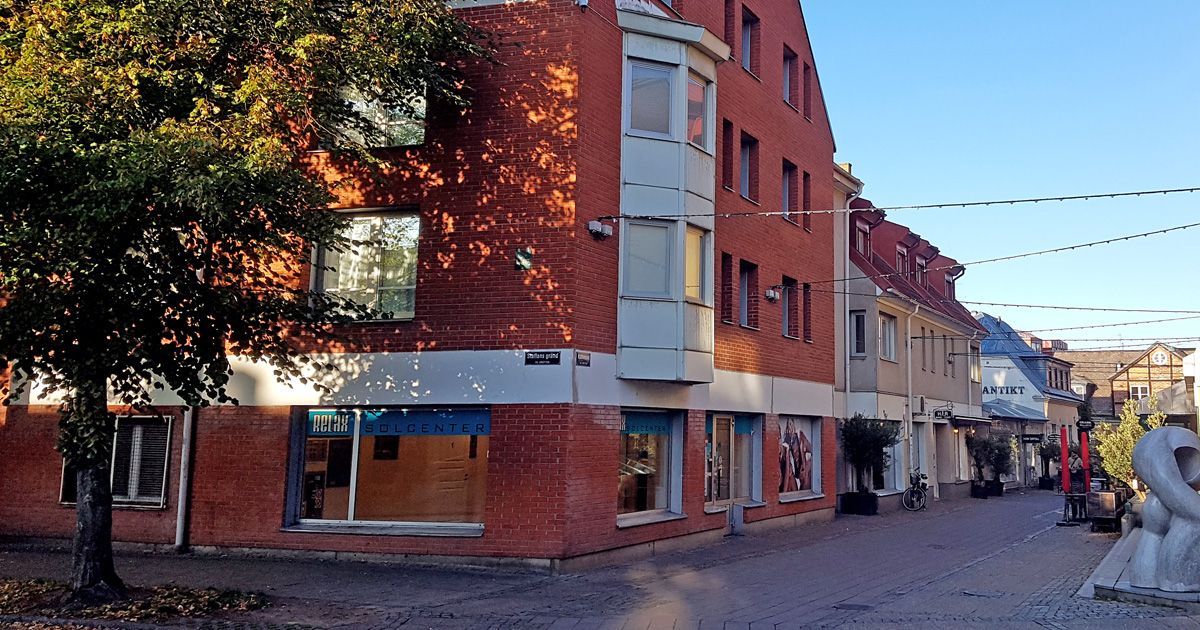 The place where the bell casting workshop, and then the South Kattesund church were located.
The church and cemetery were excavated archaeologically in connection with the major excavation of Drotten, between 1982 and 1984. The church was 19 meters long with a 15 meter long and 6.5-meter-wide longhouse and a 4 by 4-meter choir. The walls of the church consisted of staves placed in a dug gutter in the ground, and they also supported the roof of the church. Who built the church and to whom the church was sanctified is unknown. The cemetery around the church was 55 meters long and 15 meters wide. Perhaps the church was built for the English bell casters and their families, who had their final rest in the cemetery around the church.
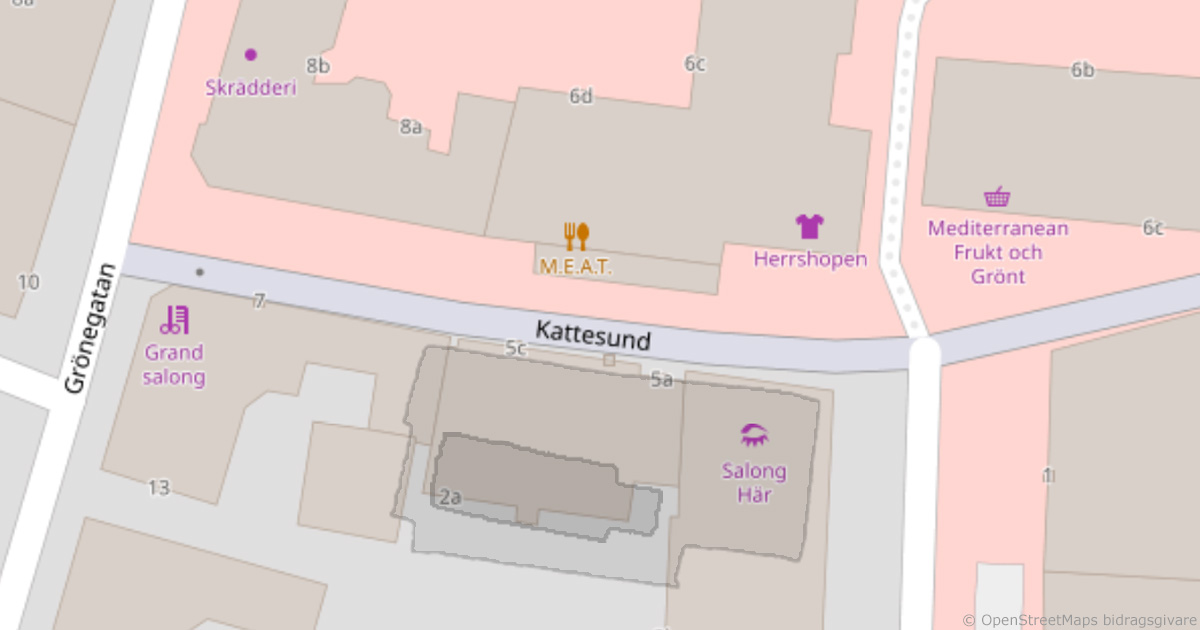 Map showing the location of the South Kattesund church in the block today.
17) King Sweyn Forkbeard's wooden church, the church of the Trinity
In connection with the major excavation of the church Drotten between 1982 and 1984, traces of a wooden church dated to around the year 990 were also found, which was believed to have been built by King Sweyn Forkbeard. According to the Chronicle, Helga from Kyjiv persuaded King Svend Forkbeard to make Lund the Christian capital of Denmark sometime after the death of her husband Toke Gormsson, on August 10, 986. Sweyn Forkbeard agreed to this and chose to make Lund his residence. Around 987, he let building a church dedicated to Trinity, Trinitas. The place where the church was located is now in a courtyard behind one of the houses that was built after the archaeological investigation.
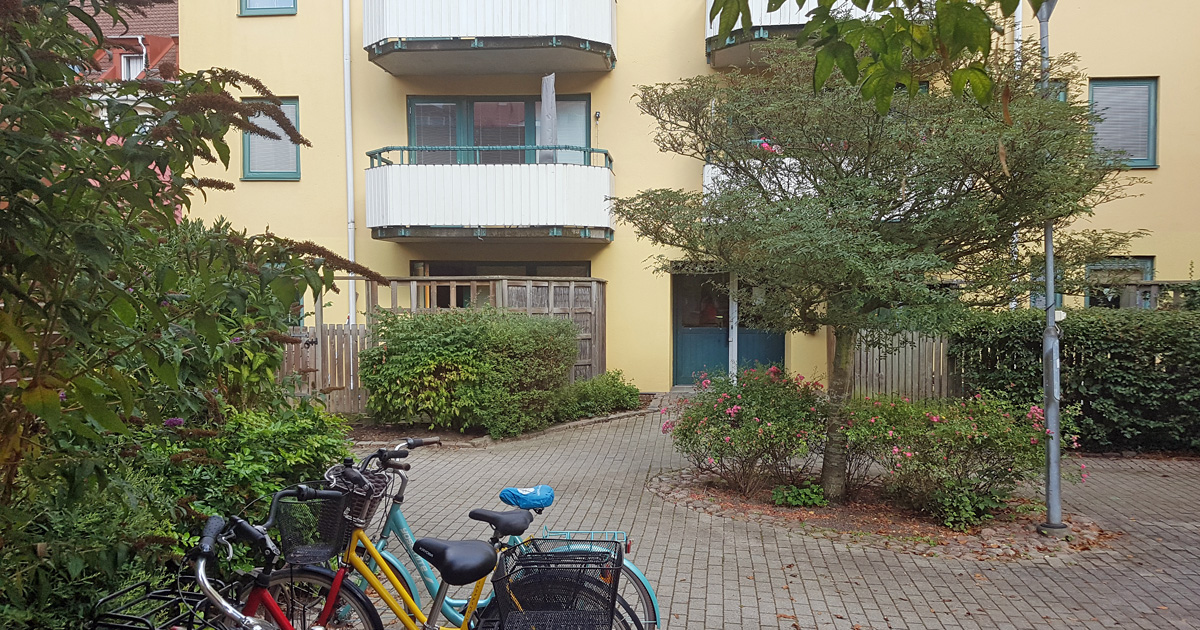 The place where Sweyn Forkbeard's church was found, straight ahead in the picture, is now a
courtyard.
The place where Sweyn Forkbeard's church was found, straight ahead in the picture, is now a
courtyard.
No wooden remains were found of the church when examined archaeologically. The dating of the church, to around the year 990, is therefore based on dendrochronological dating of the wood from 39 of the graves found at the cemetery. The dating is consistent with the Chronicle's statement that Sweyn Forkbeard had a church built in Lund around the year 987. At first the church had only a longhouse, but a choir was added later.
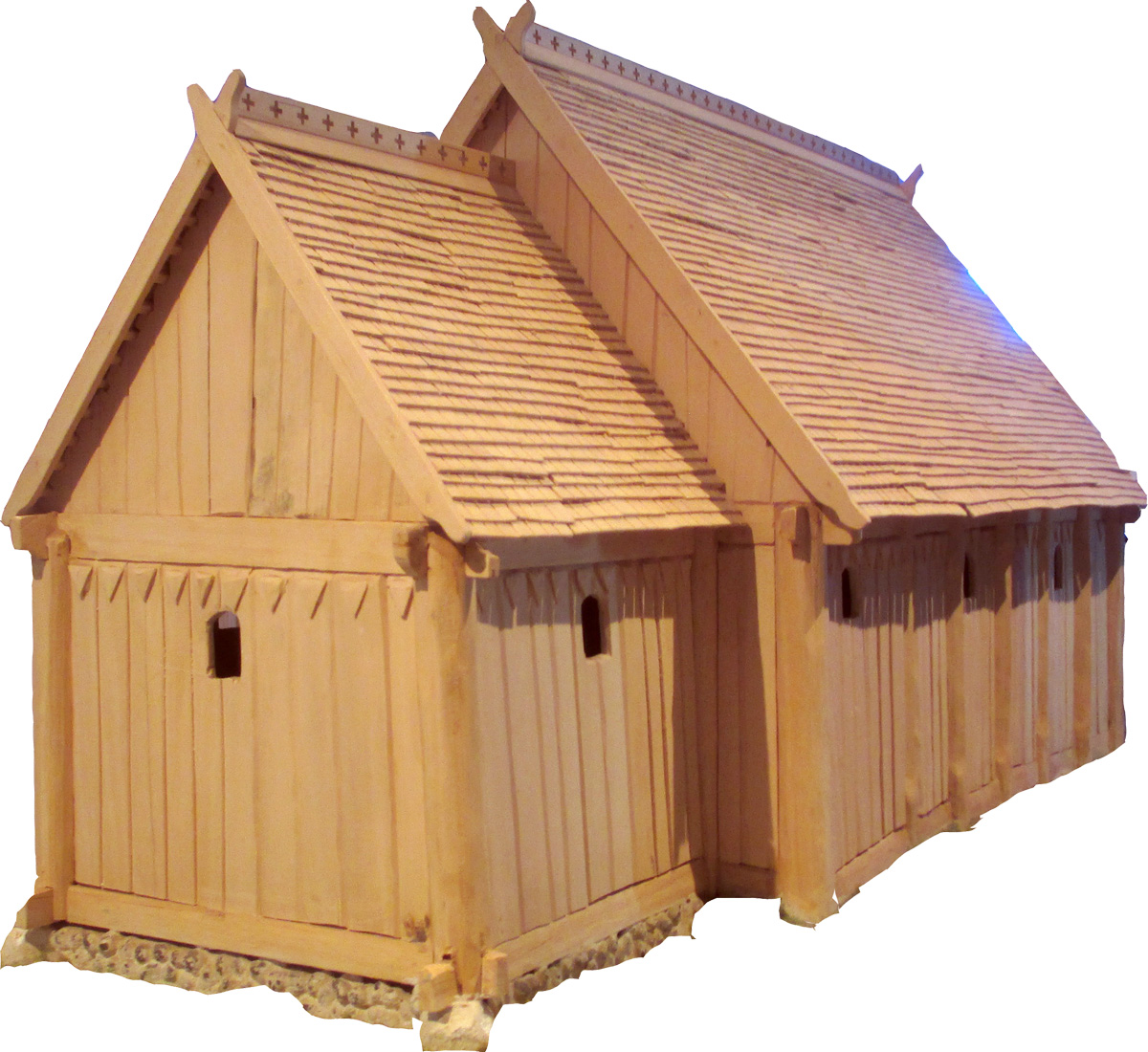 A model that shows what Trinity church may have looked like.
The longhouse was 8.5 meters wide, but since part of it was outside the area that was the
subject of the archaeological investigation, it is unknown how long it was. In any case, it
should have been twice as long as it was wide and may then have been at least 17 meters long.
The choir was 6 meters wide and 5 meters long.
A model that shows what Trinity church may have looked like.
The longhouse was 8.5 meters wide, but since part of it was outside the area that was the
subject of the archaeological investigation, it is unknown how long it was. In any case, it
should have been twice as long as it was wide and may then have been at least 17 meters long.
The choir was 6 meters wide and 5 meters long.
Sometime after the church got its choir added, a burial chamber that was 1.4 meters wide was made under the eastern part of the longhouse. At that time, only a royal person could be considered for burial in such a place, because graves inside church buildings were generally prohibited. The grave was emptied, so the remains of the buried person must have been moved, probably to the burial chamber under the choir of the church Drotten.
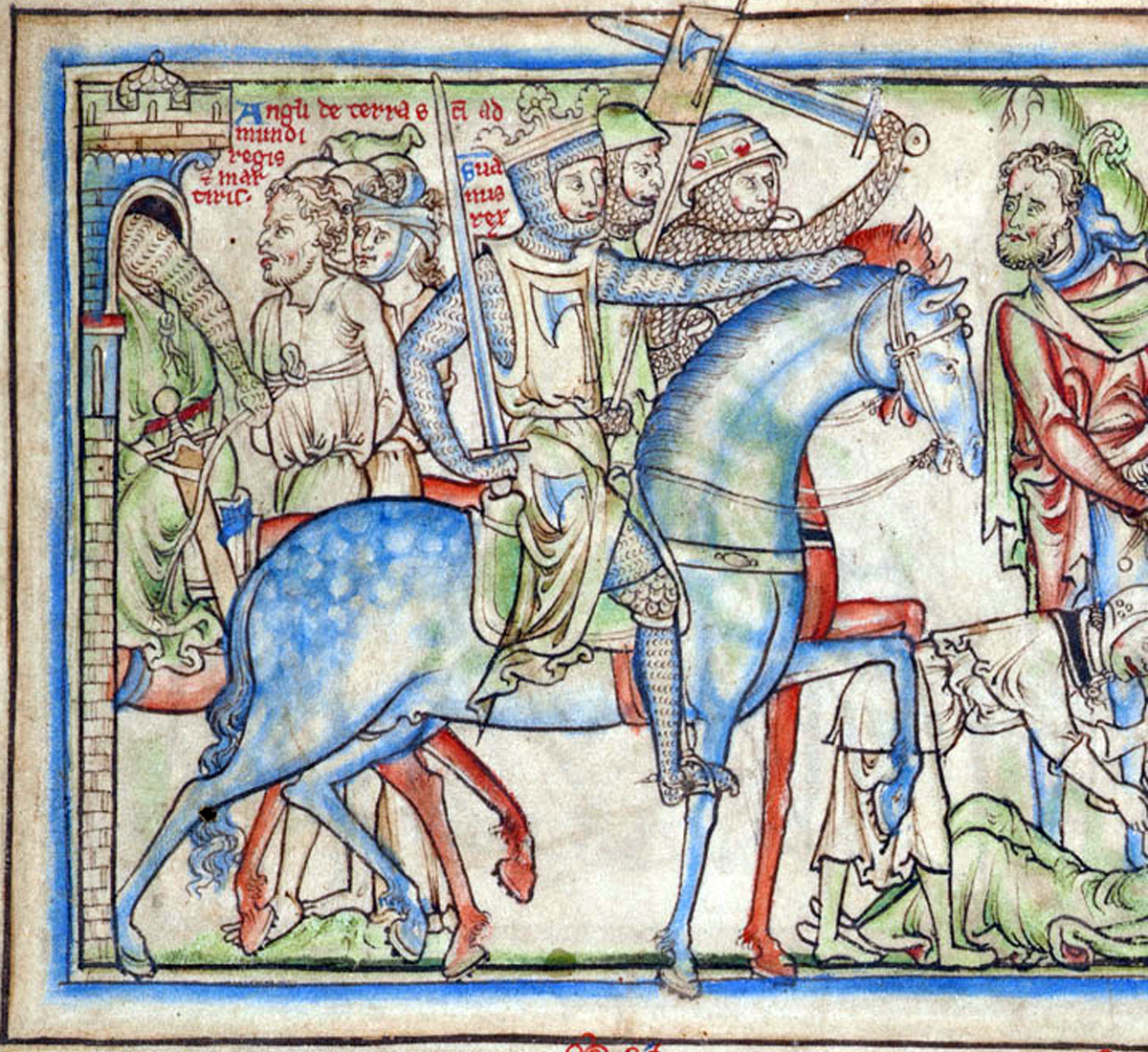 Detail of an illustration from a manuscript from the mid-13th century, showing how Sweyn
Forkbeard conquered England.
Most of what is known about Sweyn Forkbeard's time in the 990s, and early 11th century comes
from sources written much later, which makes the information more uncertain. Sweyn Forkbeard
and his son made several Viking raids to England in the late 990s and early 11th century. In
the summer of 1013, they conquered England and Sweyn Forkbeard was appointed king of England.
Detail of an illustration from a manuscript from the mid-13th century, showing how Sweyn
Forkbeard conquered England.
Most of what is known about Sweyn Forkbeard's time in the 990s, and early 11th century comes
from sources written much later, which makes the information more uncertain. Sweyn Forkbeard
and his son made several Viking raids to England in the late 990s and early 11th century. In
the summer of 1013, they conquered England and Sweyn Forkbeard was appointed king of England.
At the beginning of 1014, Sweyn Forkbeard fell ill and he died on February 3rd. His remains were brought home to Denmark to be buried in the church he had built himself. In Denmark, it is claimed that it must have been a church in Roskilde, but it is more likely that it is the church he had built here in Lund. Since the burial chamber was empty, his son, King Canute the Great, may have moved the remains to a new burial chamber, the one that was found under the choir of Drotten.